Category: Coaching

  • What tragedy and loss taught me about emotion

    What tragedy and loss taught me about emotion

    For a long long time I thought I only had two emotions: sadness and frustration. And in their absence, a middling apathy. 

    Apathy, it turns out, is an emotion too. So, correction: three.

    It’s not that I didn’t want or resisted feelings. And I’ve never subscribed to misleading gender stereotypes, and any implied shame or weakness there.

    Emotions, at least strong or identifiable ones, just seemed to elude me. 

    I’m familiar with depression’s bleak embrace – that’s not what was going on. In fact I was quite comfortable back then, in that middle-aged, middle-class, middle-of-the-road kind of way. 

    Life seemed fairly good.

    Then it went thermonuclear

    One moment I was married, just days from moving into a house we were buying together. The next, I was neither. 

    Blown apart. 

    Or open.

    I’ll walk you swiftly past the wreckage of last summer. Suffice to say, I lost my best friend, someone who spoke my language, my daftest co-conspirator – all in a matter of days. Too fast even for a post-mortem on the relationship. History and hope were torn from my timeline.

    Death seems like a fitting word actually. The destruction was sudden, dark, and the upheaval shocking and brutal. 

    Yet for all the pain, I welcomed this uninvited lesson. In grief, in bereavement, and myriad other emotions that seemed so elusive for so long.  All those feelz barged their way back into my world.

    Emotional constipation

    What you’re reading here began as a short, snappy article with digestible insight. Yet the subject matter and circumstances surrounding it defied that self-imposed brief. 

    It seemed churlish to condense a profound catastrophe into trivial ‘content’, to sanitise it of all charge and weight.

    How can one write truthfully about emotions, without expressing any?

    So I rewrote this a few times, gently revealing more of my experience in what I hope is an appropriate and helpful way.

    The focus of this essay (yes I did call it that) is what we might glean from a blowing open. How this unexpected, unwanted turn of events paved the way for a deeper emotional experience of life.  

    I suppose I’m making the case for or in favour of emotions. Not the case for having them, because as we’ll see shortly, they’re already here, like it or not.

    I’ll also tackle some misconceptions and volunteer my emerging theories. Some are rooted in my practice as a certified coach and improviser. It’s kind of my job to get curious about this sort of thing.

    I particularly hope that this lands with anyone in my earlier predicament; curious yet missing that elusive emotional depth and breadth. 

    Perhaps this is a reframing too, for anyone in suspicion, doubt or cynicism (more feelings) towards emotions, or who otherwise ‘doesn’t do’ them.

    Emotions are waves

    Cut to my sister’s immaculately decorated living room, where I escaped in the immediate aftermath of summer’s new adventure. 

    I collapse on a sofa, alternately sobbing and howling. In one hand is my phone; a good friend is alongsiding, soothing me through what I feared was unbearable. 

    It was here that I noticed how emotions came in waves, rolling. Some hit with force, others gentler and tolerable. They undulate. They move through and over you, of their own accord.

    “Here comes another one. Oh that was a big one! And look, you’re still here. There’s another… That one wasn’t so big. You’re still alive, still breathing…”

    This seems at odds with how I thought ‘emotions happened’: when ‘on,’ surely they’re FULLY ON? Amped to 11. Constant. All-consuming. 

    I wonder, is this a misconception? That emotions, especially powerful ones like anger and despair, will overwhelm us with their unpredictability, their pain and debilitation.

    Hence why we mute or avoid them.

    How would things be different if we remembered feelings are more like waves than tsunamis? It might make ‘big’ emotions seem less scary, more survivable. Give us comfort and courage. Because they too shall pass.

    Indeed, the only way out is through, in my experience. 

    Pushing back the waves, running for shore, or holding breath underwater – metaphors for resistance, suppression and denial perhaps, maybe they’re the real cause of suffering – protracting and amplifying the inner turmoil?

    During a lull in the storm, a different friend kindly reminded me how wonderful our nervous systems are at protecting us. When we lack capacity to process the full intensity of an emotion, like the electrics at home – your system will trip. The fuse will go, so you’re never overloaded. 

    You zone out, go numb, shake. 

    Of course, this isn’t healthy or sustainable in the long-term. But again, perhaps comforting to know that safety protocols are baked into the same system that gives rise to your emotions.

    Emotions aren’t particles

    So you only have two (three) emotions, Chris. You ought to feel more! Why can’t you unlock all the feelings inside? Especially the nice ones like excitement and hope.

    Can you spot the trap I’d fallen in here?

    When we stick a label on an emotion it tricks us into believing it’s a self-contained, binary on-or-off experience. And atomic – each cleanly distinct and separate from all other emotions.

    What logically follows is a tendency to label them good or bad. Happy is good (more please). Sad is bad (less thank you). Which can turn life into a bizarre game of emotional whack-a-mole.

    More misconception?

    Since that thermonuclear summer, I’ve floated perpetually along a wide, broadening spectrum of all-the-feelings, experiencing some simultaneously, by degrees. 

    At first, as the feelz came back online, I was dysregulated – super sad, super loved-up, hyper-excited, hyper-lonely. I’d dread returning home from an elating adventure, make eye contact with my puppy, then collapse under the crushing weight of grief for the embryonic family I’d lost.

    These days, I’m still easily moved but I feel regulated, thanks to the discoveries I’m sharing here. And I hold an emerging suspicion that a life well-lived is one exploring the full range of this spectrum. 

    Pain, pleasure and everything in between.

    Consider, for a moment, the sensations of anxiety and excitement. For me they’re both a sort of fizzy, nervous expectation, a restless alertness. Could they be the same region in the spectrum?

    Consider the last time you experienced disagreement with someone you care about. Did love AND hate both come into it? If they cried, did anger melt with fear and sorrow? If it was a passionate exchange, did you feel the heat of attraction?

    It could be that blurry spectrum thing again.

    Lurking behind the fallacy of atomic emotions is the unenviable predicament of feeling bad about feeling bad, which is arguably the root of most mental unhealth. 

    I shouldn’t feel this way. I’m wrong to feel like this. That’s a bad reaction. I ought to feel that way.

    In avoiding or resisting some ‘bad’ emotions yet seeking other ‘good’ ones, I wonder if we complicate and frustrate our relationship with them. Another fallacy sneaks in unquestioned: that we get to choose them, and that we are our emotions.

    When ultimately, the only thing that seems to lead to resolution, or change of emotional state that you’re looking for, is simply welcoming all of it as they course through you, of their own volition. 

    Again, the only way out is through.

    Your heart is quiet. Shh!

    I remember sitting on the doorstep with the pup on my lap, wondering how life would go on. I was now a single dog-father. Winter loomed lonely. 

    How would I work, earn, care? Could I bear living in a home that now wasn’t? This mausoleum, haunted by ghosts of ‘us’.

    I noticed sunlight shining on the red brick front wall. A bike rack. Above, the aerials of my neighbours. I practise noticing: the art of grounding back into the present moment by observing what goes on around you, through seeing and sensing. It helps when my mind races ahead of itself.

    That’s when hope arrived; a kind of humble excitement, an openness to life. This really surprised me. Guilt then followed – too soon? Still, I’d gained an extra two emotions. Hooray!

    Maybe I had a heart in there all along?

    Perhaps another reason why we’re not so good at navigating or sharing our emotions is that by definition they’re irrational. We can’t easily, and we’re certainly not taught to, discern what they mean, their purpose in the moment, or what to do with them.

    The heart, in my experience, is slow, subtle, quiet and softly spoken. That’s no good if you want answers clearly, and now, in the midst of a difficult, emotive discussion or decision.

    Yet when it ‘makes its mind up’ (like telling you there’s hope in tragedy and loss) I find the heart is persistent and steadfast in what it believes to be ‘right’. It just needs space, quiet and trust – the kind that’s so rare in today’s instant, always-on, noisy culture.

    I find this reassuring too. 

    Like emotions are on my side, if I give myself time to be with them. With more noticing, awareness and past experience, this faculty of yours can only serve you better.

    Emotions are a language

    Many years ago, I confessed to a counsellor that I wanted to be more emotionally literate. He did his best impartial practitioner face and didn’t judge me like I had. Like I was somehow emotionally illiterate or broken.

    I was kind of half-right though. Because I’ve noticed that as we begin to notice feelings, we discover more range (that spectrum) by way of contrast. 

    Oh this feels like when… this feels slightly edgier/mellower than etc.

    In this way, you expand your familiarity and confidence with the tongue – your emotional vocabulary. None of this involves words. It’s more like intuiting your way around endless aisles at an emotional supermarket. Orientation is a better word, perhaps. Or a ‘felt-sense’ as we say in embodied coaching.

    I was kind of half-wrong in assuming total emotional illiteracy is a default position for humans.

    No one ‘taught’ me emotions, like I thought I needed to be. We already have the capacity to feel ALL the feels – it’s already hard-wired in there. We evolved them, presumably to keep us alive and humping (like all our other bits and bobs).

    We’re all subconsciously avoiding a core feeling

    A few weeks ago, I sat with my eyes closed, gripping the edges of a sofa. I tried to howl but all that emerged was a restrained whelp. People around me, attending the same retreat, were encouraging this exploration of feeling into our darkest fears. I felt safe, so I relaxed.

    That’s when I met anger.

    My top lip trembled. Tentatively, I let it rise to one corner of my mouth. I was baring my teeth. What could this be? It felt like an animal sat behind my face, brooding, snarling, growling. It broadcast a grumbling warning to the world, about its dissatisfaction with the way of things. 

    This felt familiar.

    It was a slow, inward, resentful kind of anger that underscores my words and deeds when I’m stressed. If we adhere to the policy that no emotion is good or bad, it just is, then this force is the same that propels me to rectify injustice, it’s the edginess in my dark humour. Yet it’s the same force that drives the cutting, judgemental remarks I always regret in hindsight.

    At its core, this inner beast is afraid of being somehow evil, fundamentally corrupt, bad or wholly wrong and therefore cancelable and unworthy. And inside you, at your core, is a beast of your very own. 

    What’s it afraid of, what’s it protecting you from?

    According to a coaching model I use, at our core we’re all avoiding a different flavour of either shame, anger or fear.

    When you’re triggered, whether you go to addiction, humour, projection, intellectualising – whatever your avoidance strategy, there’ll be some dark shadow-y emotions that part of you will do ANYTHING to not experience.

    That’s what personality does – it protects you from suffering and pain. It does that by helping you avoid situations that risk you feeling particular emotions.

    And what a marvellous job it does! Congratulations on still being here and functional.

    Yet in muting this emotion or that, I’m concerned we mute them all. This perhaps supports my case for there being a single, continuous spectrum of feelings, rather than atomic emotions each with independent volume control.

    Knowing the measure of my core anger and fear, knowing what my inner protectors habitually avoid, and (trying to) believe that none of this ‘evil story’ is really me or wholly true (it’s just feelings I’m afraid of feeling), buys me space.

    Space to explore somewhere I’m really curious to go… 

    Our default state is joy

    Now we’re in theoretical territory…

    At the same retreat as the sofa incident above (all about liberation from trauma and personality) we were invited to probe into that core feeling above. We reflected on times we were challenged and activated, and discovered the stories we tell ourselves when we’re in that state.

    At first, delegates met despair, shame, pity, fear, confusion and anger. But when they went deeper, after letting themselves experience those avoided emotions, they found that on the other side is a sense of joy, peace and wholeness. Some described it as love. 

    If you know anyone who’s toyed with psychedelics to free themselves temporarily of ego – it’s the same kind of enlightening experience.

    The theory is that this love, innocence, peace (again, words aren’t helpful here) is humanity’s default setting. Everything else is just noise.

    Radical, right? And especially theoretical when someone crosses you on a bad day.

    Maybe you’ve snatched glimpses of your default joy? It can happen at your edges, when you’re really tested (like what happened to me). Or when everything seems to be going your way, you’re relaxed, or in a transcendent-like state of making or doing. Or in nature’s embrace. 

    I felt hope and serenity when my world seemingly fell apart late last year. I feel it increasingly now, especially when I’m in a creative flow-state while improvising, deeply relating to others when I’m coaching, or howling with laughter.

    [I share what happened on the retreat in far more depth on my podcast ‘Beyond the basement’, if you’re curious.]

    Emotions: essential, luxury or inconvenience?

    Hopefully I’ve debunked a few misconceptions, and retrieved something worth sharing from the frontline of emotional turmoil. 

    Now I’d like to make the case for welcoming more feelz into everyday life – perhaps sparing you the monumental tragedy and loss bit, by cutting straight to the ‘what now’ part.

    Would you like an extra sense that gives you helpful clues about whether something is the right way forward? How about knowing what you really need? Or when someone or something crosses a boundary for you? How about deeper connection with pretty much anyone?

    If my case above holds water, I hope you’re at least meeting that with curiosity.

    When we shut-down and live exclusively in our heads – rationalising, solving, and strategizing our way through life, we limit ourselves to only one centre of intelligence or expression. Having the heart onboard, alongside an intuitive bodily sense of what’s going on, you gain two extra sources of counsel. 

    At the risk of sounding cold and ruthless, you have options available to you. In the heart you have an extra asset, which in my experience gets underused for all the reasons I’ve outlined in this essay.

    How though? Where to begin? 

    That’s a topic for another essay. But in the meantime may I point you towards Authentic Relating and Non-violent communication as two possible routes, at least ones that work for me. 

    There’s also the possibility of enormous tragedy and loss waiting around life’s next corner… Not that I wish that upon anyone. But it does the trick.

    I’ll leave you with a final insight from another passion of mine – improvised comedy and drama. A teacher once told me that whenever we’re not sure what to do, or how to respond when we’re in a tight spot (the essence of improv): let yourself be moved.

    I’m still playing with this advice. 

    I suspect it’s about unlocking what’s already within. When stuff happens to us, it’s rare that we don’t already react internally, instinctively – what gets in the way is us not noticing or filtering it out. Improvisers often complain about getting ‘stuck in their heads’ instead of being present, in the moment and easefully feeling their way into a scene or game they’re playing.

    So perhaps an antidote to a non or un-feeling lived experience is to relax, and surrender to what happens and how it affects you. The invitation is to just notice, to become aware of those inner reactions, and interpret the signals. Remember, the heart speaks softly. There is choice in how you respond after any reaction.

    I wonder if most, if not all of humankind’s fundamental problems – climate change, inequality, war, have their origins in a shortfall of heart (love, compassion, empathy) and too much cold, dispassionate thinking and action. 

    Folk stuck in their head?

    Then another part of me wonders whether those problems too, as manifestations of tragedy and loss, are necessary to remind us, to shock or awaken us back to our emotional senses. Like they did for me.

    You needn’t always believe your feelings or act on impulse, I’m not advocating that. Just anything but repressing or denying them. Because I worry a life bereft of feeling is a life that lacks aliveness. 

    The alternative, which I’m nurturing gently with both hands open – a life of higher highs and lower lows, still hurts. Indeed it’s exhausting at times. But it’s wholly alive and a thrilling lesson in what it is to be human.
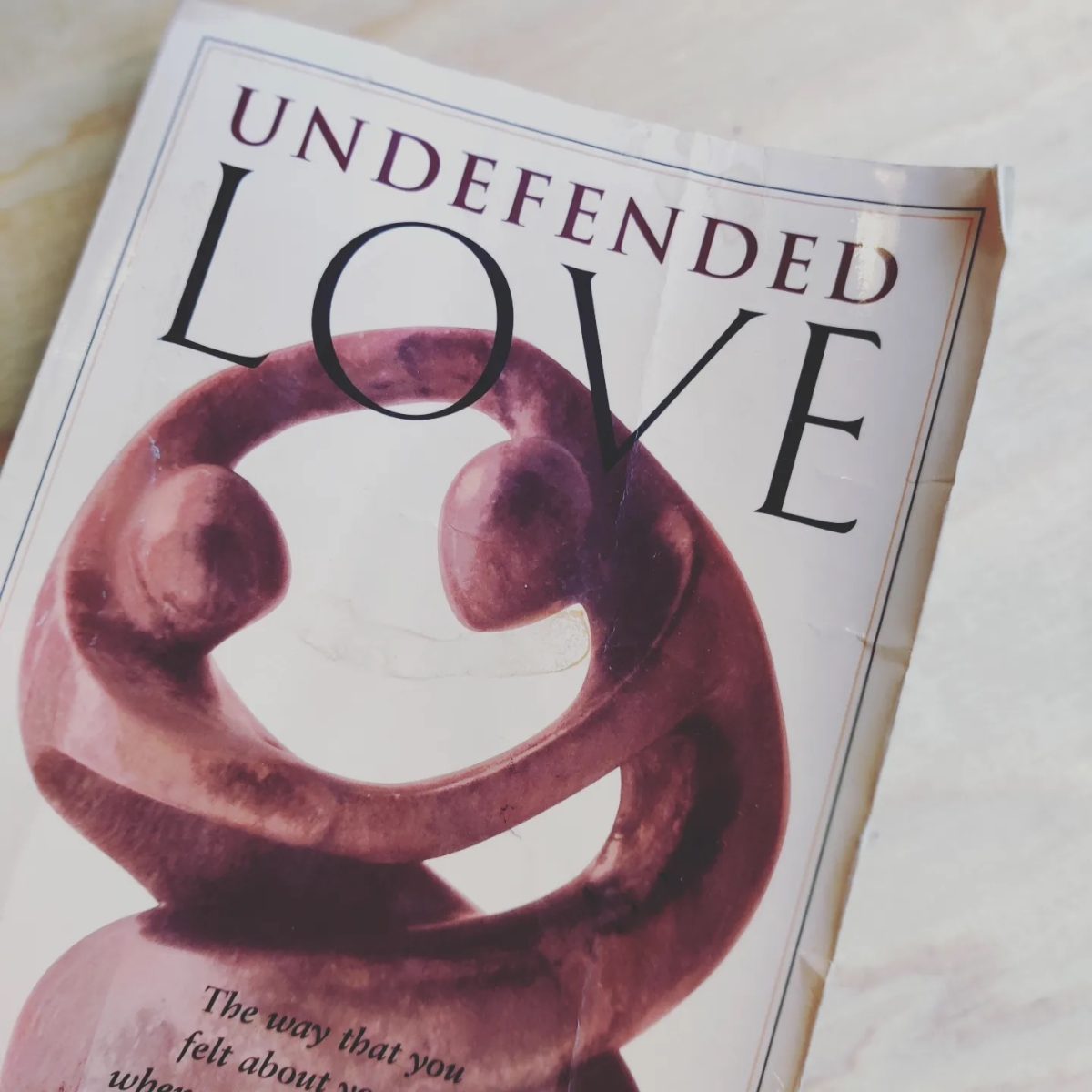
  • Undefended Love: a book that questions everything you were (never) taught about relationships

    Undefended Love: a book that questions everything you were (never) taught about relationships

    Undefended Love. Looks like something you’d find in your divorced auntie’s downstairs toilet. Or wouldn’t look twice at in a charity shop, with that cover.

    YET, wise af!

    Especially when it comes to how you relate to and grow alongside your fellow humans. For me, this book challenges everything we’re (never) taught about love and happiness.

    Here are my ‘best bits’; those pages you fold over at the corners. Instead of stuffing it back on the shelf, I thought I’d share in case anyone’s out there reflecting on relationships, love and how you’re developing as a human. I know I am, after a bumpy summer… p.s. I have NONE of this sussed.

    Before we dive in, here’s a nod to my pal Anya Pearse who recommended this book; the big heart and brain behind https://anhourofkindness.com/

    Here we go…

    Your identity is cracked. Mine too. All of us. You might have heard it called ego or personality – these are defensive strategies to protect us from pain. Ego wants to avoid certain feelings that remind us of unresolved pain (usually from childhood). It has needs, wants, demands, expectations – all to avoid getting hurt (and/or gain pleasure).

    Beneath ego is essential self. This is undefended, raw you. It’s pure and innocent. Some call it soul, essence, true or authentic self, god, love – whatever you like. It’s totally free.

    Ephemeral and wanky enough for you? Because there’s more to come.

    Without realising, we often form relationships from ego. This means we go into relationships where our broken bits meet another person’s. Cue years of wrangling as everyone tries to reconcile competing needs, and NEVER feel any hurt.

    Eeek!
    Counterintuitively, those strategies your ego uses to defend you from pain, bring about exactly what you want to avoid. Baffling, right?

    For example, if your cracked identity thinks people need rescuing, you’re going to be attracted to and attract those who want to be saved (with fragile esteem of their own). Your ego needs to know it’s right, so it affirms itself like this.

    Alas, people can only save themselves, so your need to rescue inevitably goes unsatisfied. Ever worried you’ll never be happy? That you’re better off alone?
    In any relationship (friend, lover, sibling, parent etc.), if our focus is getting something we’re only ever going to end up disappointed. Even if that need or want is temporarily met. Love isn’t a transaction or competition, yet how many of us keep score, or monitor ‘fairness’ in terms of give/get?

    This book is all about connecting more deeply with people, undefended. Our cracked, defensive identity, with its focus on fulfilling wants, will only ever limit how deep we can go. IF we keep believing and identifying with ego (rather than undefended essence, which is inherently ‘whole’ and self-satisfied).

    The best we can ever hope for in this context is closeness. And that’s enough for most people.

    Depressing?

    Perhaps you’re ready to go deeper than closeness…
    We can choose a different way to relate to other people. Rather than getting, wanting or making up for what we lack – we see each other as fellow travellers.

    You and your partners, lovers, friends – whoever they are, are on independent journeys seeking your true self. We do not depend on one another. This is our individual responsibility, as is handling our shit when we’re triggered.

    How’s that for provocative?

    As travelling companions, we help and support one another in rediscovering our true self. Like calling out our bullshit behaviour, spotting ego traps, noticing essential qualities and drawing our attention to it, cheerleading. We deepen and un-defend.

    Sound good?
    According to the book, relationship is a crucible or laboratory for noticing and exploring strong reactions, triggers and all the other stinky junk that emerges when egos knock together.

    When the nasties happen, your attention moves towards to what this tells you about you, rather than the other person. This isn’t self-blame, flagellation or introspection, it’s healthy curiosity about what this situation or lesson might teach you.

    So we go inwards (curiosity, patience, honesty) instead of outward (blame, recrimination, anger). The exception of course is abuse and violence = NOT OK.

    The tricky bit in all this is resisting old habits; contending, attacking, defending, winning. Instead, how might we see conflict and disagreement arising from ego as healthy, non-violent exploration and experiment?
    For undefended intimacy to happen, we need inner resources. Another person can help us develop this through both emotional support and closeness, AND withdrawing support too. We must be OK with the feeling of absence, abandonment and other discomfort. Scary, right?

    Closeness comes and goes though. It is only one stage on the journey towards living more undefended, and ever deepening relationships.

    For example: if you’re having an ego meltdown, the other person might meet you there, not with ego, but with their true undefended self (open, kind, aware). They kind of ‘hold’ you safely until you move back towards essence (calm the fox down). And vice versa.

    Doesn’t that sound all deep and nice and lovely?
    To live and love (and laugh) more undefended, and handle those tricky egos, the book recommends the technique of interrupting.

    This means there’s nothing new we need to learn or do; we don’t need to be different. Only NOT respond how we’d usually respond. Perhaps you’ve heard this called awareness, or noticing yourself notice.

    You can become an internal witness to yourself, observing, rather than getting sucked into the drama of ego. Ever tried mindfulness?
    This last bit stings.

    Only by exposing ourselves to the pain we fear most, over and over again (safely!) can we soften and become undefended. Yet the more we do, the more we realise that the tender bit inside that ego defends (essence) is actually rock solid and unshakeable. It’s pure. Already enough.

    THEORETICALLY.

    All this is easier said than done. It takes a lot of courage to be vulnerable, yet the reward is delicious depth, as you support one another in growth. The book reckons this deepening is limitless. You’ll never get bored of this, or each other. YUM.

    Partners, friends, lovers, relatives may come and go. They’re on their own journey. That feels a bit daunting to me, if you thought love meant depending on other people. My suspicion is that if we learn to trust and depend on our inner, essential self, those (undefended) times when we’re supporting others (and being supported) will become all the more sweeter and deeper.

    Much as I’d like to get this sorted yesterday, becoming undefended sounds like a life’s work. We can’t let go of ego and rediscover our true self overnight. Ego isn’t ‘bad’ or ‘wrong’ – it got you this far, after all. I took the book to be inviting us to explore a healthier way of relating, one you already have capacity for, in there, somewhere.

    So perhaps the first challenge is meeting you where you are now? How curious are you to let your true self have a say in running the show, instead?

    Hope that was helpful. Reckon it’s worth buying and reading? Did you even get this far?

    Drop a comment below x

    Undefended Love on Good Reads

  • 20 things dragging me through this living nightmare that is midlife

    20 things dragging me through this living nightmare that is midlife

    1. Treats: 70% dark choc cocoa and above, I’m told the chemistry helps low mood, so it’s medicinal AND a treat.
    2. Connection: talking to like-minded friends old and new, being challenged, relating similar experiences, but simple eye contact and smiles with strangers helps too.
    3. Movement: exercise, walking and qi kung to get the body circulating, guarding against stagnation.
    4. Voices: Richard Herring and I have spent some long dark nights together; letting people’s laughter and funny nonsense wash over me was a welcome distraction in those long dark nights of the soul. 
    5. Escapism: trashy sci-fi novels, journeying into my imagination means less space to worry and overanalyse (when I need a break from the feels).
    6. Melody: like a teenage dirtbag, lyrics have special significance, music moves me, skirting songs I daren’t hear.
    7. Meat-petting: respecting the state of my fragile nervous system, trusting its signals, proving I’m safe and present.
    8. Feeling the feels: having a good cry/rant, welcoming emotions, noticing the porosity and contradiction, being affected when capacity allows.
    9. Acceptance: going with what is, letting go, noticing things pass, all without approval.
    10. Be.Do.Have: my trusty model for cycles of behaviour/motivation, following myself rather than forcing or resisting.
    11. Improv principles: spontaneity, feeling affected, going big, presence, listening, accepting help from others – it’s a way of life.
    12. Self-love: contemplating love and giving myself that (emotional and practical), learning to date me; checking-in, appreciating, affection.
    13. Art: creating things and doing with DIY, solving problems in moderation to restore agency.
    14. Journaling: offloading what’s clogging up my focus with gratitude and morning pages.
    15. Bodily desire: noticing signals for food, rest, entertainment, chatter, in the moment, trusting this sack of meat that’s really quite good at keeping me alive.
    16. Presence: mindfully noticing and labelling things on dog walks, then not at all, just witnessing them appear without judgement helps clear the mind; dog, tree, cloud, sick.
    17. Theatre: TV drama like Ozark for people having a shitter time than I am, yet still coping, doing their best in their very human, nuanced way.
    18. Laughter: a perverse antidote to anger I’ve discovered, somewhere for the tension and energy to go, instead of cramp. Like mini-eruptions at the comic, futile ridiculousness of existence.
    19. Arranging: temporary fixtures in life, my home life-raft, social events to look forward to with friends, adventures and journeys.
    20. Relaxation: pampering, spa day warmth and womb-like withdrawal and regrouping, if only for a short while.

    Disclaimer: none of these are substitutes for intervention by trained mental health practitioners. If you are struggling with your mental health, please tell someone – talk to a medical professional, a loved one or seek help from an organisation like Mind (UK) or The Samaritans.

  • When you feel neutral, unsure or just ’meh’ about life

    When you feel neutral, unsure or just ’meh’ about life

    We’ve a curious relationship with emotions. At least in the post-industrial, productivity obsessed rat-race we call the developed world. 

    It’s as if they’re an affliction. A mild inconvenience. Vague, distracting – emotions are to be endured, yet largely suppressed. Like trapped wind or a hang-nail.

    I don’t know about you, but darker parts of me judge folk who go overboard on emotion – as irrational, false, volatile, gushing or oversharing.

    There’s something about all this emotional stuff scares me a bit too. They can escalate without warning. Choice and control rarely come into it. They can mug us off.

    How about you?

    Perhaps it’s for these reasons that some of us feel neutral or nothing in particular a lot of the time, when it comes to matters of the heart.

    I see this often when I coach people navigating midlife – it’s difficult to explore how we really feel or what that even means.

    Feeling the feels

    Neglecting our emotional inner world seems like a loss to me. A missed opportunity that I’ve lamented acutely through adulthood.

    For a while, I experimented with what I called ‘emotional literacy’ – like there was a language I wasn’t very good at speaking. Then I coined a new term: ‘emotional fluency’ – like there was some way to get good at my emotional experiments. 

    I read books on compassion and scrutinised emotion word-clouds to grasp their mechanics. I listened to sad songs to make me cry – to see what it felt like. 

    None of this really helped. 

    I still felt unmoved, much of the time. Just neutral. Not uncaring. Just ‘meh.’ Yet something inside, I suspected, was perpetually errant, lacking or wrong. 

    Meet apathy

    Apathy, it turns out, is an emotion too. Hooray! I thought. I’m human after all. I feel something (even if it’s nothing). That’s progress, right? 

    I discovered that apathy is a kind of emotional constipation. A sort of muted, dulled aliveness that’s probably designed to protect us from feeling those inconvenient (dreaded?) feels.

    For whatever reason – trauma, schooling, people like us learned restraint, towards baser emotional impulses like anger, fear and shame. So they don’t get a chance to emerge, more fully expressed. Instead they remain awkward and uncomfortable feelings our egos would rather avoid. 

    Yet if you cancel one emotion, you cancel them all. Hence this universal ‘meh’ feeling people like us can experience, about most things in life (even stuff that OUGHT to move us).

    We’re not broken. What if we just got stuck?

    Our meaty bone sacks are built for safety rather than happiness, apparently. Which means our neutral feeling is a sort of safety from pain, which makes perfect sense, from an evolutionary perspective.

    What helped me shift beyond neutral/meh is the premise that you and I, all of us, have an innate emotional life. Sometimes though, we just fall out of practice. Our emotional muscles can atrophy a bit, for want of a good stretch. 

    All this is very human, by the way.

    This is where things get edgy 

    If you follow my Instagram, you might have seen some gingerly shared stories from the front-line of a harrowing marital separation I recently survived. 

    Well, this particular big change shook me out of feeling neutral, or nothing in particular.

    I’m not advocating anyone puts a thermonuclear bomb under their life, as a speedy route to feeling more feels. However, what I am curious about is how change – especially the profound, painful and disruptive sort – can rapidly transform our emotional experience of life.

    When the heart breaks, it breaks open

    Humans respond and adapt REALLY FUCKING WELL to new, uncertain situations. I say that feeling both delighted surprise, and extra side-surprise that this still surprises me.

    When big change comes (expected or otherwise), when we move towards what’s deeply comfortable, it’s like we wake up. All our systems come back online, including the heart. 

    Like a reboot.

    Since things blew (fell?) apart in life, my spectrum of emotions broadened. Here, have some learns:

    • We fear feelings not things: imagine the thing you fear most happens; your response – that’s what we’re really scared of, feeling that pain, rather than the thing itself having happened.
    • Your literacy/fluency is innate: maybe there’s nothing to learn here, only deepen your understanding of. What if all emotions are already waiting in the wings for a cue? 
    • Emotions are signals: we got ‘em for a reason, so what if it was just another sort of intelligence, an extra advisor or source counsel, like your trusty creativity or analysis? As opposed to a true story…
    • They are gassy: one emotion bleeds into another, often at the same time, even opposing ones. Like a buffet of mixed farts. No one tells us this. Maybe that’s what’s so tricky and shifts us to neutral?
    • Labelling isn’t much help: sad, mad, glad, bad… What do you need more or less of? What is this sensation pulling you towards or pushing you away from?
    • They come in waves: by degrees rather than simply full on or off. The only way out is through – sure they knock us over, but it’s just like paddling in choppy water, you can ride it out until the storm passes.
    • Feelings change and always pass: no matter how awful, they will relent and mutate into something else, even disappear, they are never forever. When was the last time you felt different to now? See.

    This is a lifetime’s work

    I’ve realised there’s no such thing as ‘getting better’ or ‘doing it right’ when it comes to emotional stuff. The templates we need to navigate life are already in there. And feeling neutral or nothing in particular, like we do from time-to-time, is just another kind of emotional experience.

    You got this far – may I presume you’re inquisitive, wary even, of what’s going on beneath your surface? 

    Perhaps you too feel frustrated, wary or confused too (also emotions!). Like neutral-ness is wrong or bad in some way. Like there should be more, or you’re impatient to discover some message wrapped up in all of this, but you don’t know what. 

    Big change in some facet of your life, like the kind that’s catalysed my experience, might not be for you. But I suspect that if you sense change is coming, or you’ve a hunger for it, or even if it mugs you by surprise – that might be one way to explore your emotional curiosity, and experiment with what it is to be human. 8

    Did this article land with you?

  • 20 questions to ask when organising your time

    20 questions to ask when organising your time

    A handy list to accompany my recent audio blog about getting round to what matters, joyfully – beyond simple productivity. The idea is you ask yourself these, to help you decide what really matters.

    I use variations of these when I think/feel/sense my way through my week ahead, figuring out what needs to be done, and where to focus my dwindling energy/f*cks.

    1. What do I really care about?
    2. Where am I needed, right now?
    3. How do others fit into all this?
    4. Where am I in the midst of cycles or repeating patterns?
    5. Where’s the fun, joy, play?
    6. What feels right?
    7. How have I checked in with my head, heart and body about this?
    8. What’s on my mind? Where’s my mood today?
    9. What scope is there here for getting things wrong?
    10. What’s expected of me? What do I expect of myself?
    11. How do I feel about doing this, over this?
    12. Where’s the self-care in all this?
    13. What’s the story I’m telling myself?
    14. What would shift my mood/state, right here and now?
    15. What am I saying “no” to, if I say “yes” to this?
    16. What does “letting go” mean?
    17. What will not get done, regardless?
    18. What’s the least I can do, to make the biggest difference?
    19. What would I rather be doing?
    20. What other questions do I want to ask myself?
  • What to expect from a coaching session

    What to expect from a coaching session

    Here’s a guide for newcomers to coaching with me. Let’s assume you’ve attempted these provocations, and that led to us scheduling a proper coaching session together.

    What happens?

    Coaching is a particular kind of conversation or interaction between two people. The main difference is there’s more context or intention to it – we’ll get clearer about the what, how and why of it all. It’s more focused, deliberate and often more powerful for effecting change because of it.

    If you’re open to it, we can go deeper than usual – with curiosity, compassion, and challenge – whatever works for you.

    You’ll notice I mainly ask questions, ones that follow on from whatever you present. I reflect back a lot too. Everything is underpinned by proven models and techniques I’ve learned as a qualified coach. 

    Basically, you’re in safe hands, in a safe place. 

    With this being your first session, we might ask: What do you need? And how might coaching work for you and your situation?

    No one’s getting assessed or marked. And there’s no such thing as a right or wrong answer. Everything’s upfront and transparent – I want you to fully experience what coaching is like with me, and how that lands with you.

    For now, we’re exploring whether there’s chemistry, and a ‘good fit’ for both of us. How might we create something together?

    Who decides what we talk about? 

    The content is all about what’s alive for you. You’re the hero. I facilitate or guide the session, in service of what you bring.

    With your permission, I’ll gently lead you towards what you say is important, or what seems to be emerging as important. To that end, I’ll occasionally use my coaching radar to sense what’s going unsaid or unquestioned.

    Topic-wise, we might explore a particular problem, your thoughts and feelings, consider different options, or build new systems or behaviours through experiments. You might decide what action you want to take, what’s in the way, and what support you need through that. 

    Coaching often means committing to do meaningful stuff outside of sessions, then reflecting on and learning from how it went (or didn’t).

    If this initial coaching session works for us both, we can talk about what extra support you’d like, when and how – that could be a coaching programme, something one-off, or entirely new all together; designed by us.

    What does coaching feel like?

    Clients come away from sessions feeling inspired, moved, playful, gentle, reflective and curious.

    Coaching makes what’s difficult more do-able. And leads to breakthroughs on fronts you’ve battled with, perhaps alone, for years. Some you might not even be aware of yet.

    Coaching turns ideas into real-life, grubby-fingered projects, decisions and change. Always on your terms.

    It’s not about mind-tricks or quick-fixes. I think you’ve already got what it takes to get where you want to be. And it’s my job to help you recapture that, by surprising yourself and tapping into your natural brilliance.

    What else might happen?

    If appropriate, we’ll get out of our heads. That means movement or physical interaction (with your consent). I’m a certified embodiment and physical intelligence coach, with a few of tricks to help you feel freer, more creative, more vital, stronger and less affected by stress.

    We can work with your inner state and ‘how’ you are in the world – revealing patterns of behaviour, and how your body is influenced by (and can influence) the world around you.

    Coaching isn’t all talking. Emotion, intuition, our bodies and sensory experience all have their place. I might offer a curious activity or experiment in the heat of the moment, to shift perspectives or loosen things up.

    I’ll always seek your permission, and frequently check-in with how a session is going for you. We can always adjust in-flight.

    How does this compare to counselling or therapy?

    There are similarities. Coaching is rooted in the same time-tested psychotherapeutic and philosophical traditions, so a counsellor or therapist might recognise the techniques I use.

    That said, coaching focuses more on your future, rather than your past. We’re less fixated on re-telling old stories, more your relationship with them. As well as your capacity for agency, awareness and choice. 

    For your peace of mind: I’m trained to respect ethical boundaries, like whether coaching is or isn’t an appropriate, safe intervention. 

    I’m accredited and insured too, so again – you’re in safe hands.

    What advice will you get?

    I believe you have a natural capacity for learning, growth and creativity to overcome challenges. So as a coach, I’ll always encourage you to trust yourself as an advisor first.

    That said, I will occasionally offer my experience and opinions if you’re open to them.

    If it’s lasting results you want, all decisions and actions must be yours (rather than mine). I don’t have any ‘right’ answers, but I can coach you into discovering your own.

    How can you prepare?

    Deciding to go ahead, and dedicate yourself to coaching is enough. That’s an enormous act of bravery and self-respect – so well done already!

    To get even more out of your coaching session there are a few practical steps you might like to take:

    • Find somewhere quiet where you won’t be disturbed or interrupted (sessions usually last two hours).
    • Connect to a reliable internet connection; a decent mic and headphones will help.
    • Afterwards, solitude might help – like a quiet walk or a mindless task while things percolate mentally.

    If you really want to prepare, consider what’s alive for you – what’s going on, any recent challenges or experiences that impacted you (though I will often begin with a question like this anyway). Your notes or other prompts for discussion are welcome.

    If you only remember one thing: I invite you to stay open and playful, ready to surprise yourself. This simple outlook helps my kind of people get the most out of a coaching session. 

    Now, on to the fun bit…