Category: Strategies

  • When it hurts to keep going, yet hurts more to stop

    When it hurts to keep going, yet hurts more to stop

    How are you with downtime? Do you stare listlessly into space? Doom scroll on social media? Or just give up and get on with doing something, anything else other than nothing?

    After a decade of learning the hard way, I’m much better these days at easing off on perpetually getting things done. 

    Yet that urge to progress and make things happen still hijacks me.

    Like last month.

    I’ve been distracting myself with DIY again (what’s your poison?). An endless succession of tasks that breed exponentially, the more you do. You’d think I learnt my lesson after a sapping three year basement renovation.

    I tell myself I’m prepping my house for a lodger – which is true, and fair enough.

    We have responsibilities and obligations, right?

    Stuff must get done.

    And when that’s the case – we’re the people for it

    Deep down though, I’ve noticed people like us (when we reach a certain stage in life) intuitively begin to notice ‘something’s up’ when we’re overly-focused on being productive, and can’t (or won’t) slow down, sit still or stop.

    We just have this sense that something’s not right, or off.

    A malaise creeps in. Maybe new sensations concern you.

    Perhaps you’ve noticed feelings of sadness, shame, anxiousness, emptiness or yearning? Maybe even loneliness or overwhelm, that linger. Sometimes there’s fatigue too. 

    You become aware of things lurking in the shadows, even when you’re busy.

    I’ve also noticed that few of us ever dare remain inactive long enough (aside from sleep!) to find out what’s really going on with those undesirable feelings.

    So – self-selected living experiment that I am, I did. 

    Here’s what happened…

    What I’m about to share is hope

    Because I survived and found riches there, which I offer here now.

    Using a few tricks from my trusty coaching toolbox, I went into the melancholy, the aloneness, the frustration that every part of me wanted to avoid – by keeping moving.

    I made a pact with myself, to gently decelerate and come to a stop.

    At first old habits resisted – fidgeting and restless legs, My mind scanning the room for stuff to fix or improve. It wanted easy dopamine hits from food or my phone. 

    I welcomed it, and kept my word to stay put.

    I thought of you, actually

    Soon, in stopping, I noticed panic. Some part of me didn’t know what to do with itself. Again, I held the line, uncomfortable as it was.

    Not long after, I breached my inner sanctum – the imperial guard of overburdened doers: worthlessness, loathing even. A subtle yet persistent feeling of hopelessness, abandonment – with sad aching panic.

    This is why we keep going and why it’s so tricky to just stop and be: we must DO to stay safe, some part of us says. This part wants to protect us from feeling these painful emotions.

    Later, things got really fruity

    I do parts work – a kind of inner improvised dialogue with emotions and sensations in the body. You get curious about an urge or feeling to discover what it needs. The aim is to learn from and soothe it.

    Inside, I met a youngster, alone and unsupported, flushed, stressed, trying its best to superhumanly get everything done.

    Yet without its endless to-do list, a rot set in. 

    But I can’t let people down! What a waste of time! If I don’t get stuff done, who will?

    Dark stuff. Yet golden insight nonetheless.

    This youngster wondered where the adults were, to ease the burden of expectation. All it wanted was fun, playmates and connection – to enjoy life, to be in the here-and-now, and feel love and appreciation. 

    Like we all know we deserve.

    Inside emotion is rich, useful raw data about what you really need

    Like what drives all your relentless doing, yet cheats you out of fulfilment. And how you might find contentment, in addition to (yet perhaps beyond) getting things done ALL THE TIME.

    It’s what inspired me to share this experience in hope of finding like-hearted souls – fellow travellers I can help with insight like this.

    Wouldn’t you like to know what’s really up, why perpetual productivity isn’t quite as satisfying as it used to be? And why the old ways of coping don’t seem to work anymore.

    There are countless ways to do what I describe above and overcome what you’re up against. Mindfulness, therapy, coaching, self-inquiry to name a handful. 

    Over on my podcast you’ll find a guided walkthrough of the technique I described above. I hope it helps you.

  • 20 questions to ask when organising your time

    20 questions to ask when organising your time

    A handy list to accompany my recent audio blog about getting round to what matters, joyfully – beyond simple productivity. The idea is you ask yourself these, to help you decide what really matters.

    I use variations of these when I think/feel/sense my way through my week ahead, figuring out what needs to be done, and where to focus my dwindling energy/f*cks.

    1. What do I really care about?
    2. Where am I needed, right now?
    3. How do others fit into all this?
    4. Where am I in the midst of cycles or repeating patterns?
    5. Where’s the fun, joy, play?
    6. What feels right?
    7. How have I checked in with my head, heart and body about this?
    8. What’s on my mind? Where’s my mood today?
    9. What scope is there here for getting things wrong?
    10. What’s expected of me? What do I expect of myself?
    11. How do I feel about doing this, over this?
    12. Where’s the self-care in all this?
    13. What’s the story I’m telling myself?
    14. What would shift my mood/state, right here and now?
    15. What am I saying “no” to, if I say “yes” to this?
    16. What does “letting go” mean?
    17. What will not get done, regardless?
    18. What’s the least I can do, to make the biggest difference?
    19. What would I rather be doing?
    20. What other questions do I want to ask myself?
  • Natty trick for people who think their way through life

    Natty trick for people who think their way through life

    Here’s an intriguing technique if you’d like extra insight on what to do, what you really want, or how you really feel about things.

    It’s called focusing. And it’s kind of like meditation for people who principally think their way through life, rather than feel or intuit.

    Perhaps most of us fall into that first group. It’s the way we’re taught to deal with problems at school. To think with our heads. To act like serious, logical professionals and grown-ups. Rather than weak, irrational and impulsive chancers.

    Yet in neglecting the heart, gut or body, what if we’re losing out on valuable sensory information – intelligence, outside of our heads?

    Theoretically

    According to psychologist and philosopher Eugene Gendlin, there’s experience and wisdom in our bodies that can emerge as sensations and feelings, if you listen for it. 

    Ever got a funny feeling about being somewhere (or something or someone) that you just can’t place? When you think about a big upcoming event, do you feel butterflies in your stomach, or restless – like you want to run?

    Here’s a story for you

    25 years ago, I learned to drive. I used to get out of the car sweating, cramped up and stressed out. Now, whenever something is troubling me, those same muscles in my back and hips (psoas) tighten. I take that as a signal something needs attention, or I’m neglecting something.

    Focusing is listening for signals like that.

    It helps us sense what’s going on inside. And we do it by giving ourselves space to scan and tune into signals we might otherwise have missed or ignored in the body. 

    If you only remember one thing…

    It helps to not analyse or overthink this. But that’s (hopefully) one reason that led you here. To try something new and different, to escape old habits of staying in the head. 

    So the tip is to just sit with things as they are, like an open-minded experiment, and be curious about whatever sensations emerge in your body.

    It’s OK if it takes a while. Be silent if you need to. Take your time. Feel what’s going on in your body, instead of your head. You’re naturally curious anyway – you’re human. So there’s very little effort required here. Just feel the feelz.. 

    A focusing routine for you to play with

    I’ve tried to write the steps or script below as if I’m there with you. Support from a fellow human is always nice, and seems to make focusing a whole lot more enjoyable and meaningful. But I’m probably somewhere else now, getting all tangled up in my head. Or hip. 

    So you’ll have to make do with my endearing style of writing about it.

    Try focusing for 5 minutes if you’re new to this practice, experimenting alone. I usually do about 15-20 minutes when I’m working with someone in a guided session, reflecting back what comes up – it’s just nicer and more supportive. If you’d like to try that, drop me a line.

    One last thing… 

    Like with meditation, it takes a while to get used to all this sitting still and being completely present, in-the-moment. Give up if you need to fart or run away from the demons.

    Here’s one way to practice focusing

    1. Are you comfortable? Sit, stand or lie somewhere safe, ideally where you won’t be disturbed. Set a timer if you like – one without a blaring klaxon.
    2. Breathe in. Imagine drawing air from all around you, from your hands and feet, into the shoulders and hips, and towards the centre of your body. Then breathing out, imagine the air moving back out from the centre of your body, to the shoulders and hips, then out of the hands and feet again. Do this a couple of times, finishing at the centre of your body, then breathe normally. Feel yourself relaxing or settling into where you are. Now close your eyes if you want to.
    3. Clear a space: ask yourself how’s life going? What’s the main thing for me right now? No doubt you’ve got lots of different concerns on your mind. So the invitation is to give the mind a break by just seeing how you feel overall about these concerns. It’s kind of like zooming out on a family photo – the overall feeling you get from it, rather than zooming in on a pesky individual relative, or what a car crash that wedding was the day it was shot. Spend a little while being there with all your problems, questions, issues and challenges (I’ll call these ‘concerns’ from now on) and how they make you feel.
    4. What would you like to focus on? Amongst everything that comes up, choose a single, pressing concern. Stay zoomed out, feel what that single thing is all about – the whole thing. Unclear is normal. Feelings are fuzzy, after all.
    5. What are the qualities of that feeling?: Sit with how you feel about that concern. See what it’s like in your body, how do you react. Scan for sensations like warmth, relaxation, pain, urges to move.
    6. What word/image/phrase pops up? For example: tight, heavy, stuck? Or a hanky on the breeze, a cat in a tree? Or “run, run like hell,” or a line from a song. Anything goes. Random stuff like this pops up all the time, when you think about it.
    7. See how it fits: now go back and forth between the felt-sense of your chosen concern and the word/phrase/image. Does it feel appropriate? Does anything change while you compare them? Spend a while doing that.
    8. Ask what makes this problem feel so [whatever your word/image/phrase was]? Notice what happens in the body, any new sensations (like a twitch, ache, tingle). If it does (optional), check the new sensation against the word/image/phrase and see how one affects the other. This happens the more we tune into the body and get used to this weird focusing thing.
    9. Welcome: whatever happens, the invitation is to just welcome it. Whether it’s unclear or unresolved, pleasant or nasty, or even if that whole experience left you a bit bemused – just be welcoming. Thank yourself for taking time to try something new, and giving yourself some space.
    10. Come back to life. Open your eyes. Stretch, breathe, move. Return to thankless chaos.

    How did that go? What did you find?

    I was a bit dubious when I first began. It all feels a bit pseudo-scientific. Like we should be balancing our chakras with spirit. Not that there’s anything wrong with that. I just don’t usually operate in that realm. 

    Perhaps that’s why thinkers like us are drawn to it though?

    At first not much seems to happen with focusing. That’s OK. Give it time. This is practice after all. It gets deeper as you get acquainted with your bits and pieces again.

    Why keep up with focusing?

    I don’t know about you, but looking back on life so far, whenever I made up my mind about something, I realise much of that started in my belly. I had a bodily, gut feeling; a sense-like intuition. 

    And you know what, when I acted on that, good stuff usually followed.

    It was only after the gut-feeling signal that my head rationalised it. It’s like I had to think it through and justify the felt-sense before I acted. 

    Where do you get feelings like that? In the chest? Heart? Brain? Ass?

    Given that example, I suppose I’m curious to cut out the middleman. And see if I can get clearer insight from my body too, as well as my head, and hopefully my cold, dead heart one day.

    Maybe it’s worth persevering because what we’re really onto here is an extra, untapped tool (the body). And it has something useful to lend to all those decisions and actions you take everyday. Chances are you already do this, at some level, and focusing simply raises your awareness a bit.

    Just in case you think I’ve totally lost it, here’s some edgy research that says we’d all do well to listen to our bodies as much as we listen to our heads.

    Also: if my guidance above didn’t work for you, try these videos from the International Focusing Institute.

  • Games for achievers to play

    Games for achievers to play

    I’ve been shamelessly appropriating some games for folk like us. Little prompts to help us come up for air, from the day-to-day mire.

    So here are some provocations to get us out of our heads (and way)

    I hope they shake-up old habits. And get you thinking, or feeling – as the case may be.

    The invitation here is to give these games the benefit of the doubt. It’s OK to prejudge expectations of what might happen, but be ready to surprise yourself…

    How about some curious fun then?

    Let me know how you found these.

    Credit to some dusty little coaching books bought sustainably from World of Books.

    1. Try being brutally honest 

    The invitation is to wear your heart on your sleeve, when someone asks you a question one-to-one, or when there’s an opportunity to speak-up in a group. Jump in, respectfully, then tell it like it is, for you.

    This is more than just saying what’s on your mind. It’s about being forthcoming with what you really think or feel, in the moment.

    Yep, it might be unsettling. Disruption is progress though, of sorts.

    Sometimes there’s a temptation to shape what we want to say, to fit the situation, either de-emphasising the positive or negative. So try being candid instead. Imperfect and clumsy as it is. 

    Notice reactions in the short-term (yak!), but also see if anything changes long-term (oooh!).

    Remember that honesty isn’t the same as being obtuse and contrary, Chris.

    2. Try humility

    Hang out with people who have different standards, or different definitions of success than you. No judgement here. Just set yourself the task of figuring out what’s special or unique about them, besides what they accomplish. Get curious about what constitutes enough/perfect/complete, or other subjective standards. 

    If you’re feeling fruity, maybe hunt for evidence that humans are awesome regardless of what we do, make or achieve.

    I played this game at length with my wife when we tiled the bathroom floor. Miraculously, we are still together.

    3. Try shifting focus

    Next time you’re in conversation with someone, see how deftly you can flip who’s the focus of the dialogue. 

    If you tend to get excitable and talk about your own agenda, refocus on the other person and ask questions with genuine warmth and curiosity about their world. 

    If you often come away from conversations feeling unheard or unsure, try the opposite. Like 1, above, offering vulnerability and honesty about your world usually brings people closer.

    If you’re somewhere between these, sack this one off. You’re already capable of holding a functional human conversation. Ignore me.

    I’m well aware it can feel dirty when the spotlight is on you in a conversation. I track the ratio of conversational balance obsessively. One trick is to assume the other person is genuinely concerned or interested, and that gifting your story is an act of kindness.

    4. Try telling ALL

    This one might feel excruciating. 

    Next time you’re recounting an event or telling a story, make it as much about how you felt, as the events you describe. Label the emotions.

    So, for example, each time you make a statement of fact (e.g. “I checked everything off my to-do-list”) append a reflection on your feelings (“Yet I still feel hollow and dead inside.”).

    5. Try deepening when upset (or happy)

    When you feel moved, be curious about what’s behind your reaction. If someone frustrates you, what’s the situation teaching you about yourself? If you’re excited, how would life be different if you gave yourself more of this?

    The object here is to tune into that inner world we all have, and wonder whether it tells us anything. Feelings and sensations in the body can be signals; think of it like extra information to help you take better decisions and actions.

    Focusing (a kind of meditative practice) can really help with deepening your feelings. The method suggests we consider a problem or concern, then feel our way through the sensations that surround it. With practice, words and images can randomly come to mind, and deeper feelings that tell us something about what really matters, or how to tackle the problem. It’s basically asking yourself what you really need, then feeling your way through to an answer.

    6. Try something for something’s sake

    A creative hobby that’s enjoyable in and of itself (regardless of the outcome) isn’t just a splendid way to while away the hours. It reminds you that there’s joy in the doing, as much as in the finishing.

    So the challenge is to do something and to hell with the consequences. Do it for fun. It’s kind of related to number 2, but on your own.

    If you’re lucky enough to already have an outlet that creates stuff that’s ‘good enough’ – congratulations. You have ready-made spiritual medicine in your cabinet.

    For 6, I like to make strange sonic soundscapes on my electric guitar in the eves of a darkened room. Odd, stereotype of a lonely middle-aged man that I am.

    7. Try staring at strangers

    OK, maybe don’t stare. But go somewhere public and just people watch. Try to guess what’s on their mind and what they’re feeling, based on clues like their outward expressions, voice and gestures. 

    If you’re feeling fruity (again), play with empathy. See if you can sense what it’s like to live like that, to feel their feelz. For bonus points, if you’re zesty a f, what would happen if you approached them?

    I’m keen to say be mindful of judgement again. But it’s a real temptation to switch off from your own shit life and live out someone else’s as a kind of escapism. We’ve all done it. 

    Did you enjoy playing today?

    Tell me. I’m GENUINELY interested. And thankful you read this.

  • The cost of overpreparing and the price of presence

    The cost of overpreparing and the price of presence

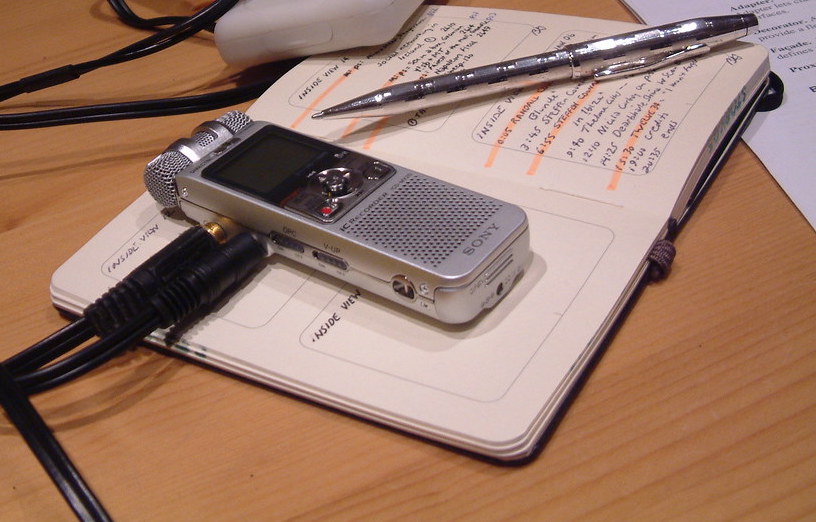
    That’s odd, I thought staring at my trusty dictaphone. I didn’t know it had a light. A flashing red one too.

    Odd. I could’ve sworn I hit record when interviewing my client’s client for this juicy story of triumph over adversity.

    Why aren’t there any audio files after three months ago…?

    Shit. This isn’t good. Where’s my magnificent latest interview? The one I really, really need to write up for my client.

    Cue terror. 

    Like a trap door to the guts. Like travelling over a humped bridge at speed. Or a shit rollercoaster. 

    I feel the earth fall away beneath me. 

    One horrible day in the life of an over-preparer

    When life went according to plan, in a former life as a case study copywriter guy, I’d sketch out a mindmap of topics to ask about, mic up my phone, then capture some bigwig CEO/MD of a faceless corporation’s tall tale of endeavour. 

    I’d listen, interrogate, and focus entirely on the conversation, safe in the knowledge that my trusty recording apparatus had my back. 

    When it didn’t, well, as you can see: my arse dropped out.

    The origin of presence

    In the before-times, long before treacherous recorders, I’d jot notes in hybrid shorthand, frantically trying to keep pace with whatever revelations my interviewee divulged. Yet I soon found my attention drawn disproportionately to keeping a meaningful record of the interview, at the expense of actually holding one. 

    Thus I came to value the notion of presence: actually being there in the moment with someone, listening for vocal cues, and crafting questions on the fly. This made for far more engaging written articles, based on a livelier, more human interview. 

    Both my interviewee and I enjoyed the experience more too. I could provoke and tempt emotions out of people (usually men) who made a living from repressing them in the face of challenges.

    For the bargain price of just 40 quid, my trusty dictaphone bought me presence. 

    And I don’t use the word trusty lightly either. 

    I did invest trust in it. It set me free to be a bit more me.

    Then came the fateful time my dictaphone zombified

    The tiny electronic charlatan said it was recording, when really it wasn’t. Worse still, it’d kept up this pretence for months without me knowing. 

    Without any notes I’d lost the bones of a story. Stories.

    I’d have to do the interview(s) all over again in a vain attempt to recapture that lost magic. 

    Unprofessional. Incompetent. And other value judgements ensued.

    The extent of hyper-preparation 

    You’ll be relieved to hear all was not lost. 

    Because some of us, those of you who think like me, are so hard-coded for failure as an inevitability, we build contingencies for our contingencies. Even with a dictaphone, it turns out I’d still hit record on my smartphone’s voice recorder app. 

    Almost habitually, unknowingly. 

    It was genuinely a surprise to discover that.

    Makes you wonder, doesn’t it? Did I ever really trust myself? Was I ever really, fully present at the time of recording, if my mind was on contingency and preparation? 

    You could chase that thought even further. With multiple layers of protection like this, you have to wonder what are we really protecting ourselves from? 

    Something tells me it’s to do with exposure and vulnerability – being revealed as a less-than-perfect human being, and handling the emotional fallout of, eurgh, failure.

    And what would the real cost of failure be? The temporary discomfort of re-recording an interview? A shame-faced admission to a client, who in all likelihood would’ve felt my pain. 

    Who knows.

    Preparation – a way of life?

    So there it was. Crackly mono, compressed and whispery, but I had a backup of my backup. The interview was saved. I could work with crap. Crap is better than no crap.

    Now, you might think the moral of the story is preparation pays. “Fail to prepare, prepare to fail” goes the wanky business idiom.

    I wish it were that simple.

    It isn’t.

    Preparation runs deeper than that, I suspect. It’s a way of life. It sets a precedent, an expectation, an intention to be hesitant, cautious and restrained. A subtle anxiety, that nibbles away at presence, playfulness and flow state – all crucial ingredients for a delightful conversation or interview. 

    Or anything joyful and creative too, I suspect.

    I wonder. Is there a link between presence, preparation and that kind of authentic, vulnerable state we need to be in to get the best out of ourselves, and the people we’re with?

    Could preparation be fear of vulnerability, and presence a way to embrace it?

    Let me tell you one last story about preparation

    Recently, I’ve been recording a series of interviews with intriguing people, all about their personal philosophies and how they relate to uncertainty, the future and change. I call it the pessimist’s guide to a hopeful future (episodes launch in April 2021, probably).

    Despite recording each conversation with every available instrument I have (zoom, dictaphone, smartphone, wax cylinder, mynah bird etc.), the preparer in me still worries about losing something – be it the recording, some wisdom, magic, or a perfect question.

    The preparer in me is an inveterate note-taker too. I frantically scribble things down, just in case I forget. Never trust your memory or yourself. It’s another expectation or intention, which on occasion almost encourages my mind to let slip the thread of conversation.

    Could it be that preparedness, a kind of control, is at war with presence? Presence says let go of control and sit with things as they are. Preparedness says keep checking for a red light.

    We’re approaching the wisdom bit

    When gatherings were a thing, my friends at Glug Leeds had me over to talk about being a freelancer in the creative industry. That copywriter thing again. I’ve spoken at a few of their events, always heavily scripting and rehearsing myself, for all but one.

    Here’s the interesting thing – my most recent, least scripted talk felt funnier, freer, and more meaningful (at least to me).

    Now I’m not saying preparation is bad or good either way, or how much is appropriate. I suppose the subtext here is perhaps it can get the better of us, at the expense of presence?

    Is there such a thing as being over-present?

    Presence feels like a more fun way to do things, but that alone at the exclusion of doing your homework (preparation) can come at a cost too. It can make you look like an amateur, like you don’t take something seriously. It’d never have washed with those CEOs and MDs I used to interview.

    On one memorable occasion I deliberately did little preparation (as an experiment) for an open-mic stand-up comedy gig, and got to a point of such supreme not-giving-a-fuckness that I recall getting up on stage and completely losing it, muttering “so… grandad died” on a loop, unable to recall any of my routines about coal mining and masculinity. 

    The audience yelled encouragement and felt my pain, but it was too late. I’d already transcended corporeal form, floating several feet above I witnessed myself dying on stage.

    I was acutely present, kind of, yet it felt dissociative, like a bad trip.

    Questions for preppers

    I don’t have the answers here. Perhaps preparedness or presence isn’t a binary choice? Maybe our capacity for both is innate? Could some lean towards one over the other, habitually? Could they even coexist?

    Perhaps there comes a point (and maybe I’m reaching it) where decades of perpetual preparedness now qualify me as perpetually prepared, so there’s credit on account that I can invest in presence. 

    Is this what enlightenment feels like?

    Time to throw this over to you, because I’m a coach and that’s what nerks like me do. 

    Have I prepared these provocative questions beforehand? See if you can tell… I’m certainly very present in writing them:

    • What’s your habitual state – present or prepared? At what cost?
    • If these states coexist, how do you float along the spectrum when you have an upcoming event or deadline?
    • Have you ever been totally present yet totally unprepared (or vice versa) – what happened? What came of it?
    • How would you like to be, in an ideal world, when the stakes are high?
    • What’s one tiny step you might take, right now, to get closer to that?

    Photo credit: “Moleskine iPod Dictaphone” by topgold

  • The hospitality hack to turn inner house party to inner calm

    The hospitality hack to turn inner house party to inner calm

    I’m sat, eyes closed and tuned in. Not to the background drone of ‘Radio Shitchat FM’ here in my coworking space. I’m focused on something far more animated and relentless – the live 24-hour house party that is my mind. 

    And as I stand in my cranial foyer, red carpet unfurled, metaphorical guests come and go… 

    • There’s the gung-ho guest kicking chairs over. They’re keen to just get on and write this article you’re reading right now. 
    • Then there’s the cautious one, all sombre and diligent. They insist we do this properly: ‘let’s plan first’ they say. 
    • There’s someone yelling ‘give up’ in time with the music. According to them, ‘no one reads this shit anyway, so why bother? It’s difficult and pointless’. 
    • And over there, shy in the corner sits the quiet and polite guest. They secretly fantasizing that this could be the breakthrough article that invites a watershed of new followers and enquiries for coaching. 

    Suddenly, other party-goers get wind of this fantasy and the room erupts. 

    Everyone wants their say on what really happens next. Drinks get spilt, a fight breaks out, and funky new stains appear on the already pockmarked carpet.

    woman in gray dress standing on brown wooden floor
    Photo by cottonbro on Pexels.com

    Does your inner world sometimes feel like an illegal rave? 

    Is there a lot going on up there? Are you living a stream-of-conscious monologue, written while performed in the echo chamber of yourself?

    Tune in now to what’s going on inside. Can you sense competing urges, feelings and impulses? Are they noisy, contradicting and sometimes confusing? 

    This is completely natural, apparently

    As Natasha Lythgoe, leader of a recent course in focusing said: “welcome to being human.”

    Natasha’s training shared a new model for making sense of this inner world. Rather than a single metaphorical voice dominating the party (which I assumed was just a single, albeit very messy me), it’s possible to discern many voices. A revolving door of characters, loud, quiet and everything in between, all with unique and contradicting motives and messages. 

    And if you feel carefully enough, apparently, it’s possible to sense real, physical sensations in your body that correlate with those myriad forces within. I believe ‘embodiment’ or ‘befriending’ are other monikers for this so-called art of focusing.

    First, a quick disclosure 

    I’ve only been practising for two months so I’m no expert at this. I’ve meditated for roughly the same number of years so that’s my limited benchmark on matters of the inner world. On that front, I’m fairly spiritually illiterate. 

    That said, I know the turmoil within intimately. And moving beyond simply coping is what brought me to focusing – not just for me but for the people I coach too.

    I also feel compelled to add that, generally, I only do things for utilitarian reasons. It has to work, or otherwise serve some demonstrable, functional purpose. And focusing, so far, seems to deliver on that, with evidence to back it up.

    I document my formative experiences here as a signpost for like-minded people looking to experiment with their wellbeing routines. It’s for anyone curious, intrigued by new ways to paddle in the deeper waters of human consciousness.

    Welcome to intentionally earthing yourself

    As I understand it, the theory goes that by warmly greeting sensations (through focusing), without judging them as good, bad, right or wrong, everyone feels welcome at the mental house party. Restlessness, anger, glee, sadness, lust and the whole spectrum of human feelings are greeted as equals, no questions asked. 

    Intention seems relevant too. By really really wanting to be present and there for yourself or someone else (we practised as pairs), whoever decides to show up at the party, focusing takes on more significance. 

    It’s a bit like meditation in that respect: resistance, and wanting things to be different, only cranks up the conflict. So instead, we just sit and welcome it all, as it already is.

    Take compulsion and urgency, for example

    There’s a part of me forever on-the-go: doing, exercising, building and learning. It feels like a convex tug in my stomach, lurching forwards, as if I’m constantly rising from seated, with restless legs. 

    It’s not a bad or good thing, just a thing – like all the other urges that come and go.

    Focusing suggests that I feel and describe that sensation in my belly. That I greet it with open arms and a warm smile. And like every good host, make sure it (and everyone else) feels right at home. 

    The premise is that (like a party) no single guest gets to unfairly dominate the evening’s entertainment. And with that you feel more grounded, balanced, centred, or any other number of esoterically mystic states.

    I’ve also heard focusing likened to earthing yourself

    Now this is a metaphor I can get to grips with, silly blokey human that I am. These thoughts and feelings are like bolts of energy zapping* around us, with nowhere to go. 

    So by scanning the body and finding out where, physically, the charge is, I give it a point to earth to. Somewhere for the electricity to discharge, safely, without frying anyone.

    * = Like all deep inner work, words can elude us, so we’re limited to tenuous analogies and metaphors, the kind littered in this article. I’ve tried to be pragmatic. Give me a break. If you enjoy particularly esoteric descriptions, check out Natasha – the lady who taught me.

    Worth having in your toolbox

    Focusing is all very well and good when life’s peachy, and you fancy a quick cuddle with yourself. But what happens when you’re triggered? Like when someone breaks your cardinal rule of ‘always do things properly.’ Like turning their car without indicating at a road junction, for example. 

    It can feel impossible to ignore e.g. Mr/Ms Perfectionist guest. She/He who instantly picks up the cocktail cabinet for a spot of amateur window reglazing, screaming like they’re the only person who matters at the inner party.

    Well, I’ve been there, frequently. 

    It can feel like a betrayal to not indulge the loudest of guests. They’re so loud, after all, so familiar, so they must be right. Maybe they are.

    With self-awareness upgraded, I’ve got a new stratagem in my toolbox

    Now, I still feel a surge of anger and self-righteousness. But I locate it somewhere physical – in this case, my chest. I recognise whoever turned up, and quietly appreciate what they brought to liven up the party (even if it’s a semi-automatic weapon). 

    And in welcoming the sensations that manifest physically (tightened jaw, tight belly), I rest assured there’s a worthwhile motive behind the urge. Even if I can’t see it yet. It’s like trying to see the best in a guest, even when they soil your bedsheets.

    OK, focusing can be a bit like soothing a toddler sometimes. But perhaps that’s the nature of a particular urge? And respectful, non-judgemental attention is what it needs. Like acknowledging the tantrum, kindly, but not engaging with it.

    As an aside, focusing is introducing me to the various characters inside (some of whom I know better than others). I’m discovering more about who they are and gaining clues about who I really am and where to go next.

    The hospitality hack

    If you’re the type to live life under a microscope (like I do), perhaps you’re intuitively wary of inviting extra introspection into your life, with a practice like focusing.

    Rightly so. 

    Yet it seems the knack to focusing is a shift towards being more welcoming and hospitable to the various motives and impulses of our inner word. We don’t scrutinise the party guests, nor endlessly analyse who they (we) are, or feel bad about them (us) being that way. 

    Everyone’s welcome. That’s the basic premise. And there’s enough jelly and ice cream to go around.

    Similarly, perhaps you’ve come across tiresome positive psychology mantras, encouraging you to be more loving to or accepting of yourself? 

    It’s fairly ubiquitous advice. But it’s quite vague and impractical too, especially when you’re in the midst of another pernicious mental bun fight.

    So what I like most about the focusing model is it hacks an ancient expression of generosity and kindness: hospitality towards fellow travellers. There’s something innate and natural about being kind and welcoming to our guests – that’s a model I can work with. 

    And anchoring those physical sensations in the body gets you out of your head quicker. So you can get on with the very human act of being kinder and gentler to others like you are to yourself.