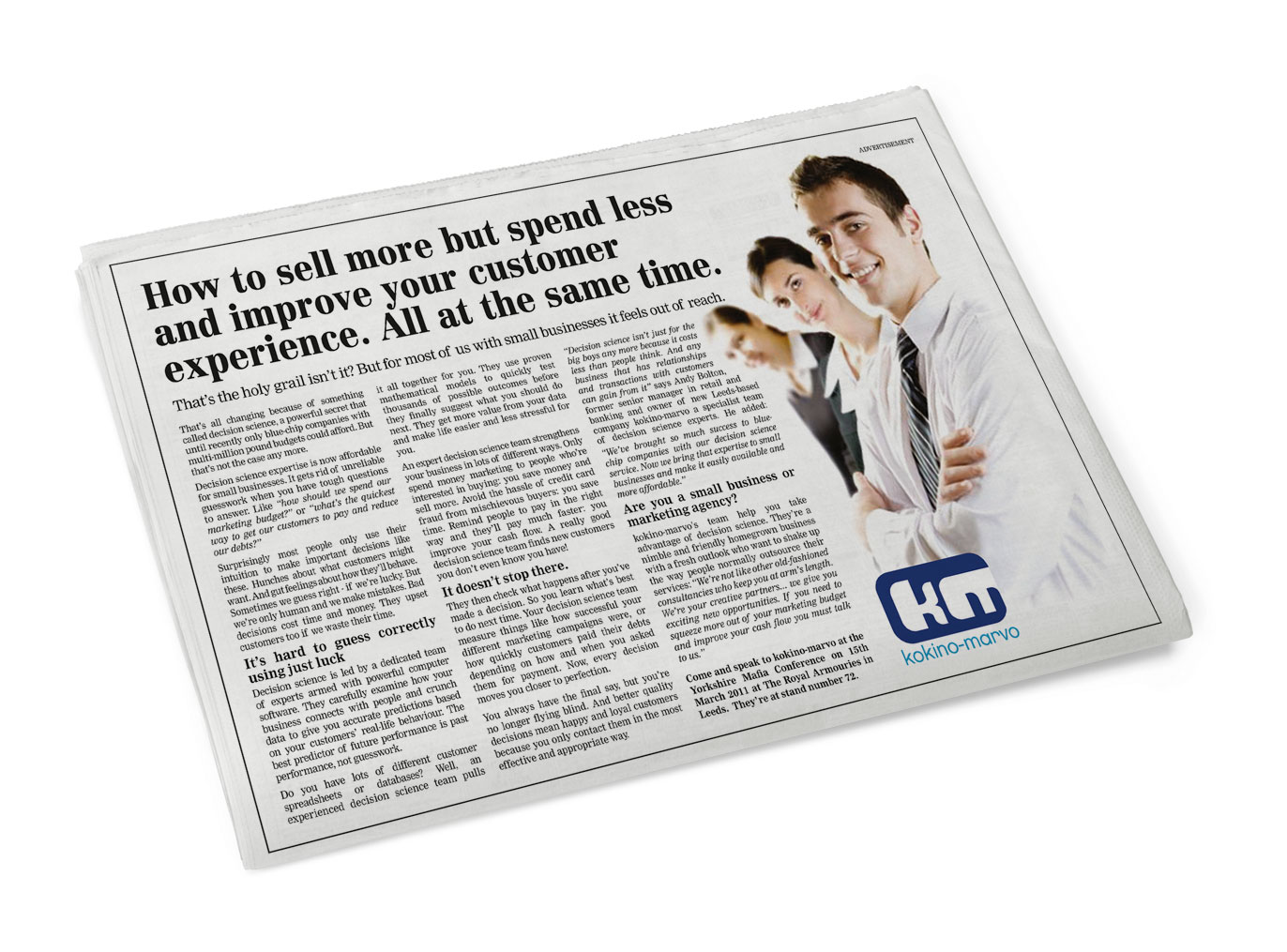
There’s an age-old debate in the copywriting community, about whether long copy or short copy is best. Long copy would be your direct response letters, advertorials, case studies and the like. Short copy is your quippy slogans and straplines.
This is rather like that tiresome debate about public or private sector. Let’s not reanimate a well-flogged horse. I say choose whatever’s best for the job.
It’s the same with short sentences. Or long ones which explore ideas at a relaxed pace, and in a bit more detail. They all have their place. It depends on the brief.
Yet short copy and long copy are, in fact, far more harmonious and interrelated than their respective detractors would have you believe.
Let me explain.
I’m a long copy kinda freelancer. I say that not to nail my colours to the mast, but to state I’m more comfortable expressing ideas that way (it’s handy for the purpose of this article). I do write short copy for my clients, like headlines or banners, but it’s much more difficult from scratch.
You try saying something complicated in 3 words or 500. Then tell me which you find easiest (not better).
Here’s a method that works for this freelance copywriter
So now you know where I’m coming from: short copy is a tricky swine. And if you try to go at it cold, you’ll quickly run out of ideas or round in circles.
There’s a better way to do this if, like me, verbose writing comes easily. Some copywriters can crank out catchy phrases all day long. We’re not like that. We have to put the effort in.
First (as always) do your research. Talk about, read and watch as much as you can on your subject matter. If you’re a decent copywriter this should happen anyway.
Now, ignore your short copy word limit and write what you like. If you only have 3 words to describe your product or service, sod it, do it in 3000.
Do it in a tone of voice and style that the short copy should eventually be in. It’s especially useful if the voice uses idioms, informal turns of phrase or colloquialism.
Just let yourself be free and unrestrained.
Tidy it up a bit then take a break.
When you revisit your copy to tweak it (again, as any decent copywriter would do a few times), keep your eyes peeled.
I assure you there’ll be a handful of almost-ready short, pithy lines there that you can use for your short copy slogan or headline.
Look out for them lurking inside longer sentences or subtitles. Extract them, without prejudice, then explore. At the very least you’ll have some excellent starting points with the potential to develop.
What the hell just happened there?
All your preparation just paid off. The act of writing unleashed your subconscious. And those random little connections your brain makes – thoughts, memories and values – spilled out onto the page without you realising it.
There’s a fortunate byproduct of this exercise too.
That extra, long copy you wrote won’t go to waste. Try throwing it at a brochure or an ‘About’ page.
The only drawback I can see is that this draws out the process. We’re talking closer to a day instead of a few hours.
Isn’t it worth the extra time though, for more organic, creative results? Let me know if you want the same.