For a long long time I thought I only had two emotions: sadness and frustration. And in their absence, a middling apathy.
Apathy, it turns out, is an emotion too. So, correction: three.
It’s not that I didn’t want or resisted feelings. And I’ve never subscribed to misleading gender stereotypes, and any implied shame or weakness there.
Emotions, at least strong or identifiable ones, just seemed to elude me.
I’m familiar with depression’s bleak embrace – that’s not what was going on. In fact I was quite comfortable back then, in that middle-aged, middle-class, middle-of-the-road kind of way.
Life seemed fairly good.
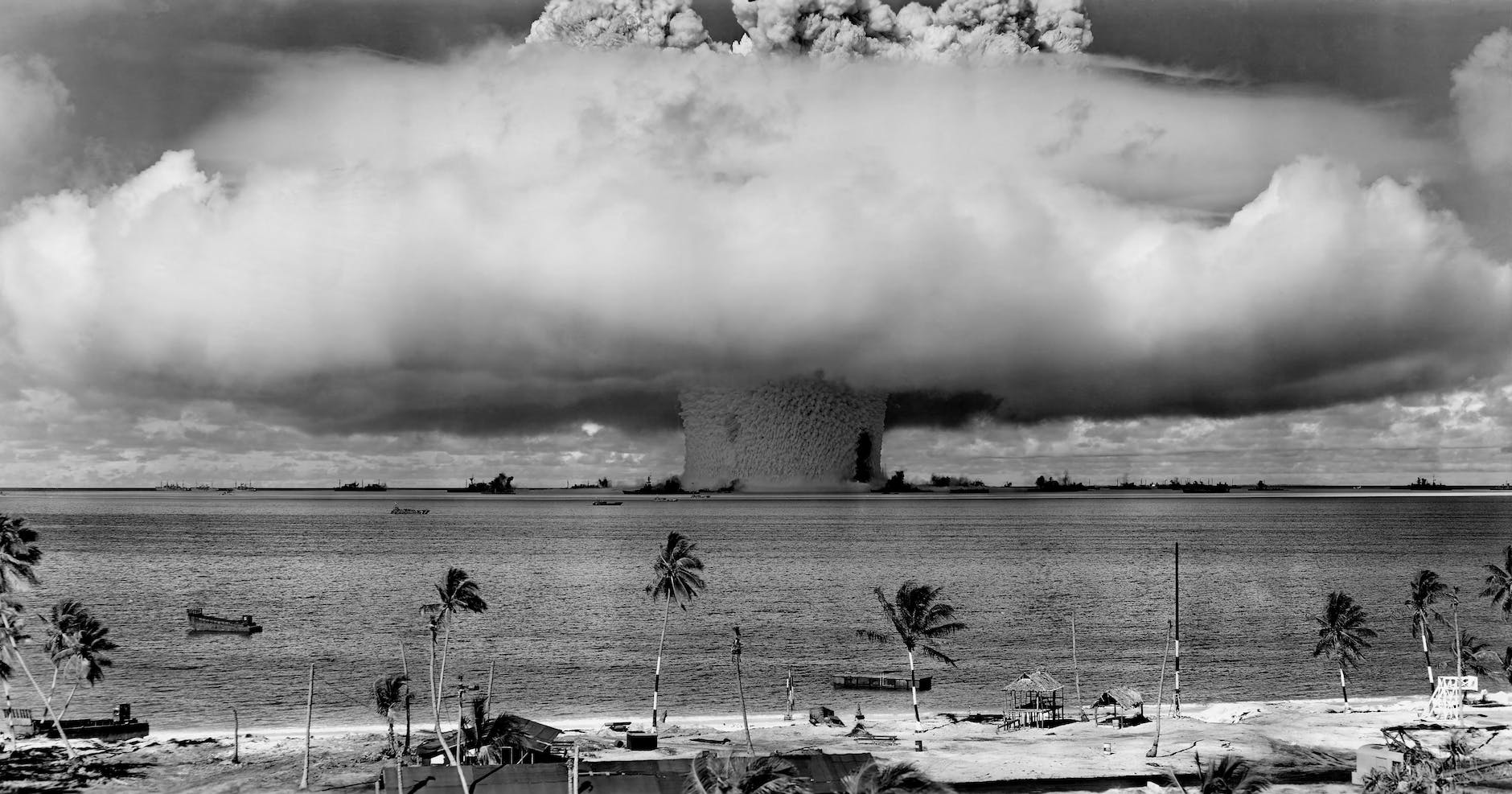
Then it went thermonuclear
One moment I was married, just days from moving into a house we were buying together. The next, I was neither.
Blown apart.
Or open.
I’ll walk you swiftly past the wreckage of last summer. Suffice to say, I lost my best friend, someone who spoke my language, my daftest co-conspirator – all in a matter of days. Too fast even for a post-mortem on the relationship. History and hope were torn from my timeline.
Death seems like a fitting word actually. The destruction was sudden, dark, and the upheaval shocking and brutal.
Yet for all the pain, I welcomed this uninvited lesson. In grief, in bereavement, and myriad other emotions that seemed so elusive for so long. All those feelz barged their way back into my world.
Emotional constipation
What you’re reading here began as a short, snappy article with digestible insight. Yet the subject matter and circumstances surrounding it defied that self-imposed brief.
It seemed churlish to condense a profound catastrophe into trivial ‘content’, to sanitise it of all charge and weight.
How can one write truthfully about emotions, without expressing any?
So I rewrote this a few times, gently revealing more of my experience in what I hope is an appropriate and helpful way.
The focus of this essay (yes I did call it that) is what we might glean from a blowing open. How this unexpected, unwanted turn of events paved the way for a deeper emotional experience of life.
I suppose I’m making the case for or in favour of emotions. Not the case for having them, because as we’ll see shortly, they’re already here, like it or not.
I’ll also tackle some misconceptions and volunteer my emerging theories. Some are rooted in my practice as a certified coach and improviser. It’s kind of my job to get curious about this sort of thing.
I particularly hope that this lands with anyone in my earlier predicament; curious yet missing that elusive emotional depth and breadth.
Perhaps this is a reframing too, for anyone in suspicion, doubt or cynicism (more feelings) towards emotions, or who otherwise ‘doesn’t do’ them.
Emotions are waves
Cut to my sister’s immaculately decorated living room, where I escaped in the immediate aftermath of summer’s new adventure.
I collapse on a sofa, alternately sobbing and howling. In one hand is my phone; a good friend is alongsiding, soothing me through what I feared was unbearable.
It was here that I noticed how emotions came in waves, rolling. Some hit with force, others gentler and tolerable. They undulate. They move through and over you, of their own accord.
“Here comes another one. Oh that was a big one! And look, you’re still here. There’s another… That one wasn’t so big. You’re still alive, still breathing…”
This seems at odds with how I thought ‘emotions happened’: when ‘on,’ surely they’re FULLY ON? Amped to 11. Constant. All-consuming.
I wonder, is this a misconception? That emotions, especially powerful ones like anger and despair, will overwhelm us with their unpredictability, their pain and debilitation.
Hence why we mute or avoid them.
How would things be different if we remembered feelings are more like waves than tsunamis? It might make ‘big’ emotions seem less scary, more survivable. Give us comfort and courage. Because they too shall pass.
Indeed, the only way out is through, in my experience.
Pushing back the waves, running for shore, or holding breath underwater – metaphors for resistance, suppression and denial perhaps, maybe they’re the real cause of suffering – protracting and amplifying the inner turmoil?
During a lull in the storm, a different friend kindly reminded me how wonderful our nervous systems are at protecting us. When we lack capacity to process the full intensity of an emotion, like the electrics at home – your system will trip. The fuse will go, so you’re never overloaded.
You zone out, go numb, shake.
Of course, this isn’t healthy or sustainable in the long-term. But again, perhaps comforting to know that safety protocols are baked into the same system that gives rise to your emotions.
Emotions aren’t particles
So you only have two (three) emotions, Chris. You ought to feel more! Why can’t you unlock all the feelings inside? Especially the nice ones like excitement and hope.
Can you spot the trap I’d fallen in here?
When we stick a label on an emotion it tricks us into believing it’s a self-contained, binary on-or-off experience. And atomic – each cleanly distinct and separate from all other emotions.
What logically follows is a tendency to label them good or bad. Happy is good (more please). Sad is bad (less thank you). Which can turn life into a bizarre game of emotional whack-a-mole.
More misconception?
Since that thermonuclear summer, I’ve floated perpetually along a wide, broadening spectrum of all-the-feelings, experiencing some simultaneously, by degrees.
At first, as the feelz came back online, I was dysregulated – super sad, super loved-up, hyper-excited, hyper-lonely. I’d dread returning home from an elating adventure, make eye contact with my puppy, then collapse under the crushing weight of grief for the embryonic family I’d lost.
These days, I’m still easily moved but I feel regulated, thanks to the discoveries I’m sharing here. And I hold an emerging suspicion that a life well-lived is one exploring the full range of this spectrum.
Pain, pleasure and everything in between.
Consider, for a moment, the sensations of anxiety and excitement. For me they’re both a sort of fizzy, nervous expectation, a restless alertness. Could they be the same region in the spectrum?
Consider the last time you experienced disagreement with someone you care about. Did love AND hate both come into it? If they cried, did anger melt with fear and sorrow? If it was a passionate exchange, did you feel the heat of attraction?
It could be that blurry spectrum thing again.
Lurking behind the fallacy of atomic emotions is the unenviable predicament of feeling bad about feeling bad, which is arguably the root of most mental unhealth.
I shouldn’t feel this way. I’m wrong to feel like this. That’s a bad reaction. I ought to feel that way.
In avoiding or resisting some ‘bad’ emotions yet seeking other ‘good’ ones, I wonder if we complicate and frustrate our relationship with them. Another fallacy sneaks in unquestioned: that we get to choose them, and that we are our emotions.
When ultimately, the only thing that seems to lead to resolution, or change of emotional state that you’re looking for, is simply welcoming all of it as they course through you, of their own volition.
Again, the only way out is through.
Your heart is quiet. Shh!
I remember sitting on the doorstep with the pup on my lap, wondering how life would go on. I was now a single dog-father. Winter loomed lonely.
How would I work, earn, care? Could I bear living in a home that now wasn’t? This mausoleum, haunted by ghosts of ‘us’.
I noticed sunlight shining on the red brick front wall. A bike rack. Above, the aerials of my neighbours. I practise noticing: the art of grounding back into the present moment by observing what goes on around you, through seeing and sensing. It helps when my mind races ahead of itself.
That’s when hope arrived; a kind of humble excitement, an openness to life. This really surprised me. Guilt then followed – too soon? Still, I’d gained an extra two emotions. Hooray!
Maybe I had a heart in there all along?
Perhaps another reason why we’re not so good at navigating or sharing our emotions is that by definition they’re irrational. We can’t easily, and we’re certainly not taught to, discern what they mean, their purpose in the moment, or what to do with them.
The heart, in my experience, is slow, subtle, quiet and softly spoken. That’s no good if you want answers clearly, and now, in the midst of a difficult, emotive discussion or decision.
Yet when it ‘makes its mind up’ (like telling you there’s hope in tragedy and loss) I find the heart is persistent and steadfast in what it believes to be ‘right’. It just needs space, quiet and trust – the kind that’s so rare in today’s instant, always-on, noisy culture.
I find this reassuring too.
Like emotions are on my side, if I give myself time to be with them. With more noticing, awareness and past experience, this faculty of yours can only serve you better.
Emotions are a language
Many years ago, I confessed to a counsellor that I wanted to be more emotionally literate. He did his best impartial practitioner face and didn’t judge me like I had. Like I was somehow emotionally illiterate or broken.
I was kind of half-right though. Because I’ve noticed that as we begin to notice feelings, we discover more range (that spectrum) by way of contrast.
Oh this feels like when… this feels slightly edgier/mellower than etc.
In this way, you expand your familiarity and confidence with the tongue – your emotional vocabulary. None of this involves words. It’s more like intuiting your way around endless aisles at an emotional supermarket. Orientation is a better word, perhaps. Or a ‘felt-sense’ as we say in embodied coaching.
I was kind of half-wrong in assuming total emotional illiteracy is a default position for humans.
No one ‘taught’ me emotions, like I thought I needed to be. We already have the capacity to feel ALL the feels – it’s already hard-wired in there. We evolved them, presumably to keep us alive and humping (like all our other bits and bobs).
We’re all subconsciously avoiding a core feeling
A few weeks ago, I sat with my eyes closed, gripping the edges of a sofa. I tried to howl but all that emerged was a restrained whelp. People around me, attending the same retreat, were encouraging this exploration of feeling into our darkest fears. I felt safe, so I relaxed.
That’s when I met anger.
My top lip trembled. Tentatively, I let it rise to one corner of my mouth. I was baring my teeth. What could this be? It felt like an animal sat behind my face, brooding, snarling, growling. It broadcast a grumbling warning to the world, about its dissatisfaction with the way of things.
This felt familiar.
It was a slow, inward, resentful kind of anger that underscores my words and deeds when I’m stressed. If we adhere to the policy that no emotion is good or bad, it just is, then this force is the same that propels me to rectify injustice, it’s the edginess in my dark humour. Yet it’s the same force that drives the cutting, judgemental remarks I always regret in hindsight.
At its core, this inner beast is afraid of being somehow evil, fundamentally corrupt, bad or wholly wrong and therefore cancelable and unworthy. And inside you, at your core, is a beast of your very own.
What’s it afraid of, what’s it protecting you from?
According to a coaching model I use, at our core we’re all avoiding a different flavour of either shame, anger or fear.
When you’re triggered, whether you go to addiction, humour, projection, intellectualising – whatever your avoidance strategy, there’ll be some dark shadow-y emotions that part of you will do ANYTHING to not experience.
That’s what personality does – it protects you from suffering and pain. It does that by helping you avoid situations that risk you feeling particular emotions.
And what a marvellous job it does! Congratulations on still being here and functional.
Yet in muting this emotion or that, I’m concerned we mute them all. This perhaps supports my case for there being a single, continuous spectrum of feelings, rather than atomic emotions each with independent volume control.
Knowing the measure of my core anger and fear, knowing what my inner protectors habitually avoid, and (trying to) believe that none of this ‘evil story’ is really me or wholly true (it’s just feelings I’m afraid of feeling), buys me space.
Space to explore somewhere I’m really curious to go…
Our default state is joy
Now we’re in theoretical territory…
At the same retreat as the sofa incident above (all about liberation from trauma and personality) we were invited to probe into that core feeling above. We reflected on times we were challenged and activated, and discovered the stories we tell ourselves when we’re in that state.
At first, delegates met despair, shame, pity, fear, confusion and anger. But when they went deeper, after letting themselves experience those avoided emotions, they found that on the other side is a sense of joy, peace and wholeness. Some described it as love.
If you know anyone who’s toyed with psychedelics to free themselves temporarily of ego – it’s the same kind of enlightening experience.
The theory is that this love, innocence, peace (again, words aren’t helpful here) is humanity’s default setting. Everything else is just noise.
Radical, right? And especially theoretical when someone crosses you on a bad day.
Maybe you’ve snatched glimpses of your default joy? It can happen at your edges, when you’re really tested (like what happened to me). Or when everything seems to be going your way, you’re relaxed, or in a transcendent-like state of making or doing. Or in nature’s embrace.
I felt hope and serenity when my world seemingly fell apart late last year. I feel it increasingly now, especially when I’m in a creative flow-state while improvising, deeply relating to others when I’m coaching, or howling with laughter.
[I share what happened on the retreat in far more depth on my podcast ‘Beyond the basement’, if you’re curious.]
Emotions: essential, luxury or inconvenience?
Hopefully I’ve debunked a few misconceptions, and retrieved something worth sharing from the frontline of emotional turmoil.
Now I’d like to make the case for welcoming more feelz into everyday life – perhaps sparing you the monumental tragedy and loss bit, by cutting straight to the ‘what now’ part.
Would you like an extra sense that gives you helpful clues about whether something is the right way forward? How about knowing what you really need? Or when someone or something crosses a boundary for you? How about deeper connection with pretty much anyone?
If my case above holds water, I hope you’re at least meeting that with curiosity.
When we shut-down and live exclusively in our heads – rationalising, solving, and strategizing our way through life, we limit ourselves to only one centre of intelligence or expression. Having the heart onboard, alongside an intuitive bodily sense of what’s going on, you gain two extra sources of counsel.
At the risk of sounding cold and ruthless, you have options available to you. In the heart you have an extra asset, which in my experience gets underused for all the reasons I’ve outlined in this essay.
How though? Where to begin?
That’s a topic for another essay. But in the meantime may I point you towards Authentic Relating and Non-violent communication as two possible routes, at least ones that work for me.
There’s also the possibility of enormous tragedy and loss waiting around life’s next corner… Not that I wish that upon anyone. But it does the trick.
I’ll leave you with a final insight from another passion of mine – improvised comedy and drama. A teacher once told me that whenever we’re not sure what to do, or how to respond when we’re in a tight spot (the essence of improv): let yourself be moved.
I’m still playing with this advice.
I suspect it’s about unlocking what’s already within. When stuff happens to us, it’s rare that we don’t already react internally, instinctively – what gets in the way is us not noticing or filtering it out. Improvisers often complain about getting ‘stuck in their heads’ instead of being present, in the moment and easefully feeling their way into a scene or game they’re playing.
So perhaps an antidote to a non or un-feeling lived experience is to relax, and surrender to what happens and how it affects you. The invitation is to just notice, to become aware of those inner reactions, and interpret the signals. Remember, the heart speaks softly. There is choice in how you respond after any reaction.
I wonder if most, if not all of humankind’s fundamental problems – climate change, inequality, war, have their origins in a shortfall of heart (love, compassion, empathy) and too much cold, dispassionate thinking and action.
Folk stuck in their head?
Then another part of me wonders whether those problems too, as manifestations of tragedy and loss, are necessary to remind us, to shock or awaken us back to our emotional senses. Like they did for me.
You needn’t always believe your feelings or act on impulse, I’m not advocating that. Just anything but repressing or denying them. Because I worry a life bereft of feeling is a life that lacks aliveness.
The alternative, which I’m nurturing gently with both hands open – a life of higher highs and lower lows, still hurts. Indeed it’s exhausting at times. But it’s wholly alive and a thrilling lesson in what it is to be human.