Category: New ways to look at old problems

  • Monday vomit

    Monday vomit

    It feels almost too cliche to write about, but Mondays for me bring baggage. Emotional weather. At least habitually. 

    It begins Sunday evening

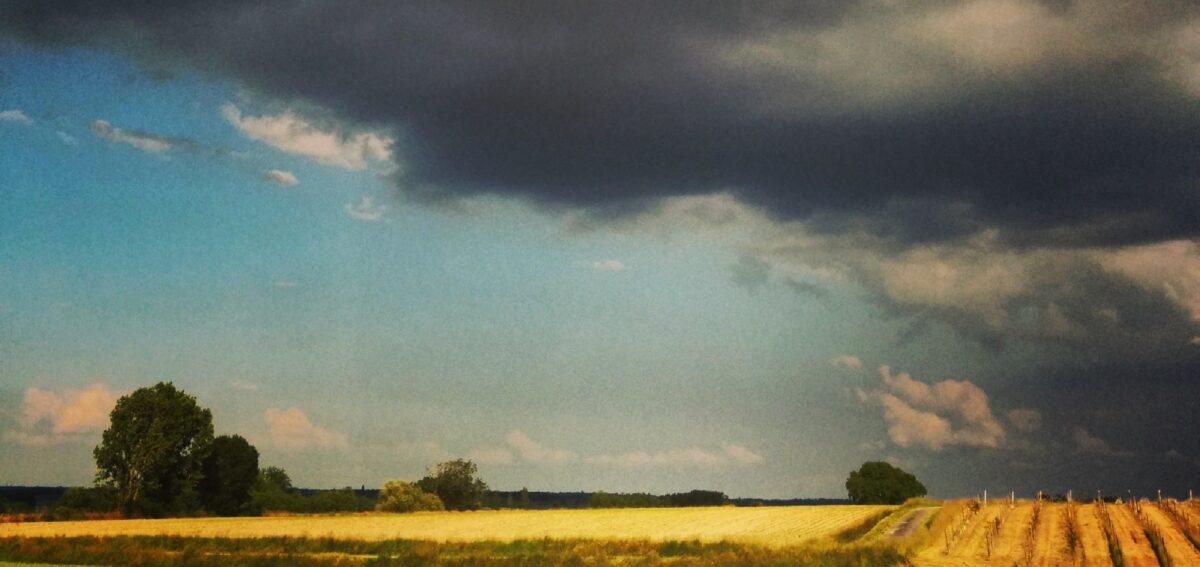
    A sense of foreboding. An atmospheric changeover. Like duty descending as an ethereal burden. A sandstorm of uncertainty gathers on the horizon, closing in, leaving the next morning in its wake. 

    There’s possibility in there, of course – space and opportunity. But for folk like me (who like a bit of structure and apparent ‘how’ in their lives) – the scope of the week ahead can sometimes get the better of us. 

    Monday can be a vulnerable time

    Yet rather than tackle problems alone, these days I’m trying something new. 

    I dredge for curiosity and connection in those murky feelings – how do others relate to their week ahead? What are they going through? 

    More often than not, I find it’s the lonely bit of Mondays, the stoney-faced struggle, the seriousness, that gets in the way. 

    Sounds like an excuse for an experiment

    Three weeks ago, I launched the Monday vomit event: a space to process the dread, hope, fear or excitement of your week ahead. To meet others. Feel the feels. Regain perspective. And focus on what really matters.

    It’s kind of like a pep-talk, leaning heavily on group coaching. And it follows a proven therapeutic model for exploding those Monday morning narratives and underlying motivations. 

    All in a quick 30 minute session

    The metaphor I’m toying with is like puking up whatever is on your mind, then picking out the chunky bits. But that’s where the imagery ends, because the final bit is about accountability – working out what’s valuable to us in the coming week ahead (do people bottle puke?)

    So far, we’ve had people bring dilemmas, stories, mistakes, overwhelm, victories, tears, laughter and everything in-between. Anything goes really. 

    If you’re an enterprising individual at a point of change, an entrepreneur or employee, a leader, or just fancy a bit of space in your working week – this might be for you.

    Just bring an enquiring mind and willingness to share and try something different.

    Here’s your invitation

    Next week (19th July) the Monday vomit event goes public (so far it’s been an inner circle thing…). It’ll be a regular event, every Monday morning.

    If you want to try one, just sign-up on Eventbrite. It seems to work best as a tiny, intimate event so grab one of four places before it fills up.

    Join us for connection, honesty and levity. Gloom might be the (my?) pretext, yet I’m surprised by how many people vomit sparkles in the sessions too.

    Subversion will be my compass, through the emotional weather that sometimes clouds the start of our week – what’s yours?

  • What subversive madness must live through you?

    What subversive madness must live through you?

    There’s a door, in a room, above a garage, in Merseyside. And if you scrape off a layer of paint or four, you’ll be looking at a gaggle of mutilated faces; noseless and shrunken.

    And these faces would grin back at you, all eyes and mouth; ghoulish and gormless. A disembodied throng of serious fools, time-travellers, sentinels at a former gateway to lunacy.

    You’re looking at the back of my teenage bedroom door

    Back in the 90s I enjoyed working myself into hysteric fervour, by snipping away at the Viking office supplies catalogue. I’d cut out the faces of pictured models – officious-looking businesspeople, then fold them so their eyes kissed their mouths, leaving little in between. 

    In fruitier moods I’d perhaps lower a hairline, so the face resembled a smirking rugby ball. Or glue someone else’s (usually bigger) eyes in, upside down. Then I’d cry laughing at this hideous transformation of banal to ridiculous.

    It beats torturing animals, I suppose.

    Yet there was one face in particular that always captured my imagination… 

    Let’s call him Viking guy

    The Viking guy

    He was a late-60-something caucasian chap, with frosty white hair, besuited, confident, and sporting a smile somewhere between affable and smug. 

    This kindly man reeked of boardrooms and golf courses – the definitive pre-retirement exec. He was (possibly) the embodiment of business: smart, trustworthy, sensible and serious. The kind of guy who’d do you a fabulous deal on printer ink, and throw in a gentle pat on the head for your anxious, overachieving son.

    He lives on, inside me. Inside all of us?

    I expect this poor gent is long dead. I wonder now what he’d make of my secret anti-shrine to everything he stood for (or seemed to). 

    Likewise, with my lifelong subversion of serious, corporate professionalism. Something so at odds with the noble truth of his adorable little scrunched-up face. And his command of a mutant army of gurning telesales operatives. Their upside-down eyes-bulging, attentive and pitiful.

    This is NOT Viking guy

    Escapism

    My squashed faces were, of course, an inconsequential detour from the seriousness of childhood: school, exams and expectations. 

    I grew up pretty quick – handed house keys in junior school, child-minding my siblings, cooking meals from scratch for a family of five. Someone had to be the grown-up until the grown-ups came home, from their long, stressful day at work. I suppose part of me still waits.

    But that’s the origin of my serious and subversive, silly side. 

    I won’t denigrate either – they both have their place. Mr serious gets things done, and under control. Yet it can dominate. Often at the expense of the playful, funny, absurd side – with its ‘pointless’ outcomes.

    Maybe this sounds familiar? 

    When problems get tricky and existential (like when I found myself drifting in a former career) the serious side can often step in. It creates perfect infinite loops of introspection. And pressurises you to find definite solutions to perennial problems, like meaning and purpose. Be perfect. Do it right. Try harder etc. etc.

    But what happens to your ‘other’ sides when your serious side dominates? Where does your equivalent of the scissor brandishing lunatic, gunning for the Viking guy, go? 

    Perhaps more tellingly, where else in life do they inevitably pop up, no matter how hard your serious side tries to repress them?

    For me it’s always something absurd

    A turn of phrase, snapshot or abstract idea that catches my imagination. Like a seagull with no wings saying “bro I’m outta here”. I giggle to myself, reliving it over and over. And revel in not being able to figure out why it’s so funny. I embrace uncertainty instead of managing it, like my inner Viking guy.

    My playful side instead wants to subvert the seriousness, meet it with irreverence and laughter. It seeks truth through humour. Like a safety valve. Or a different window onto a familiar vista.

    A working theory: everything’s in there, coexisting 

    Angels and demons, inner critics and cheerleaders – you already have options. Perhaps some are muted or lost for words. Yet they’re intrinsically part of your amalgamated identity, out of reach or elusive, but in there all the same. 

    And they will, perhaps persistently, manifest throughout your life as simultaneous traps and escape routes. 

    Like mine did, when squashed faces became a full-on community project. This was in my 30s, when I left the barren grey plains of the corporate wilderness. Or my animal wisdom memes, art that emerged from a dark patch in my mid-30s. 

    In pondering this dilemma of how aspects of character coexist, and how to channel them meaningfully, I came across Dr. James Hollis, a Jungian psychoanalyst speaking on the Power of Ten podcast:

    ‘The people that we admire most in history… in many cases, their lives were very conflictual, full of suffering, often without recognition in their lifetime. And yet we admire them because they embodied something that was meant to be embodied in this world. It wasn’t about their egos. It wasn’t about their fiscal plan. It was about being in service to something that mattered within them. And that’s what vocation really is. And when you do that something supports you.’

    As a visionary clearly in the same category as Van Gogh or Mother Theresa, I’m drawn to Jim’s compelling premise. He speculates that meaning in life (i.e. what to throw ‘yourselves’ into) is something channeled through you. It’s a crusade that you’re in service to. Something inescapable and pervasive. It emerges, through ongoing, daily battles and little victories. 

    Maybe you don’t quite choose it, more it chooses you?

    That’s your thing and who you (already) really are

    Here’s Jimbo again:

    “What wants to enter the world through me? We’re always in service to something. You better figure out what it is, because if you’re in service to the primal complexes, which is to say the clusters of history that a fate presented us, it’s always going to be in some way, someone else’s life, someone else’s agenda. It’s going to be regressive in character. You’re in service to what wants to enter the world through me.”

    Perhaps far too often, we throw ourselves behind what we’re told to get behind, or fall into it accidentally. We do what we ought to and should do in life. Not what we really want to or care deeply about. 

    And when we’re distracted or unaware, maybe there’s a risk we miss what’s right under our noses (or on the back of our bedroom doors), and has been all along.

    Meanwhile, that existential struggle we know all too well. That cause we might rally behind (like my seriousness and lust for subversion with absurdity) and discover ourselves through, goes amiss.

    What won’t go away? What lives through you?

    In case you’re doubting the relevance of your lived experience, your particular lifelong crusade, or who you are: here’s a thought. Sometimes there’s a misconception that to champion a cause – some problem or injustice, one has to have all the answers, and be the expert on solving it. 

    I fell for this slight of hand, in our age of technocratic officiousness. 

    However, just living your crusade, knowing the ups and downs intimately, first-hand, is perhaps really what qualifies you to speak up about it and explore its domain. 

    Maybe I’m only justifying my own indulgent madness here (*reaches for scissors*). But there’s something inescapable about this personal quest for subversion, truth, and exploration of our shadow side. 

    What wants to live through you? And who are we to resist?

    So, I put it to you: what themes seem inescapable in your life? What wants to live through you? And how will you speak up about it? 

    Because maybe there are others out there, just like you, ready and willing to join you on the adventure. 

    And who knows where it will end? Perhaps in some eerie mausoleum to squashed faces, on the rear of a repainted bedroom door in Merseyside.

  • The cost of overpreparing and the price of presence

    The cost of overpreparing and the price of presence

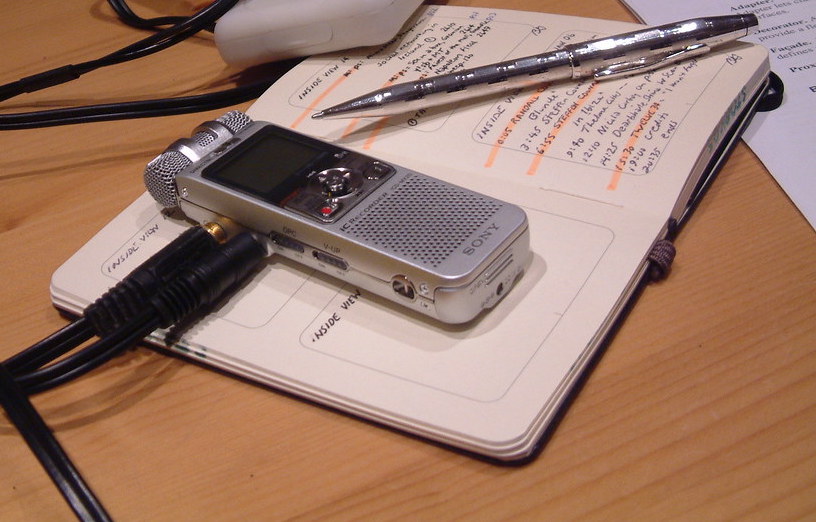
    That’s odd, I thought staring at my trusty dictaphone. I didn’t know it had a light. A flashing red one too.

    Odd. I could’ve sworn I hit record when interviewing my client’s client for this juicy story of triumph over adversity.

    Why aren’t there any audio files after three months ago…?

    Shit. This isn’t good. Where’s my magnificent latest interview? The one I really, really need to write up for my client.

    Cue terror. 

    Like a trap door to the guts. Like travelling over a humped bridge at speed. Or a shit rollercoaster. 

    I feel the earth fall away beneath me. 

    One horrible day in the life of an over-preparer

    When life went according to plan, in a former life as a case study copywriter guy, I’d sketch out a mindmap of topics to ask about, mic up my phone, then capture some bigwig CEO/MD of a faceless corporation’s tall tale of endeavour. 

    I’d listen, interrogate, and focus entirely on the conversation, safe in the knowledge that my trusty recording apparatus had my back. 

    When it didn’t, well, as you can see: my arse dropped out.

    The origin of presence

    In the before-times, long before treacherous recorders, I’d jot notes in hybrid shorthand, frantically trying to keep pace with whatever revelations my interviewee divulged. Yet I soon found my attention drawn disproportionately to keeping a meaningful record of the interview, at the expense of actually holding one. 

    Thus I came to value the notion of presence: actually being there in the moment with someone, listening for vocal cues, and crafting questions on the fly. This made for far more engaging written articles, based on a livelier, more human interview. 

    Both my interviewee and I enjoyed the experience more too. I could provoke and tempt emotions out of people (usually men) who made a living from repressing them in the face of challenges.

    For the bargain price of just 40 quid, my trusty dictaphone bought me presence. 

    And I don’t use the word trusty lightly either. 

    I did invest trust in it. It set me free to be a bit more me.

    Then came the fateful time my dictaphone zombified

    The tiny electronic charlatan said it was recording, when really it wasn’t. Worse still, it’d kept up this pretence for months without me knowing. 

    Without any notes I’d lost the bones of a story. Stories.

    I’d have to do the interview(s) all over again in a vain attempt to recapture that lost magic. 

    Unprofessional. Incompetent. And other value judgements ensued.

    The extent of hyper-preparation 

    You’ll be relieved to hear all was not lost. 

    Because some of us, those of you who think like me, are so hard-coded for failure as an inevitability, we build contingencies for our contingencies. Even with a dictaphone, it turns out I’d still hit record on my smartphone’s voice recorder app. 

    Almost habitually, unknowingly. 

    It was genuinely a surprise to discover that.

    Makes you wonder, doesn’t it? Did I ever really trust myself? Was I ever really, fully present at the time of recording, if my mind was on contingency and preparation? 

    You could chase that thought even further. With multiple layers of protection like this, you have to wonder what are we really protecting ourselves from? 

    Something tells me it’s to do with exposure and vulnerability – being revealed as a less-than-perfect human being, and handling the emotional fallout of, eurgh, failure.

    And what would the real cost of failure be? The temporary discomfort of re-recording an interview? A shame-faced admission to a client, who in all likelihood would’ve felt my pain. 

    Who knows.

    Preparation – a way of life?

    So there it was. Crackly mono, compressed and whispery, but I had a backup of my backup. The interview was saved. I could work with crap. Crap is better than no crap.

    Now, you might think the moral of the story is preparation pays. “Fail to prepare, prepare to fail” goes the wanky business idiom.

    I wish it were that simple.

    It isn’t.

    Preparation runs deeper than that, I suspect. It’s a way of life. It sets a precedent, an expectation, an intention to be hesitant, cautious and restrained. A subtle anxiety, that nibbles away at presence, playfulness and flow state – all crucial ingredients for a delightful conversation or interview. 

    Or anything joyful and creative too, I suspect.

    I wonder. Is there a link between presence, preparation and that kind of authentic, vulnerable state we need to be in to get the best out of ourselves, and the people we’re with?

    Could preparation be fear of vulnerability, and presence a way to embrace it?

    Let me tell you one last story about preparation

    Recently, I’ve been recording a series of interviews with intriguing people, all about their personal philosophies and how they relate to uncertainty, the future and change. I call it the pessimist’s guide to a hopeful future (episodes launch in April 2021, probably).

    Despite recording each conversation with every available instrument I have (zoom, dictaphone, smartphone, wax cylinder, mynah bird etc.), the preparer in me still worries about losing something – be it the recording, some wisdom, magic, or a perfect question.

    The preparer in me is an inveterate note-taker too. I frantically scribble things down, just in case I forget. Never trust your memory or yourself. It’s another expectation or intention, which on occasion almost encourages my mind to let slip the thread of conversation.

    Could it be that preparedness, a kind of control, is at war with presence? Presence says let go of control and sit with things as they are. Preparedness says keep checking for a red light.

    We’re approaching the wisdom bit

    When gatherings were a thing, my friends at Glug Leeds had me over to talk about being a freelancer in the creative industry. That copywriter thing again. I’ve spoken at a few of their events, always heavily scripting and rehearsing myself, for all but one.

    Here’s the interesting thing – my most recent, least scripted talk felt funnier, freer, and more meaningful (at least to me).

    Now I’m not saying preparation is bad or good either way, or how much is appropriate. I suppose the subtext here is perhaps it can get the better of us, at the expense of presence?

    Is there such a thing as being over-present?

    Presence feels like a more fun way to do things, but that alone at the exclusion of doing your homework (preparation) can come at a cost too. It can make you look like an amateur, like you don’t take something seriously. It’d never have washed with those CEOs and MDs I used to interview.

    On one memorable occasion I deliberately did little preparation (as an experiment) for an open-mic stand-up comedy gig, and got to a point of such supreme not-giving-a-fuckness that I recall getting up on stage and completely losing it, muttering “so… grandad died” on a loop, unable to recall any of my routines about coal mining and masculinity. 

    The audience yelled encouragement and felt my pain, but it was too late. I’d already transcended corporeal form, floating several feet above I witnessed myself dying on stage.

    I was acutely present, kind of, yet it felt dissociative, like a bad trip.

    Questions for preppers

    I don’t have the answers here. Perhaps preparedness or presence isn’t a binary choice? Maybe our capacity for both is innate? Could some lean towards one over the other, habitually? Could they even coexist?

    Perhaps there comes a point (and maybe I’m reaching it) where decades of perpetual preparedness now qualify me as perpetually prepared, so there’s credit on account that I can invest in presence. 

    Is this what enlightenment feels like?

    Time to throw this over to you, because I’m a coach and that’s what nerks like me do. 

    Have I prepared these provocative questions beforehand? See if you can tell… I’m certainly very present in writing them:

    • What’s your habitual state – present or prepared? At what cost?
    • If these states coexist, how do you float along the spectrum when you have an upcoming event or deadline?
    • Have you ever been totally present yet totally unprepared (or vice versa) – what happened? What came of it?
    • How would you like to be, in an ideal world, when the stakes are high?
    • What’s one tiny step you might take, right now, to get closer to that?

    Photo credit: “Moleskine iPod Dictaphone” by topgold

  • On the impishly elusive state of focus

    Each morning, a former monk pours mellow reassurance directly into my ears via the HeadSpace app, reminding me that the hypothetical future wanderings drifting in and out of my mind, are actually quite inevitable.

    And don’t I know it…

    Your own private peep show

    All it takes is one word or evocative idea and my imagination’s in orbit. 

    Someone chit-chats about the weather; yet in my head I’m wondering what geo-engineered rain feels like. Or while buried in a good book, I’ll be orating a one-sided defence of post-capitalism.

    Whichever distraction prompts it, my awareness rockets skyward only to plummet earthbound, crashing, disorientated, several junctures ahead of where I left off. 

    It’s a bit like living in your own private episode of Peep Show. And it doesn’t half get in the way of being fully present and focused when I’m on-the-go. 

    For others, it’s not quite so simple 

    Luckily (or not) I’m a remorseless taskmaster so shit gets done – I’m just ‘not all there’ while I make it happen. 

    But I’ve coached other folk who don’t even know where to begin because of their greasy focus. And then there are other poor souls who’ve made an art of defer and delay, succumbing to playful distractions, overanalysis or crippling perfectionism.

    Whatever the reason and response – what’s so tortuous is that at a profoundly deep level, every one of us knows what really needs to be done. What matters most. 

    Yet somehow, all too often, it rarely gets done the way we hope it will.

    Quick, buy a book!

    However elusive focus feels, if you’re trying to navigate a meaningful existence through the noisy shitshow that is modern life, chances are you’re in for some frustration and resistance. 

    Cal Newport squeezed a palatable tome out of this de facto state of affairs, in one of those snazzy-covered, one-big-idea books that really only merit a chapter or two: Deep Work. 

    In it, Cal argues that deeply focused, applied concentration…

    “…is becoming increasingly rare and at the exact same time it is becoming increasingly valuable in our economy. … the few who cultivate this skill, and then make it the core of their working life, will thrive.”

    You’ve probably read or heard of Deep Work already – worldly soul on a journey of constant improvement that you are. So let’s not cover old ground. 

    Instead, think how what Cal said makes you feel…

    Like you need to fix this? ASAP? Because something’s wrong, there’s something you’re missing out on, or you’re not everything you know you could be. 

    That’s a tricky place to learn and build from though, isn’t it? Perhaps awkward and uncomfortable.

    It does, however, shift a lot of £12 books off the shelves.

    What meddles with focus could be a way forward

    Which brings me neatly onto one possible source of brooding malcontent with focus, or our lack of it. 

    When a coaching client rocks up in knots, one way to create a bit of breathing space is to put a fresh spin on things as they are.

    So, what if this royal pain in the arse focus thing is actually just an escape route in disguise? 

    Seriously.

    When I’m daydreaming-up dendritic dialogues of situations yet-to-be, instead of being enraptured by the task at hand (like I ought to), maybe my rocket-fueled imagination is just under-engaged. 

    At the risk of sounding ethereal and wanky – I’ve not honoured a talent.

    Perhaps if I took it for walkies in the park, let it have a shit if it’s a good boy (by journaling, for example), it might curl up by the fire later when I need to be wholly present and focused on whatever I’m supposed to be doing.

    So under-focus isn’t a hindrance. It could be a signal. An itch that needs scratching.

    • What if indecision and overanalysis is really just a vivid mind in search of a fresh project to commit to? What do the subject matters you ponder over tell you about what makes you tick?
    • What if your happy-go-lucky, effulgent way of engaging with the world – flitting playfully from one sensation to the next, is just a hunger for responsibility or resolution? Do the activities you lose time in tell you something about yourself?
    • What if all these things are just double-edged swords? They’re what draw people to you; part of your character that make you a joy to be around, yet a nightmare left alone.
    • What would working with (rather than against) under-focus look like? If it wasn’t a problem, how would that change things? 
    • Could you nurture distraction, procrastination, introspection like a useful urge that deserves context and direction? And how can you get clear on that?

    James Clear, another peddler of one-big-idea books (though admittedly a very good one), argues that focus frustrations often mask lack of clarity about what we really want. If we’re clear on that – what we want to be, do and have, focus tends to follow.

    In my experience coaching, getting clear means saying no to more stuff. Some put their needs first instead of others a little more often. Others build more variety and routine into their week so they satiate that incongruent human desire for structure and freedom.

    What we stand for presents options too 

    If you believe personal responsibility is a solid principle, how in practice might you raise your hand and say “know what, I’m going to give myself permission to indulge daydreaming/ procrastination/ avoidance/ introspection on Friday afternoons.” 

    Because responsibility isn’t the same thing as blame. You didn’t choose your mind, or those moreish thoughts and feelings that waft like farts through your cheesebox. 

    But you can choose to own what you’ve got to work with, and hack it, gently.

    Likewise, for cooperation, collaboration and community values. If you stand by them, how can you reach out to others when focus wanes? Know any other devout perfectionists or procrastinators? How are they getting on? Who’s taking the lead?

    By way of example on both of these, I take the lead from a lifelong master of relaxation: my darling spouse. With or without me, she’ll have her feet up, guilt-free, whenever the feeling takes her. So, after some resistance I tried her way. I owned my tendency to never sit still (when that’s appropriate), but come 6pm it isn’t so I down-tools, and resist tinkering with my latest DIY distraction.

    In my experience as a coach, inspiration and ways forward often lurk right beneath our noses. They only become apparent when we look beyond the struggle, and take on the role of curious and playful beginner – not weak, but daring, however uncomfortable we feel about the experiments that follow.

    Beware toxic entrepreneurialism

    Time for a pop at the rat-race, so here’s some vitriol…

    There’s a subtext to this whole focus thing. It’s that all-encompassing productivity is a gold standard. And that growth and progress should be linear and relentless. Five minutes suffering the sermons of entrepreneur influencers on YouTube confirms this.

    Sorry, but human progress isn’t like that (for most of us). 

    It’s blindly lurching forwards through puddles of our vomit, followed by a kick in the teeth then a nice sit-down. Then the sun comes out again and we’re off, ad infinitum.

    To put this in a more coach-like way, the mind and body seem to operate seasonally, with day-to-day emotional weather to contend with too. 

    It’d be trite to suggest focus is all about balance – you’re a smart reader, you already know that. My point is that there’s something about planning your route forward with seasons and weather in mind. 

    If the plan is to go pelvis-deep on Monday/Tuesday with wellbeing Wednesday for treats, then suddenly Tuesday arrives full of piss and wind; can you flex? Would you dare bring relaxation forwards when you need it most, shuffling other commitments with intention, and not give yourself too much of a hard time for taking such sensible, honest action? 

    Likewise, if all is well on Friday; can you roll with it and work into Saturday while the world rues its hangover? There’s something sweetly rebellious about stealing a march on the rat-race when it dares not intrude…

    All this demands responsibility, clarity and honesty with yourself – all themes that run deeper than what at first glance appears to be a localised bug in your focus software. 

    Focus defies brute force

    If trusty Buddhists like Andi Puddicombe of HeadSpace are to be believed, focus is less about being perpetually ‘on it’ – driven and productive. It’s more about “remaining undistracted”, apparently. 

    Nor can we fix or find focus. We can only cultivate conditions it prefers. It seems (from my own experiments) that focus may be one of those impishly desirable states, like happiness. We’re all chasing it, when pursuit is the very thing most likely to scare it off.

    It may well be that focus, like happiness, is a default state. Calm is already there within us, we just need to cut the shit piled on top of it, to make it more accessible. 

    Now there’s a twist.

    What if focus is neither good nor bad: it just is

    Despite my best efforts, I can’t court ‘becoming more present’ into my life by being (even more) disciplined. I’m already sorted for drive and self-organisation. And I’m quite fond of having an overactive imagination too (sometimes).

    Reading more books and how-to explainers won’t help much either (sorry Cal/James). That’s why I resisted the temptation to burp up yet another article littered with life-hacks on silencing your phone, pomodoro technique or working to binaural beats. 

    These things might help, but substantive change only ever really comes about through identity shift – our relationship with who we authentically are (warts and all)

    For me, that’s calling truce with my mind’s tendency to wander off into well-trodden hinterlands as I get on with things. It’s neither good, nor bad. 

    It just is. 

    I can only meet it as I do most professional challenges; curious, calm, compassionate, comic, contrarian, C-fixated coach I am.

    With that glimmer of calm acceptance quelling any tension, I can toy with step two: alternative identities. And discovering which aspects of character are worth fortifying, any gaps, and how to go about that, before embarking on wild experiments, as a playful beginner.

    To this end, I’ve got some upcoming befriending training that purports to embrace whatever (or rather whoever) is playing up inside our private box of frogs, when focus escapes us. As I understand it, a splash of compassion helps; checking-in with your interruptions. 

    I’ll report back on what I learn; perhaps that’ll shed more light on this whole focus thing.

    What next for you? 

    As we’ve seen, waning focus could be a signal rather than a hindrance. So, what might it be telling you about who you are and what you really want? How might you meet it in a different way?