Category: New ways to look at old problems

  • When it hurts to keep going, yet hurts more to stop

    When it hurts to keep going, yet hurts more to stop

    How are you with downtime? Do you stare listlessly into space? Doom scroll on social media? Or just give up and get on with doing something, anything else other than nothing?

    After a decade of learning the hard way, I’m much better these days at easing off on perpetually getting things done. 

    Yet that urge to progress and make things happen still hijacks me.

    Like last month.

    I’ve been distracting myself with DIY again (what’s your poison?). An endless succession of tasks that breed exponentially, the more you do. You’d think I learnt my lesson after a sapping three year basement renovation.

    I tell myself I’m prepping my house for a lodger – which is true, and fair enough.

    We have responsibilities and obligations, right?

    Stuff must get done.

    And when that’s the case – we’re the people for it

    Deep down though, I’ve noticed people like us (when we reach a certain stage in life) intuitively begin to notice ‘something’s up’ when we’re overly-focused on being productive, and can’t (or won’t) slow down, sit still or stop.

    We just have this sense that something’s not right, or off.

    A malaise creeps in. Maybe new sensations concern you.

    Perhaps you’ve noticed feelings of sadness, shame, anxiousness, emptiness or yearning? Maybe even loneliness or overwhelm, that linger. Sometimes there’s fatigue too. 

    You become aware of things lurking in the shadows, even when you’re busy.

    I’ve also noticed that few of us ever dare remain inactive long enough (aside from sleep!) to find out what’s really going on with those undesirable feelings.

    So – self-selected living experiment that I am, I did. 

    Here’s what happened…

    What I’m about to share is hope

    Because I survived and found riches there, which I offer here now.

    Using a few tricks from my trusty coaching toolbox, I went into the melancholy, the aloneness, the frustration that every part of me wanted to avoid – by keeping moving.

    I made a pact with myself, to gently decelerate and come to a stop.

    At first old habits resisted – fidgeting and restless legs, My mind scanning the room for stuff to fix or improve. It wanted easy dopamine hits from food or my phone. 

    I welcomed it, and kept my word to stay put.

    I thought of you, actually

    Soon, in stopping, I noticed panic. Some part of me didn’t know what to do with itself. Again, I held the line, uncomfortable as it was.

    Not long after, I breached my inner sanctum – the imperial guard of overburdened doers: worthlessness, loathing even. A subtle yet persistent feeling of hopelessness, abandonment – with sad aching panic.

    This is why we keep going and why it’s so tricky to just stop and be: we must DO to stay safe, some part of us says. This part wants to protect us from feeling these painful emotions.

    Later, things got really fruity

    I do parts work – a kind of inner improvised dialogue with emotions and sensations in the body. You get curious about an urge or feeling to discover what it needs. The aim is to learn from and soothe it.

    Inside, I met a youngster, alone and unsupported, flushed, stressed, trying its best to superhumanly get everything done.

    Yet without its endless to-do list, a rot set in. 

    But I can’t let people down! What a waste of time! If I don’t get stuff done, who will?

    Dark stuff. Yet golden insight nonetheless.

    This youngster wondered where the adults were, to ease the burden of expectation. All it wanted was fun, playmates and connection – to enjoy life, to be in the here-and-now, and feel love and appreciation. 

    Like we all know we deserve.

    Inside emotion is rich, useful raw data about what you really need

    Like what drives all your relentless doing, yet cheats you out of fulfilment. And how you might find contentment, in addition to (yet perhaps beyond) getting things done ALL THE TIME.

    It’s what inspired me to share this experience in hope of finding like-hearted souls – fellow travellers I can help with insight like this.

    Wouldn’t you like to know what’s really up, why perpetual productivity isn’t quite as satisfying as it used to be? And why the old ways of coping don’t seem to work anymore.

    There are countless ways to do what I describe above and overcome what you’re up against. Mindfulness, therapy, coaching, self-inquiry to name a handful. 

    Over on my podcast you’ll find a guided walkthrough of the technique I described above. I hope it helps you.

  • What tragedy and loss taught me about emotion

    What tragedy and loss taught me about emotion

    For a long long time I thought I only had two emotions: sadness and frustration. And in their absence, a middling apathy. 

    Apathy, it turns out, is an emotion too. So, correction: three.

    It’s not that I didn’t want or resisted feelings. And I’ve never subscribed to misleading gender stereotypes, and any implied shame or weakness there.

    Emotions, at least strong or identifiable ones, just seemed to elude me. 

    I’m familiar with depression’s bleak embrace – that’s not what was going on. In fact I was quite comfortable back then, in that middle-aged, middle-class, middle-of-the-road kind of way. 

    Life seemed fairly good.

    Then it went thermonuclear

    One moment I was married, just days from moving into a house we were buying together. The next, I was neither. 

    Blown apart. 

    Or open.

    I’ll walk you swiftly past the wreckage of last summer. Suffice to say, I lost my best friend, someone who spoke my language, my daftest co-conspirator – all in a matter of days. Too fast even for a post-mortem on the relationship. History and hope were torn from my timeline.

    Death seems like a fitting word actually. The destruction was sudden, dark, and the upheaval shocking and brutal. 

    Yet for all the pain, I welcomed this uninvited lesson. In grief, in bereavement, and myriad other emotions that seemed so elusive for so long.  All those feelz barged their way back into my world.

    Emotional constipation

    What you’re reading here began as a short, snappy article with digestible insight. Yet the subject matter and circumstances surrounding it defied that self-imposed brief. 

    It seemed churlish to condense a profound catastrophe into trivial ‘content’, to sanitise it of all charge and weight.

    How can one write truthfully about emotions, without expressing any?

    So I rewrote this a few times, gently revealing more of my experience in what I hope is an appropriate and helpful way.

    The focus of this essay (yes I did call it that) is what we might glean from a blowing open. How this unexpected, unwanted turn of events paved the way for a deeper emotional experience of life.  

    I suppose I’m making the case for or in favour of emotions. Not the case for having them, because as we’ll see shortly, they’re already here, like it or not.

    I’ll also tackle some misconceptions and volunteer my emerging theories. Some are rooted in my practice as a certified coach and improviser. It’s kind of my job to get curious about this sort of thing.

    I particularly hope that this lands with anyone in my earlier predicament; curious yet missing that elusive emotional depth and breadth. 

    Perhaps this is a reframing too, for anyone in suspicion, doubt or cynicism (more feelings) towards emotions, or who otherwise ‘doesn’t do’ them.

    Emotions are waves

    Cut to my sister’s immaculately decorated living room, where I escaped in the immediate aftermath of summer’s new adventure. 

    I collapse on a sofa, alternately sobbing and howling. In one hand is my phone; a good friend is alongsiding, soothing me through what I feared was unbearable. 

    It was here that I noticed how emotions came in waves, rolling. Some hit with force, others gentler and tolerable. They undulate. They move through and over you, of their own accord.

    “Here comes another one. Oh that was a big one! And look, you’re still here. There’s another… That one wasn’t so big. You’re still alive, still breathing…”

    This seems at odds with how I thought ‘emotions happened’: when ‘on,’ surely they’re FULLY ON? Amped to 11. Constant. All-consuming. 

    I wonder, is this a misconception? That emotions, especially powerful ones like anger and despair, will overwhelm us with their unpredictability, their pain and debilitation.

    Hence why we mute or avoid them.

    How would things be different if we remembered feelings are more like waves than tsunamis? It might make ‘big’ emotions seem less scary, more survivable. Give us comfort and courage. Because they too shall pass.

    Indeed, the only way out is through, in my experience. 

    Pushing back the waves, running for shore, or holding breath underwater – metaphors for resistance, suppression and denial perhaps, maybe they’re the real cause of suffering – protracting and amplifying the inner turmoil?

    During a lull in the storm, a different friend kindly reminded me how wonderful our nervous systems are at protecting us. When we lack capacity to process the full intensity of an emotion, like the electrics at home – your system will trip. The fuse will go, so you’re never overloaded. 

    You zone out, go numb, shake. 

    Of course, this isn’t healthy or sustainable in the long-term. But again, perhaps comforting to know that safety protocols are baked into the same system that gives rise to your emotions.

    Emotions aren’t particles

    So you only have two (three) emotions, Chris. You ought to feel more! Why can’t you unlock all the feelings inside? Especially the nice ones like excitement and hope.

    Can you spot the trap I’d fallen in here?

    When we stick a label on an emotion it tricks us into believing it’s a self-contained, binary on-or-off experience. And atomic – each cleanly distinct and separate from all other emotions.

    What logically follows is a tendency to label them good or bad. Happy is good (more please). Sad is bad (less thank you). Which can turn life into a bizarre game of emotional whack-a-mole.

    More misconception?

    Since that thermonuclear summer, I’ve floated perpetually along a wide, broadening spectrum of all-the-feelings, experiencing some simultaneously, by degrees. 

    At first, as the feelz came back online, I was dysregulated – super sad, super loved-up, hyper-excited, hyper-lonely. I’d dread returning home from an elating adventure, make eye contact with my puppy, then collapse under the crushing weight of grief for the embryonic family I’d lost.

    These days, I’m still easily moved but I feel regulated, thanks to the discoveries I’m sharing here. And I hold an emerging suspicion that a life well-lived is one exploring the full range of this spectrum. 

    Pain, pleasure and everything in between.

    Consider, for a moment, the sensations of anxiety and excitement. For me they’re both a sort of fizzy, nervous expectation, a restless alertness. Could they be the same region in the spectrum?

    Consider the last time you experienced disagreement with someone you care about. Did love AND hate both come into it? If they cried, did anger melt with fear and sorrow? If it was a passionate exchange, did you feel the heat of attraction?

    It could be that blurry spectrum thing again.

    Lurking behind the fallacy of atomic emotions is the unenviable predicament of feeling bad about feeling bad, which is arguably the root of most mental unhealth. 

    I shouldn’t feel this way. I’m wrong to feel like this. That’s a bad reaction. I ought to feel that way.

    In avoiding or resisting some ‘bad’ emotions yet seeking other ‘good’ ones, I wonder if we complicate and frustrate our relationship with them. Another fallacy sneaks in unquestioned: that we get to choose them, and that we are our emotions.

    When ultimately, the only thing that seems to lead to resolution, or change of emotional state that you’re looking for, is simply welcoming all of it as they course through you, of their own volition. 

    Again, the only way out is through.

    Your heart is quiet. Shh!

    I remember sitting on the doorstep with the pup on my lap, wondering how life would go on. I was now a single dog-father. Winter loomed lonely. 

    How would I work, earn, care? Could I bear living in a home that now wasn’t? This mausoleum, haunted by ghosts of ‘us’.

    I noticed sunlight shining on the red brick front wall. A bike rack. Above, the aerials of my neighbours. I practise noticing: the art of grounding back into the present moment by observing what goes on around you, through seeing and sensing. It helps when my mind races ahead of itself.

    That’s when hope arrived; a kind of humble excitement, an openness to life. This really surprised me. Guilt then followed – too soon? Still, I’d gained an extra two emotions. Hooray!

    Maybe I had a heart in there all along?

    Perhaps another reason why we’re not so good at navigating or sharing our emotions is that by definition they’re irrational. We can’t easily, and we’re certainly not taught to, discern what they mean, their purpose in the moment, or what to do with them.

    The heart, in my experience, is slow, subtle, quiet and softly spoken. That’s no good if you want answers clearly, and now, in the midst of a difficult, emotive discussion or decision.

    Yet when it ‘makes its mind up’ (like telling you there’s hope in tragedy and loss) I find the heart is persistent and steadfast in what it believes to be ‘right’. It just needs space, quiet and trust – the kind that’s so rare in today’s instant, always-on, noisy culture.

    I find this reassuring too. 

    Like emotions are on my side, if I give myself time to be with them. With more noticing, awareness and past experience, this faculty of yours can only serve you better.

    Emotions are a language

    Many years ago, I confessed to a counsellor that I wanted to be more emotionally literate. He did his best impartial practitioner face and didn’t judge me like I had. Like I was somehow emotionally illiterate or broken.

    I was kind of half-right though. Because I’ve noticed that as we begin to notice feelings, we discover more range (that spectrum) by way of contrast. 

    Oh this feels like when… this feels slightly edgier/mellower than etc.

    In this way, you expand your familiarity and confidence with the tongue – your emotional vocabulary. None of this involves words. It’s more like intuiting your way around endless aisles at an emotional supermarket. Orientation is a better word, perhaps. Or a ‘felt-sense’ as we say in embodied coaching.

    I was kind of half-wrong in assuming total emotional illiteracy is a default position for humans.

    No one ‘taught’ me emotions, like I thought I needed to be. We already have the capacity to feel ALL the feels – it’s already hard-wired in there. We evolved them, presumably to keep us alive and humping (like all our other bits and bobs).

    We’re all subconsciously avoiding a core feeling

    A few weeks ago, I sat with my eyes closed, gripping the edges of a sofa. I tried to howl but all that emerged was a restrained whelp. People around me, attending the same retreat, were encouraging this exploration of feeling into our darkest fears. I felt safe, so I relaxed.

    That’s when I met anger.

    My top lip trembled. Tentatively, I let it rise to one corner of my mouth. I was baring my teeth. What could this be? It felt like an animal sat behind my face, brooding, snarling, growling. It broadcast a grumbling warning to the world, about its dissatisfaction with the way of things. 

    This felt familiar.

    It was a slow, inward, resentful kind of anger that underscores my words and deeds when I’m stressed. If we adhere to the policy that no emotion is good or bad, it just is, then this force is the same that propels me to rectify injustice, it’s the edginess in my dark humour. Yet it’s the same force that drives the cutting, judgemental remarks I always regret in hindsight.

    At its core, this inner beast is afraid of being somehow evil, fundamentally corrupt, bad or wholly wrong and therefore cancelable and unworthy. And inside you, at your core, is a beast of your very own. 

    What’s it afraid of, what’s it protecting you from?

    According to a coaching model I use, at our core we’re all avoiding a different flavour of either shame, anger or fear.

    When you’re triggered, whether you go to addiction, humour, projection, intellectualising – whatever your avoidance strategy, there’ll be some dark shadow-y emotions that part of you will do ANYTHING to not experience.

    That’s what personality does – it protects you from suffering and pain. It does that by helping you avoid situations that risk you feeling particular emotions.

    And what a marvellous job it does! Congratulations on still being here and functional.

    Yet in muting this emotion or that, I’m concerned we mute them all. This perhaps supports my case for there being a single, continuous spectrum of feelings, rather than atomic emotions each with independent volume control.

    Knowing the measure of my core anger and fear, knowing what my inner protectors habitually avoid, and (trying to) believe that none of this ‘evil story’ is really me or wholly true (it’s just feelings I’m afraid of feeling), buys me space.

    Space to explore somewhere I’m really curious to go… 

    Our default state is joy

    Now we’re in theoretical territory…

    At the same retreat as the sofa incident above (all about liberation from trauma and personality) we were invited to probe into that core feeling above. We reflected on times we were challenged and activated, and discovered the stories we tell ourselves when we’re in that state.

    At first, delegates met despair, shame, pity, fear, confusion and anger. But when they went deeper, after letting themselves experience those avoided emotions, they found that on the other side is a sense of joy, peace and wholeness. Some described it as love. 

    If you know anyone who’s toyed with psychedelics to free themselves temporarily of ego – it’s the same kind of enlightening experience.

    The theory is that this love, innocence, peace (again, words aren’t helpful here) is humanity’s default setting. Everything else is just noise.

    Radical, right? And especially theoretical when someone crosses you on a bad day.

    Maybe you’ve snatched glimpses of your default joy? It can happen at your edges, when you’re really tested (like what happened to me). Or when everything seems to be going your way, you’re relaxed, or in a transcendent-like state of making or doing. Or in nature’s embrace. 

    I felt hope and serenity when my world seemingly fell apart late last year. I feel it increasingly now, especially when I’m in a creative flow-state while improvising, deeply relating to others when I’m coaching, or howling with laughter.

    [I share what happened on the retreat in far more depth on my podcast ‘Beyond the basement’, if you’re curious.]

    Emotions: essential, luxury or inconvenience?

    Hopefully I’ve debunked a few misconceptions, and retrieved something worth sharing from the frontline of emotional turmoil. 

    Now I’d like to make the case for welcoming more feelz into everyday life – perhaps sparing you the monumental tragedy and loss bit, by cutting straight to the ‘what now’ part.

    Would you like an extra sense that gives you helpful clues about whether something is the right way forward? How about knowing what you really need? Or when someone or something crosses a boundary for you? How about deeper connection with pretty much anyone?

    If my case above holds water, I hope you’re at least meeting that with curiosity.

    When we shut-down and live exclusively in our heads – rationalising, solving, and strategizing our way through life, we limit ourselves to only one centre of intelligence or expression. Having the heart onboard, alongside an intuitive bodily sense of what’s going on, you gain two extra sources of counsel. 

    At the risk of sounding cold and ruthless, you have options available to you. In the heart you have an extra asset, which in my experience gets underused for all the reasons I’ve outlined in this essay.

    How though? Where to begin? 

    That’s a topic for another essay. But in the meantime may I point you towards Authentic Relating and Non-violent communication as two possible routes, at least ones that work for me. 

    There’s also the possibility of enormous tragedy and loss waiting around life’s next corner… Not that I wish that upon anyone. But it does the trick.

    I’ll leave you with a final insight from another passion of mine – improvised comedy and drama. A teacher once told me that whenever we’re not sure what to do, or how to respond when we’re in a tight spot (the essence of improv): let yourself be moved.

    I’m still playing with this advice. 

    I suspect it’s about unlocking what’s already within. When stuff happens to us, it’s rare that we don’t already react internally, instinctively – what gets in the way is us not noticing or filtering it out. Improvisers often complain about getting ‘stuck in their heads’ instead of being present, in the moment and easefully feeling their way into a scene or game they’re playing.

    So perhaps an antidote to a non or un-feeling lived experience is to relax, and surrender to what happens and how it affects you. The invitation is to just notice, to become aware of those inner reactions, and interpret the signals. Remember, the heart speaks softly. There is choice in how you respond after any reaction.

    I wonder if most, if not all of humankind’s fundamental problems – climate change, inequality, war, have their origins in a shortfall of heart (love, compassion, empathy) and too much cold, dispassionate thinking and action. 

    Folk stuck in their head?

    Then another part of me wonders whether those problems too, as manifestations of tragedy and loss, are necessary to remind us, to shock or awaken us back to our emotional senses. Like they did for me.

    You needn’t always believe your feelings or act on impulse, I’m not advocating that. Just anything but repressing or denying them. Because I worry a life bereft of feeling is a life that lacks aliveness. 

    The alternative, which I’m nurturing gently with both hands open – a life of higher highs and lower lows, still hurts. Indeed it’s exhausting at times. But it’s wholly alive and a thrilling lesson in what it is to be human.


  • Undefended Love: a book that questions everything you were (never) taught about relationships

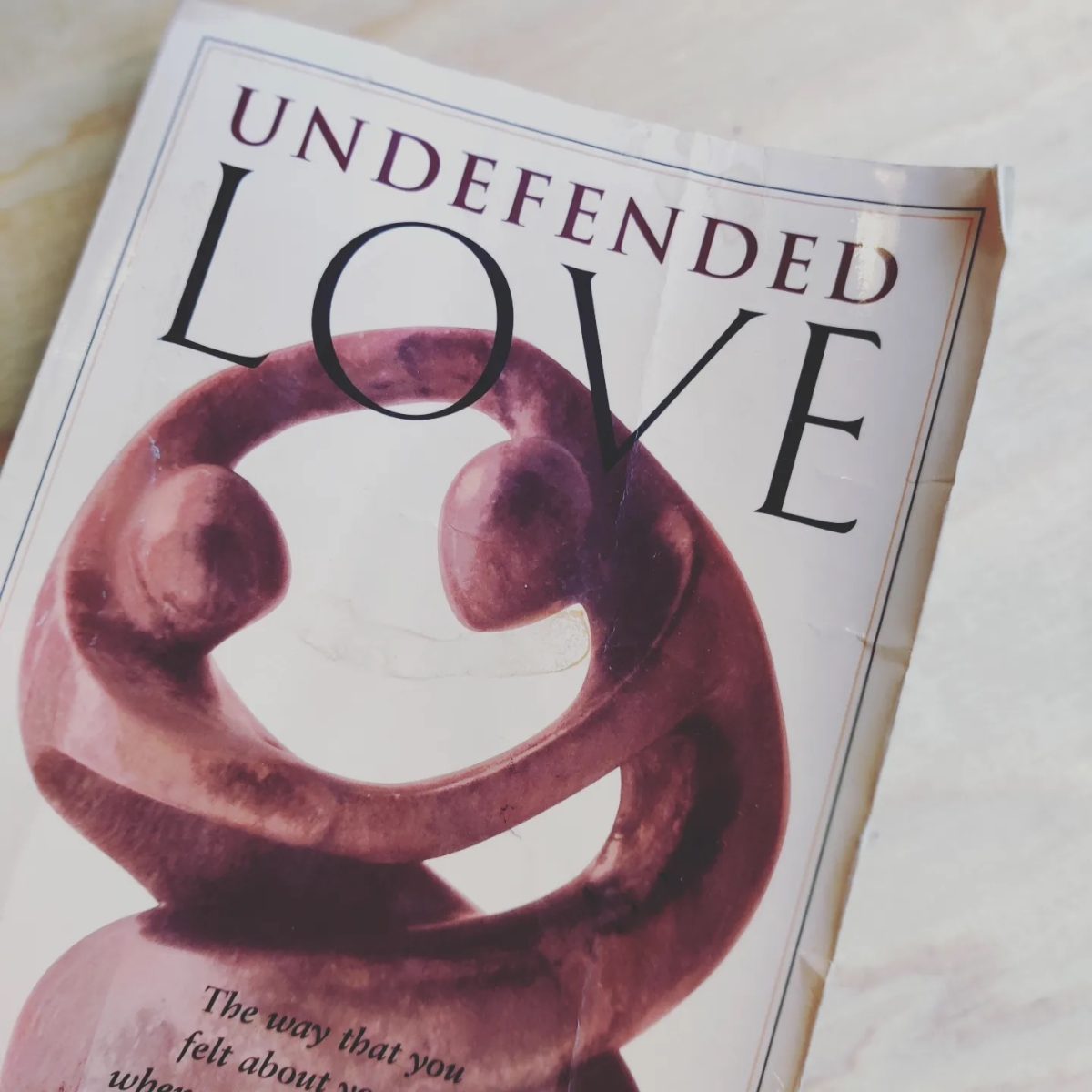
    Undefended Love: a book that questions everything you were (never) taught about relationships

    Undefended Love. Looks like something you’d find in your divorced auntie’s downstairs toilet. Or wouldn’t look twice at in a charity shop, with that cover.

    YET, wise af!

    Especially when it comes to how you relate to and grow alongside your fellow humans. For me, this book challenges everything we’re (never) taught about love and happiness.

    Here are my ‘best bits’; those pages you fold over at the corners. Instead of stuffing it back on the shelf, I thought I’d share in case anyone’s out there reflecting on relationships, love and how you’re developing as a human. I know I am, after a bumpy summer… p.s. I have NONE of this sussed.

    Before we dive in, here’s a nod to my pal Anya Pearse who recommended this book; the big heart and brain behind https://anhourofkindness.com/

    Here we go…

    Your identity is cracked. Mine too. All of us. You might have heard it called ego or personality – these are defensive strategies to protect us from pain. Ego wants to avoid certain feelings that remind us of unresolved pain (usually from childhood). It has needs, wants, demands, expectations – all to avoid getting hurt (and/or gain pleasure).

    Beneath ego is essential self. This is undefended, raw you. It’s pure and innocent. Some call it soul, essence, true or authentic self, god, love – whatever you like. It’s totally free.

    Ephemeral and wanky enough for you? Because there’s more to come.

    Without realising, we often form relationships from ego. This means we go into relationships where our broken bits meet another person’s. Cue years of wrangling as everyone tries to reconcile competing needs, and NEVER feel any hurt.

    Eeek!
    Counterintuitively, those strategies your ego uses to defend you from pain, bring about exactly what you want to avoid. Baffling, right?

    For example, if your cracked identity thinks people need rescuing, you’re going to be attracted to and attract those who want to be saved (with fragile esteem of their own). Your ego needs to know it’s right, so it affirms itself like this.

    Alas, people can only save themselves, so your need to rescue inevitably goes unsatisfied. Ever worried you’ll never be happy? That you’re better off alone?
    In any relationship (friend, lover, sibling, parent etc.), if our focus is getting something we’re only ever going to end up disappointed. Even if that need or want is temporarily met. Love isn’t a transaction or competition, yet how many of us keep score, or monitor ‘fairness’ in terms of give/get?

    This book is all about connecting more deeply with people, undefended. Our cracked, defensive identity, with its focus on fulfilling wants, will only ever limit how deep we can go. IF we keep believing and identifying with ego (rather than undefended essence, which is inherently ‘whole’ and self-satisfied).

    The best we can ever hope for in this context is closeness. And that’s enough for most people.

    Depressing?

    Perhaps you’re ready to go deeper than closeness…
    We can choose a different way to relate to other people. Rather than getting, wanting or making up for what we lack – we see each other as fellow travellers.

    You and your partners, lovers, friends – whoever they are, are on independent journeys seeking your true self. We do not depend on one another. This is our individual responsibility, as is handling our shit when we’re triggered.

    How’s that for provocative?

    As travelling companions, we help and support one another in rediscovering our true self. Like calling out our bullshit behaviour, spotting ego traps, noticing essential qualities and drawing our attention to it, cheerleading. We deepen and un-defend.

    Sound good?
    According to the book, relationship is a crucible or laboratory for noticing and exploring strong reactions, triggers and all the other stinky junk that emerges when egos knock together.

    When the nasties happen, your attention moves towards to what this tells you about you, rather than the other person. This isn’t self-blame, flagellation or introspection, it’s healthy curiosity about what this situation or lesson might teach you.

    So we go inwards (curiosity, patience, honesty) instead of outward (blame, recrimination, anger). The exception of course is abuse and violence = NOT OK.

    The tricky bit in all this is resisting old habits; contending, attacking, defending, winning. Instead, how might we see conflict and disagreement arising from ego as healthy, non-violent exploration and experiment?
    For undefended intimacy to happen, we need inner resources. Another person can help us develop this through both emotional support and closeness, AND withdrawing support too. We must be OK with the feeling of absence, abandonment and other discomfort. Scary, right?

    Closeness comes and goes though. It is only one stage on the journey towards living more undefended, and ever deepening relationships.

    For example: if you’re having an ego meltdown, the other person might meet you there, not with ego, but with their true undefended self (open, kind, aware). They kind of ‘hold’ you safely until you move back towards essence (calm the fox down). And vice versa.

    Doesn’t that sound all deep and nice and lovely?
    To live and love (and laugh) more undefended, and handle those tricky egos, the book recommends the technique of interrupting.

    This means there’s nothing new we need to learn or do; we don’t need to be different. Only NOT respond how we’d usually respond. Perhaps you’ve heard this called awareness, or noticing yourself notice.

    You can become an internal witness to yourself, observing, rather than getting sucked into the drama of ego. Ever tried mindfulness?
    This last bit stings.

    Only by exposing ourselves to the pain we fear most, over and over again (safely!) can we soften and become undefended. Yet the more we do, the more we realise that the tender bit inside that ego defends (essence) is actually rock solid and unshakeable. It’s pure. Already enough.

    THEORETICALLY.

    All this is easier said than done. It takes a lot of courage to be vulnerable, yet the reward is delicious depth, as you support one another in growth. The book reckons this deepening is limitless. You’ll never get bored of this, or each other. YUM.

    Partners, friends, lovers, relatives may come and go. They’re on their own journey. That feels a bit daunting to me, if you thought love meant depending on other people. My suspicion is that if we learn to trust and depend on our inner, essential self, those (undefended) times when we’re supporting others (and being supported) will become all the more sweeter and deeper.

    Much as I’d like to get this sorted yesterday, becoming undefended sounds like a life’s work. We can’t let go of ego and rediscover our true self overnight. Ego isn’t ‘bad’ or ‘wrong’ – it got you this far, after all. I took the book to be inviting us to explore a healthier way of relating, one you already have capacity for, in there, somewhere.

    So perhaps the first challenge is meeting you where you are now? How curious are you to let your true self have a say in running the show, instead?

    Hope that was helpful. Reckon it’s worth buying and reading? Did you even get this far?

    Drop a comment below x

    Undefended Love on Good Reads

  • When you feel neutral, unsure or just ’meh’ about life

    When you feel neutral, unsure or just ’meh’ about life

    We’ve a curious relationship with emotions. At least in the post-industrial, productivity obsessed rat-race we call the developed world. 

    It’s as if they’re an affliction. A mild inconvenience. Vague, distracting – emotions are to be endured, yet largely suppressed. Like trapped wind or a hang-nail.

    I don’t know about you, but darker parts of me judge folk who go overboard on emotion – as irrational, false, volatile, gushing or oversharing.

    There’s something about all this emotional stuff scares me a bit too. They can escalate without warning. Choice and control rarely come into it. They can mug us off.

    How about you?

    Perhaps it’s for these reasons that some of us feel neutral or nothing in particular a lot of the time, when it comes to matters of the heart.

    I see this often when I coach people navigating midlife – it’s difficult to explore how we really feel or what that even means.

    Feeling the feels

    Neglecting our emotional inner world seems like a loss to me. A missed opportunity that I’ve lamented acutely through adulthood.

    For a while, I experimented with what I called ‘emotional literacy’ – like there was a language I wasn’t very good at speaking. Then I coined a new term: ‘emotional fluency’ – like there was some way to get good at my emotional experiments. 

    I read books on compassion and scrutinised emotion word-clouds to grasp their mechanics. I listened to sad songs to make me cry – to see what it felt like. 

    None of this really helped. 

    I still felt unmoved, much of the time. Just neutral. Not uncaring. Just ‘meh.’ Yet something inside, I suspected, was perpetually errant, lacking or wrong. 

    Meet apathy

    Apathy, it turns out, is an emotion too. Hooray! I thought. I’m human after all. I feel something (even if it’s nothing). That’s progress, right? 

    I discovered that apathy is a kind of emotional constipation. A sort of muted, dulled aliveness that’s probably designed to protect us from feeling those inconvenient (dreaded?) feels.

    For whatever reason – trauma, schooling, people like us learned restraint, towards baser emotional impulses like anger, fear and shame. So they don’t get a chance to emerge, more fully expressed. Instead they remain awkward and uncomfortable feelings our egos would rather avoid. 

    Yet if you cancel one emotion, you cancel them all. Hence this universal ‘meh’ feeling people like us can experience, about most things in life (even stuff that OUGHT to move us).

    We’re not broken. What if we just got stuck?

    Our meaty bone sacks are built for safety rather than happiness, apparently. Which means our neutral feeling is a sort of safety from pain, which makes perfect sense, from an evolutionary perspective.

    What helped me shift beyond neutral/meh is the premise that you and I, all of us, have an innate emotional life. Sometimes though, we just fall out of practice. Our emotional muscles can atrophy a bit, for want of a good stretch. 

    All this is very human, by the way.

    This is where things get edgy 

    If you follow my Instagram, you might have seen some gingerly shared stories from the front-line of a harrowing marital separation I recently survived. 

    Well, this particular big change shook me out of feeling neutral, or nothing in particular.

    I’m not advocating anyone puts a thermonuclear bomb under their life, as a speedy route to feeling more feels. However, what I am curious about is how change – especially the profound, painful and disruptive sort – can rapidly transform our emotional experience of life.

    When the heart breaks, it breaks open

    Humans respond and adapt REALLY FUCKING WELL to new, uncertain situations. I say that feeling both delighted surprise, and extra side-surprise that this still surprises me.

    When big change comes (expected or otherwise), when we move towards what’s deeply comfortable, it’s like we wake up. All our systems come back online, including the heart. 

    Like a reboot.

    Since things blew (fell?) apart in life, my spectrum of emotions broadened. Here, have some learns:

    • We fear feelings not things: imagine the thing you fear most happens; your response – that’s what we’re really scared of, feeling that pain, rather than the thing itself having happened.
    • Your literacy/fluency is innate: maybe there’s nothing to learn here, only deepen your understanding of. What if all emotions are already waiting in the wings for a cue? 
    • Emotions are signals: we got ‘em for a reason, so what if it was just another sort of intelligence, an extra advisor or source counsel, like your trusty creativity or analysis? As opposed to a true story…
    • They are gassy: one emotion bleeds into another, often at the same time, even opposing ones. Like a buffet of mixed farts. No one tells us this. Maybe that’s what’s so tricky and shifts us to neutral?
    • Labelling isn’t much help: sad, mad, glad, bad… What do you need more or less of? What is this sensation pulling you towards or pushing you away from?
    • They come in waves: by degrees rather than simply full on or off. The only way out is through – sure they knock us over, but it’s just like paddling in choppy water, you can ride it out until the storm passes.
    • Feelings change and always pass: no matter how awful, they will relent and mutate into something else, even disappear, they are never forever. When was the last time you felt different to now? See.

    This is a lifetime’s work

    I’ve realised there’s no such thing as ‘getting better’ or ‘doing it right’ when it comes to emotional stuff. The templates we need to navigate life are already in there. And feeling neutral or nothing in particular, like we do from time-to-time, is just another kind of emotional experience.

    You got this far – may I presume you’re inquisitive, wary even, of what’s going on beneath your surface? 

    Perhaps you too feel frustrated, wary or confused too (also emotions!). Like neutral-ness is wrong or bad in some way. Like there should be more, or you’re impatient to discover some message wrapped up in all of this, but you don’t know what. 

    Big change in some facet of your life, like the kind that’s catalysed my experience, might not be for you. But I suspect that if you sense change is coming, or you’ve a hunger for it, or even if it mugs you by surprise – that might be one way to explore your emotional curiosity, and experiment with what it is to be human. 8

    Did this article land with you?

  • When you’re restless, like something’s missing or not quite right in life

    When you’re restless, like something’s missing or not quite right in life

    Now here’s a curious feeling. I’ve heard it described like this:

    “Something’s not quite right, I’m not sure what – it’s hard to place. It’s like I’m not in control. Things have kind of plateaued. Life’s OK. I’m just not ‘happy’ with the way things are and the direction life’s heading.”

    The word that comes to mind is restless

    You could very well be driven and independent, comfortable in your own lane, career or business. Maybe you’re quietly confident in your abilities too.

    Yet there’s a lingering, yearning, underlying desire for difference or change.

    Perhaps that in itself irks you?

    If life’s OK, why moan? That’d be ungrateful. So perhaps we’re up against shame here too.

    I feel you.

    And I’ve dwelled thereabouts several times, amidst life’s natural junctures. 

    So here’s my attempt at exploring what might really be going on, with three possible underlying causes of restlessness.

    You’re coming of age

    Something symbolic (genetic?) happens when we move between significant epochs in our life. I’m talking age 30/40/50. 

    It’s not like you turn middle-age one day and everything goes to shit all at once (well it kind of does physically – stuff drops).

    It’s more like gradual awakening(s). 

    Chemistry plays tricks on us. Likewise with social cues. Our priorities change as we wrestle with time’s inexorable march, and let go of/cling on to ambitions.

    My 30s shift began at age 28 and lingered until 32-ish. I soon left the barren grey plains of corporate 9-to-5, via breakdown, for freelance freedom. The 40s shift was similar, albeit deeper, starting earlier, say 37 when I felt disillusioned, went mad in a basement, then reemerged as the coach I am now.

    What I think I’m saying is it’s all perfectly natural. 

    Yet coming of age can sneak up and ambush you, especially if you’re not aware of what’s going on, in that wondrous fleshy machine of yours.

    So I suppose the question is: what significant periods of life are you moving between? Where might priorities be shifting? How is it happening: to you or by you?

    That reminds me to treat myself like a ‘meat pet’ 

    We inhabit these fallible, credulous, fragile sacks of meat (our bodies). And we’re only cognisant of the thin foam brothing atop our murky subconscious beneath. 

    You’re complex.

    In layman’s terms, I wonder how essential it is to give ourselves time and space to work things through, to bring our frail meat-sacks along gently and respectfully. Because it increasingly feels like my body has a mind all of its own…

    I’m still working on that anyway. How about you?

    You’re plateauing

    To borrow more paraphrasing from my coaching clients:

    “It’s as if I’ve played by the rules, done what’s expected of me and it’s got me this far, which I’m sort of grateful for. But it’s like the old ways aren’t working very well any more. It doesn’t feel like I’m ‘getting on’ like I wish I was.”

    The word ‘expectations’ jumps out here

    Few of us are aware of, let alone escape, the expectations we absorb from people around us. We’re talking norms, values, prejudices and pressures – about success and how to live our lives. Aka work, debt, breed, die.

    Then there’s comparison with others: dirty yet inevitable. We measure where others are up to. We crave better for ourselves and our loved ones. Then give ourselves a hard time for falling short.

    So if I may, I invite you to ponder these questions: what does ‘getting on’ really mean? What rules or expectations have you absorbed unquestioningly, and which would you rewrite if you could?

    Undoubtable hell

    Tenuous perhaps, but I’m reminded of Gyles Brandreth’s reflections on WW2, and how some reminisce fondly upon it as a golden era for the UK, despite folk having bombs literally dropped on their heads (by nazis). 

    He argues that while life was undoubtedly hell, people felt challenged and (if fortunate enough) alive. They had purpose and intention in life, and their capacity for adapting and prevailing was constantly tested.

    I wouldn’t advocate moving to the embattled Ukraine anytime soon. Or nazi bomb parties. But I do ask what other, healthier (and sane) ways are there for you to feel challenged, alive and purposeful? 

    On your terms, as opposed to anyone else’s, of course.

    You’re not in control

    As a teen with exams to pass, I convinced myself I had to touch surfaces with all 10 fingers or my family would die. 

    Dark.

    I now realise this was probably OCD – a very natural quirk of the human mind as it desperately attempts to manage uncertainty, and our unknowable future.

    You needn’t list OCD as a nocturnal hobby to identify with poor, spotty 90s Chris. Could your present restlessness, lingering sense of dissatisfaction, frustration even at times, quite possibly be a similar reaction to control or lack of it?

    Buddhists reckon attachment, and wanting things to be any other way than how they are is the root of all human suffering. At some level, maybe you’re suffering like this in your own way. You’re not out of control, yet perhaps you crave a better grip on where life’s going?

    Which is relatable. 

    We all expect some level of control in our lives, and we often believe that more is better – the antidote to uncertainty.

    A different (philosophical?) look at this

    What do ‘agency’ and ‘influence’ mean to you?

    I take agency to be the power to take action in life. And taking action affords us influence on its course. 

    So I’m curious: how would life be different if you explored agency and influence (rather than control)? What would it take to notice yourself (especially in predicaments like the one you’re in now) and make new or different choices when it comes to action?

    There’s also something in here about being smart enough to accept life doesn’t always go your way. I believe that about you. Do you? 

    I hope you’re still with me here… 

    So should there be any truth in my philosophical whimsy… is control really what’s going on here? Or is there something about adapting and coping in tricky situations, with greater awareness and choice? 

    Because I strongly suspect you’re also BRILLIANT at all that too. You already reached this ripe age, didn’t you?

    Maybe it’s case of where we focus our dwindling attention…

    What do you really want? By that I mean your secret plan, the one not getting the attention it deserves. Tell me: what’s the big adventure, project or idea you’ve got on the back burner?

    In my humble experience a) everyone has at least one and b) it often links many reasons why you feel restless.

    And if you did make ‘that thing’ more of a priority, how far would it go towards unlocking what’s missing or not quite right in life?


    Would you enjoy being poked?

    If any of this landed, you might like my daily challenge to help folk like us play with intuition, and trust ourselves to cope, adapt and thrive in the moment. 

    Its working title is Micro Pokes, and it’s presently a work-in-progress. You can find out more and get invited when it’s ready here.

  • What improv taught me about being a cynical alien snuffle hog

    What improv taught me about being a cynical alien snuffle hog

    A train squeals into dimly lit Derby station. Two baby-faced students drift into its congested vestibule. Crouched in a corner on my rucksack, I listen as they bemoan presentations they’re obliged to deliver tomorrow. 

    One must memorise and practice so he doesn’t let his tutor down. The other wants it done quickly, meaning less time for worrying. Neither wants to endure anyone else’s presentation.

    I’d been expecting this. 

    When modern life welcomed me back into its familiar, restrained embrace. Pleasantries over, it hands you a list of shoulds and musts, demands a plan, then leaves you alone to screw over the hows and whys.

    Crouched in that carriage vestibule, bearing witness to workaday woes, felt very at odds with the adventure I’ve just been on. I’ve just returned from a four day improv retreat into my imagination, emotions, and those of my fellow improv-ers.

    Improv, in case you’re as new to it as I am, is unscripted, improvised performance. You just make it up as you go along – singing and acting your way through ideas as they emerge. You play with scenes, characters, objects, games and narratives. 

    And hosting this particular retreat were the effervescent Maydays, who make comedy improv an artform, emphasising play, fun and laughter.

    In a moment of mad intuitive decision-making, I joined their retreat to broker personal peace with spontaneity and uncertainty. To let go of over-planning, preparedness, control, and that fear of being unready and making mistakes. 

    All big obstacles for folk like me.

    So I expected the big challenge to be coping with novel, uncertain situations. I thought I’d struggle to take myself less seriously, and immerse myself in play.

    That was my first inconsequential mistake

    Like humanity since forever, I navigated novelty quite well, I think – imagination took care of that. And there’s relish in playing daft and making a tit out of oneself. Loved it.

    No, the real blocker was those ever pesky unhelpful beliefs, and negative internal chatter. 

    I’m talking about the kind we accumulate memorising obligatory presentations no one really enjoys giving or hearing. By pretending to be grown-ups in everyday life. By exposing ourselves to scrutiny. By avoiding failure and mistakes. By making unrealistic expectations of ourselves and others. 

    Then moaning about it all on late-night train journeys through Derby. 

    Beliefs are like chain-link fences surrounding our ego. They keep things safe and knowable. And mine strained under the weight of my own bullshit in our very first improv exercise.

    It was a circle game where fellow improv-ers played out imaginary scenes. Newcomers could freeze the action, tag in/out, then shift the scene somewhere else with new characters and action. You might remember this from drama lessons at school.

    Stood at the edge of that circle on day one, I recall watching with simultaneous delight and disgust the ease with which these strangers threw themselves into it. Part of me wanted to jump in and play, unafraid and keen to make playmates. The other shook his head, tutting at ideas he deemed reductive, childish, or shallow; scared and awkward. 

    It was like being a grown-up standing at the entrance of a park, holding a child back because the swings look dangerous, or other kids aren’t good enough; or a thousand other flawed arguments against just, well, seeing what happens.

    I am one of four mystic oracles

    I vomited this at Ed, one of the Maydays. I likened it to hearing all those disapproving, judgemental, ridiculing voices at once. Bullies from childhood, parents, siblings, classmates – telling you to hold back, stay in line, to avoid risks. 

    Ed reassured me this was all perfectly normal apparently, when new to improv. He revealed his after kindly dropping me into a group game, live on-stage, at the first evening show of the retreat.

    Here I was one of four mystic oracles who responded with wisdom, one word at a time, when posed questions by the audience. 

    Absurdly, for someone who loves showing off, the heat of public scrutiny felt acute, as I strode onto stage with my fellow oracles. That inner child at the park gates was grinning, playful and enraptured. Yet holding its hand firmly was that cemented adult – unwilling to sway in gay, reverential abandon like my fellow oracles.

    Slowly, I began to wave my arms and surrender to the game, daring to lift my eyes beyond the floor, toying with questions from the audience and offering daft responses. 

    It felt excruciating at first, then gleefully inevitable. 

    I was having inconsequential fun. And it felt freeing.

    Over the course of the retreat, I was thrown into hours of pair and group work like this. We were given scenes, props, characters, relationships and emotions to play with. 

    My inner child gradually led the adult. I remembered how to play.

    Yet still, the judgement – “what are these dickheads doing?” it asked, “that’s so dishonest to pretend,” “how is THAT funny?”. 

    In a clinic with Katy, of the Maydays, I listened as she deftly shared techniques to resolve others’ improv problems I could literally only imagine, beginner as I am. At session close, I thought fuck it, she seems nice, I’ll open up about my struggle with judgement and cynicism. 

    Her advice was reassuring and sincere. In fact it probably applies to any situation we feel anxious or cynical about. 

    She said it’s about ‘over-agreeing’

    In improv, we are told “yes, and…” is the motto: meet every idea with openness and enthusiasm, always wonder how you can make it even better, more fun and playful for everyone. 

    So to combat my demons, her suggestion was to greet someone’s ‘annoying’ hyperactive monster with the reaction “oh god I’m this monster’s superfan, can I get your autograph?!” 

    This made sense. 

    It made even more sense outside of improv

    I don’t know about you but I’m uncomfortable not knowing, being on my own, and having to make fast friendships. Well, as a newcomer to a retreat like this, I had no choice but to agree my way through. 

    To over-agree.

    In crowds like this, my inner stroppy teenager (yes, another character) wants to cross its arms, snort and judge people from the sidelines. “Look at how quickly they make friends, it’s so disingenuous, why are they so over-the-top with each other?” 

    That part wanted me to believe everyone else was the problem, when really – I was the odd one out here. I came to the realisation that outsiderness was my own construct. It was a subliminal choice. 

    So began my journey with over-agreeing. By observing the warmth and innocence amongst fellow improv-ers. I tried to meet it with curiosity and my own (for now, understated) version of agreement.

    I decided to be an improv-er

    It all came together one evening in a conversation with fellow improv-er, Gareth. I asked him what it was that made a community like this. He was well-refreshed at the time, yet strung together the most useful and eloquent summation of improv-types (at least at that retreat). 

    He said what united people like this (us?) was a love of attention, yet not too much, a love of games and world-building escapism. Many had experience of bullying, feeling left out, or other cruel hands life can deal you. 

    He said it attracted gamers, coders, dancers, and people with self-confessed ‘boring’ jobs. I’d noticed that too – how many people improv-ed to escape the everyday workaday, looking for a safe place to play, free from judgement and obligation, perhaps. 

    But the kindest observation was that at heart improv is optimistic and hospitable. People who love improv love making friends and playing. 

    What a place to be a vulnerable newcomer!

    Could it be that I’d not only found a way of life I’m drawn to, but a tribe too? One to grow amongst.

    I’ve always, somewhat arrogantly, regarded myself as a bit alternative in terms like these; a bit nerdy and escapist, a sometime victim of convention. Certainly not ‘mainstream’. 

    Yet here I was bringing all my accumulated mainstream baggage and judgemental persecution with me into the retreat, killing my own buzz. 

    And in doing that I was practically defining the role of conformist!

    So here was the real obstacle to improv. 

    Not technique – that could be learned. 

    Play? Well, I suspect that’s innate. I melted into scenes like the best of them. 

    Mistakes? Too late, the game has already moved on.

    No, it was self-editing and self-consciousness. 

    Ego. 

    Which led to yet another lightbulb moment

    I later attended a session on supporting other humans in improv. It wasn’t my first choice – I just picked from whatever workshops were left. 

    Heck, this improv. Let’s go…

    During that session we explored our improv preferences. Some liked objects, others liked slow and calm. Mine was surrealism. Cue a library scene in which fellow improv-er Wanda created conditions where I inadvertently kink-shamed a snail via bad translation. 

    Only later did the lesson become clear, when she pointed out what worked. She’d created the scene for me, out of kindness. 

    That was Wanda’s gift. 

    More walls came tumbling down

    Play is generosity. Play is altruism. Saying yes, and over-agreeing. It’s all just making hospitable games where we can all have a nice time together.

    At some point, probably in growing-up and taking responsibility for everything, I forgot that that was so important. 

    Yet lurking beneath all the trappings of adulthood – there it still was. The need for kindness and the ability to be kind in play. 

    And without realising it, I’d been doing it for others myself on this retreat, every time I threw them a line, or let imagination lead us both.

    Reciprocal kindness at play was how my judgement quietened

    Suffice to say it precipitated my natural transition into alien snuffle hog on heat, singing “I’m dead inside” with a choir, and smearing blancmanage on a trio of lusty uncles.

    One particularly fond memory of the retreat is yelling “shit and pointless! Shit and pointless!” with fellow spoof-businesspeople, after we’d each delivered boardroom presentations we’d never seen before. My alter ego? Nigel Chiswick, sycophant, golf prat and shallow materialist.

    In short, things got better when I embraced discomfort – contradicting and surprising myself.

    The cynicism and judgement didn’t stop, I just paid it less mind. I made other people my focus, did right by them and me – genuinely wanting what felt best for us in the moment. 

    Perversely, a workshop of ‘starting with yourself’ helped with that. 

    To improv well, apparently one can look inside for inspiration; at what empathy is telling you, or what feels intuitively interesting. That’s as opposed to trying to be funny, clever or original. 

    It’s nice when you get a laugh, but it’s even nicer when others come along with you. 

    Another lesson.

    I got way more than I bargained for on this improv retreat

    I discovered, or rediscovered, that like most challenges, we already have much of what we need inside us. That often in life, the thing you think will be the thing, isn’t the thing. The thing is something quite different, or could never have predicted. You can hear more about that on my audio blog podcast.

    And I’ve also found a new hobby that isn’t one

    Improv is a way of life, or at least one that (im)perfectly fits where I’m going. Ironically it couldn’t be any more like the way I already (hope) I coach – with curiosity, playfulness and compassion. In fact, what rescued me several times on this retreat was ‘what would a decent coach do?’. 

    Now I’m thinking up new ways to bring the improv ethos into coaching sessions with clients. And how I might draw on those wrestles with self-censorship into my coaching practice.

    And like every decent coach, I’m asking new questions. 

    Like how can I live a life more improv? Where can I practice with (and be kind to) others? What vibes do I give off, in play, in work? And how can I over-agree more?

    An unexpected passenger

    As our train rattled northwards out of Derby station, I felt a foreboding sense of resignation. 

    Reality had pierced my improv bubble. 

    I’d expected this – being back amongst people who, like me, bought the bullshit. People prone to preparing, stressing and struggling.

    Then an unexpected passenger hopped on at Sheffield. 

    She swanned into our crowded vestibule, joking about the Covid-19 super-spreader event it clearly was. 

    Suddenly, another passenger piped up: “Just so everyone knows: I’ve got a delta variant”. 

    And before my ego could intervene, I was in on the vibe: “Ace! Can I have one please? I’m collecting it.” 

    Surreal. Inappropriate. But I suspect that’s how I like my improv. 

    Unfiltered. 

    And this retreat gave me permission to begin exploring that. Judging by the sheer diversity of people in attendance, it seems that playful resourcefulness in the face of what’s unknowable, the kind I was initially looking for, is innate. 

    It’s already there within us. 

    And the situations to be more improv are all around us; in our jobs, homes and late-night trains from Derby.

    Just gotta push through those filters, play like mistakes don’t matter, and help other people along in the game.

    Do you (over-)agree?