Tag: copywriting

  • 3 quick questions to ponder before you hire a freelance copywriter

    There are secret powers us decent copywriters rely on everyday when we write convincing words for our clients’ marketing campaigns.

    No, it’s not our lightening-fast ability to use pencils or keyboards. It’s more nebulous than that.

    We’ve nurtured some important traits that make the whole writing process smoother and more productive. So here I’ve tried to corral them into three neat little indicators. You can use these if you’re looking for a reliable freelance copywriter, or to give yourself peace-of-mind that you’re about to hire a capable one.

    I recommend you invite your freelancer over for a coffee (ideally plus cake) and a friendly chat. Be honest about what you’re up to – you’re making sure they’re the right person for the job, after all (and that the job’s right for them).

    Be inquisitive about their art, probe their experience then keep an ear out for any indications of the following.

    1. Is your copywriter quick on the uptake?

    Copywriters should be able to quickly grasp how things work; like complex processes and patterns buried in detailed information. That usually involves sifting through clients’ documents, collating nuggets of information and deciding what’s important and why. Like the kind you’ll find in white-papers or sales brochures.

    The should soak stuff up like a sponge. Not everything will seem relevant to them at the time, when your copywriter’s researching and planning your copy, but may be invaluable later.

    And this isn’t just about information . A lot of the important stuff – your culture and your values go unspoken, yet still have a role to play in your marketing. That demands emotional intelligence and a knack for reading between the lines. How people say things is as important as the way they say them.

    Ultimately, when clients like you have urgent deadlines to meet, your copywriter can’t slow momentum down with a sluggish approach to research. You need them to be quick of the mark.

    Almost 10 years as a copywriter has taught me that it’s better to approach research and planning with an objective, yet ruthless attitude.

    Why ruthless? Well, you can’t possibly cram everything into your copy – only the best bits which clearly communicate a point. Maybe it comes with age, but when you’ve read up on and spoken about as many projects as I have, you get a sixth-sense for knowing what might come in handy, and what can safely be ignored.

    2. Is your freelance copywriter worldly, widely-read and well-travelled or experienced?

    Insatiable curiosity is what compels me to take on new work and practice my art. I’m motivated by the rewards of working out why things are the way they are, and what make them tick. And any decent copywriter will say the same.

    That’s good for clients. Why? Because what a copywriter lacks in knowledge (of your specific business), they can make up for in experience and imagination. And travel, exploration or being mindful of your day-to-day experiences is a classic way to stay open your mind, and hone your senses.

    A recent example writing about mattresses springs to mind (pun intended). I’ve never sold or built them, but it helped having bought one not long ago and being a bit of a geek in researching how to get better sleep. I also like my kip – so it came in handy being able to describe the sensations of good sleep and what it feels like to endure poor night’s worth of zzzs.

    An open-mind also brings balance to your copy. Worldly copywriters bring new and different perspectives to how products or services can be presented. That avoids making assumptions about customers – the kind everyone risks making, when you’ve been immersed in your business for a long time.

    3. Can your copywriter put themselves in someone else’s shoes?

    The ability to see things through a reader’s eyes is probably the most important of all three points here.

    Understanding readers’ priorities is everything. They’re the most important person you need to connect with – not stakeholders, investors or suppliers. They’re the people you need to convince that something is worth doing, whether that’s buying, booking or enquiring.

    That same knack for empathy also applies to a copywriter ‘getting you’. It helps them craft copy that you’re willing to nail your reputation to.

    Empathy creates plausible copy too.

    Smart people don’t fall for false sentiment. They have to believe that whoever wrote the copy has touched, tasted and smelled what they’re about to invest in themselves. That means treading a careful balance between truth, projection and a strong sense of conviction in the products or services your copywriter is writing about.

    Of course, I’m not advocating lies here. If a copywriter, based on truthful and accurate information, can imagine an ideal world involving your product or service, then they’re well-placed to reverse engineer that process, and recreate it with copy. That’s because they too have lived and breathed the very same process of informed decision-making and persuasion that customers experience.

    That’s all for now. The more boxes above your copywriter ticks, the better. And if things don’t go so well – you know where to come…
  • Why decent copywriters should shoot themselves in the foot

    After injecting some energy and enthusiasm back into a industry insight whitepaper for Grant Thornton, it occurred to me that its authors might like to know which copy I edited, and why. After all, it’s nice to have some context and justification when a stranger (however expert they profess to be…) tramples all over your words.

    Then it occurred to me: by supplying that guidance, my trade secrets, I’m probably doing myself out of a job.

    I’m essentially ‘up-skilling’ clients. I’m giving people the tools to copywrite and copyedit words themselves, so ultimately, they don’t have to rely on a freelancer anymore.

    But then I had a second thought about why this is the right thing to do: it comes down to what you stand for and where your priorities lie.

    I want people to communicate better, and get their point across clearly – so they understand one another and avoid conflict, dishonesty or miscommunication.

    That’s always felt more important to me than how much work and money I can gain.

    So if you want guidance and advice on how to improve your copy (as well as having it made better at the same time). Just ask.

  • I’m no grammar Nazi. But I am a clarity fascist

    Sometimes, when they hear you’re a copywriter, people proudly exclaim that they too can’t stand rogue apostrophes and a complacent attitude to putting letters in the right place – especially in this age of automatic spell-checkers, they often say.

    Yet there’s so more to the art of copywriting than this.

    I’m all in favour of getting things grammatically tight and making sure things are spelt correctly, but as a freelance copywriter, what really presses my buttons are words that convey a message with precision and clarity.

    A fisticuffs between ‘there’, ‘their’ and ’they’re’ wicks my sensibility as much as the next linguistic nut. And I’ll begrudgingly tolerate an inadvertent spelling malfunction if the sentiment behind the words makes a point succinctly.

    But if copy rambles on and on with irrelevancies, shirks responsibility about who’s saying what and doesn’t leave you with a clear impression of what to do next, then I come out in a semantic rash.

    It’s then that my mental red pen comes out and words get euthanised left, right and centre.

    Because incoherent wittering is what really holds copywriting back and it deserves a zero-tolerance approach, unlike trivial grammatical pedantry.

    And a zero-tolerance approach to anything short of absolute clarity is exactly what you get when you hand your copy over to me: the self-appointed simplicity stazi.

  • Copy: it’s all in the execution

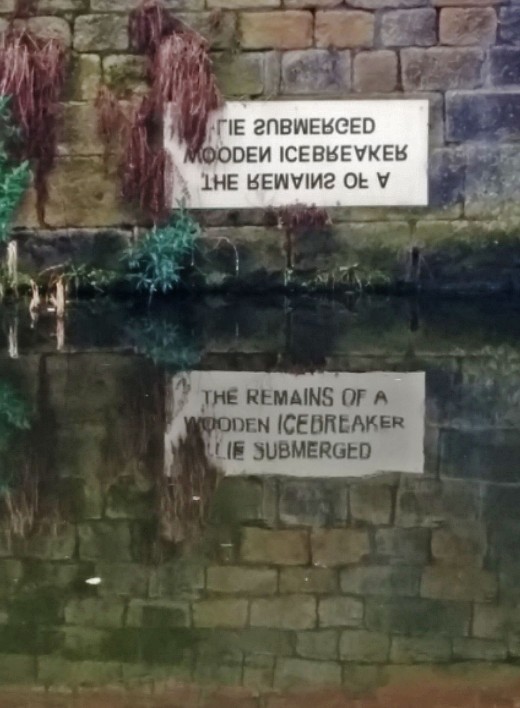
    I dash past this clever bit of copy in Leeds at least once a week and it never fails to snatch my attention and raise a smile in the mind.

    It’s a notice under the Canal Road bridge in Armley, Leeds on the Leeds-Liverpool canal:

    Notice by Leeds Liverpool Canal that reads "The remains of a wooden icebreaker lie submerged"

    Just look at it. It’s all in the execution: a perfect symbiosis between copy and context.

    The codified message naturally commands your curiosity, and the message is simultaneously clever, and when decrypted, rewarding.

  • 5 things you probably forgot to tell your freelancer in that brief you meant to write (part 2)

    Recently, I explored the first 3 of my top 5 things to ask at the outset of a project. These are questions both clients and freelancers alike often overlook, but the information they reveal can make the difference between a project flying out the door faster than a greased whippet, or a lame Fido that hangs around your kitchen, urinating uncontrollably at the slightest disturbance.

    Before I pick up this article where we left it, let me remind you once again that it’s OK to not know the answers to these questions.

    This all about provoking discussion, and being mindful that the issues these questions allude to are more important than having all the correct answers straight away.

    4. How should someone feel afterwards?

    This is about characterising the emotions that we want to associate with an artefact, again from the point of view of your audience, reader or customer. This is after they’ve interacted with whatever it is this project is meant to produce – like engaging marketing copy or a lively photograph from an event.

    There could be myriad emotions, but it’s surprising how limited our vocabulary is to describe them all. Go beyond the obvious – happy, sad, reassured and all of a sudden people draw blanks.

    The book ‘Non-violent Communication’ has some excellent atypical emotional language to borrow from – like exultant and rancorous. Not two you’d usually employ, I grant you, but it provokes specificity in what is essentially our criteria for success: the level of connection we want to make with the users of our product.

    Generally speaking, most projects want to evoke a positive response. Fear-based marketing is effective, but cowardly, to paraphrase advice from one of my clients.

    In the context of copywriting, you’ve got to be genuine and honest when it comes to emotions. I’m all for giving people legitimate information, then using language to accurately describe some truthful future state. That’s how you make meaningful, lasting connections with customers.

    5. What would wild success be like?

    What a lovely one to finish with. Go on, ask the question – I bet you won’t.

    In a fact-finding meeting between client and freelancer, it can feel a little awkward to ask this wondrous question. But why not? Humans seem to function better when they know what they’re aiming for. So let’s choose something lofty and ambitious.

    This is about giving your freelancer a gold standard to work towards, and a chance to exceed your expectations. Some of us like to impress people – we like the praise and the extra satisfaction of having gone above what was required.

    Asking this question also encourages innovation and experimentation. In the past, it’s compelled me to included extra ‘wildcard’ options amongst my event photos for clients – a perspective or object they wouldn’t usually promote, captured in a way they didn’t ask for.

    That’s the beauty of being a freelancer – an outsider, you bring new ways to approach problems to people who are so close they struggle to step back.

    So use your imagination, set the bar high – who knows, it might just pay off.

    Read part 1 of this article.

    Download your free questionnaire for better project briefs

  • 5 things you probably forgot to tell your freelancer in that brief you meant to write (part 1)

    Who really bothers to write a brief in the real-world? Perhaps those agencies with multi-million pound brands on their books, and maybe even the occasional diligent client at the more ‘value conscious’ end of the spectrum.

    Usually though, the project brief remains elusive – little more than a shared verbal understanding, explored in those first few, tentative conversations between freelancer and client before they embark on a new project together.

    Done well, a brief does more than formalise what everyone needs to understand about a problem and how it’s to be solved. It prompts you to look at things from every angle, and ask important, often overlooked, questions – even if they can’t be answered yet.

    A few years ago, I ploughed through various dry textbooks (finally, that PRINCE2 training manual came in useful) and blogs about writing good project briefs. From that exercise, I produced 20 excellent questions every would-be commercial problem-solver should ask at the beginning of a project.

    Whether you’re a high-profile agency or a lowly freelancer in Leeds like me, these questions will unearth the crucial facts, or at least prompt people to dig deeper until they’re exposed.

    Here are 5 of the best, with a downloadable project brief questionnaire including all 20 questions. Naturally, I’ve written this in the context of being a freelance event photographer and copywriter in Leeds, though any creative project stands to benefit.

    1. Who approves this project as complete?

    More often than you might think, who commissions the work and who approves it, aren’t the same person.

    Here’s how it happens.

    Imagine everything’s going swimmingly. In fact, client and freelancer alike are beginning to suspect things are going almost too well.

    Then, with the finish line in sight, some high-ranking, hitherto unknown, senior director pops up and turns your project upside down. They want to have their say (rightly so), and are perfectly placed to do so – coming to the project just as it’s ready to fly out the door.

    I’ve no problem accommodating people with different views; the issue here is when and how. Sometimes, well-intentioned clients shield themselves (and their freelancers) from erratic interventions like this, but it’s akin to spraying your fingertips with Lynx as a teenager to prevent your parents smelling the smoky whiff of those 10 L&Bs you’ve been experimenting with.

    Sooner or later, everyone wants to stick their oar in on a high-profile project – there’s something about an impending deadline that encourages people to micro-manage or hunt for undeserved glory.

    Far be it from me to interfere with the internal politics of any company I freelance for, but in my experience it’s better to get everyone involved sooner, with clear expectations of what input we need from them and when.

    That might be feedback at milestones, or simple involvement by exception – only when things go wrong, or a decision needs to be made, do we escalate to senior level.

    Finally, what ‘complete’ means depends on who you ask, and what constitutes a ‘satisfactory’ delivery can be entirely subjective, especially when you have lots of people involved.

    If you’re the client, I recommend you nominate one person who ultimately decides when a project is complete, and we make explicit their criteria for success so, as a freelancer, I can work towards it.

    2. Have you seen anyone solve a similar problem?

    Every idea has its inspiration. This is about getting to the root of the brainwave that made you, my client, pick up the phone and hire me as your freelance copywriter in Leeds or event photographer.

    Why? Because there’s no point in paying for a freelancer to second-guess your vision. If there’s already something similar and tangible out there that you want to replicate: bring it, show it and let’s build on it.

    In the context of freelance copywriting or event photography; was it a competitor’s ad you saw? An image on TV? Or did you read an article in a magazine, or lift an idea from a book?

    People say there’s no such thing as an original idea, and that creativity is just repackaging old ideas. I suspect there’s truth in both, plus a place for pure, inexplicable spontaneity.

    All I know for certain is that it’s all connected when it comes to inspiration – however disjointedly. So reveal everything, however tenuous and obvious to your freelancer. It can only help improve the end product.

    3. What keeps your audience awake at night?

    If you’ve read any of my other posts, you’ll know I love crowing on about writing for your reader, addressing what’s important to them and really pressing their buttons. That’s how you connect with people – through research and planning.

    So this question’s about getting under the skin of your audience. ‘Audience’ is of course your customer, reader, client or whoever else you’re trying to influence, furnish with information, or persuade to do something.

    OK, I don’t expect you to really know exactly what people think. The subtext to the question isn’t really to intrude upon their anxiety disorders. It’s to provoke discussion around a reader’s wider lifestyle and their underlying motivations.

    I love asking people this question because you can see them pause and consider their answer, while they imagine someone else’s day and their innermost thoughts and feelings as it comes to a close.

    Our objective is to understand their thought processes, what bothers them, the burdens in their life – these might give us revealing clues about a useful context in which to frame an idea. Perhaps we could pair our solution up with one of their burdens, providing it genuinely eases it, of course.

    The answer might not be clear, but remember, that’s not the point – this is about provoking discussion and imagination.

    Download your free questionnaire for better project briefs

    Read part 2 of this article (published on 17th Feb 2016).