Category: Strategies

  • An outsiders’ renaissance for irregular humans like us

    An outsiders’ renaissance for irregular humans like us

    If you painted a vignette of your formative years, what would it look like? My adolescence is a lanky geek staring out of a bedroom window lamenting the world’s indifference, anticipating myriad traps ready to kill or maim you and the persons you hold dear.

    Bleak, I know, but that’s growing up in a northern industrial town for you.

    Sometimes the outside world had the temerity to enter my inner one. Like the night Sally and Kerry from school spilled into the front garden of my childhood home with a bunch of scallies. Despite being several rungs up the social ladder, presumably they thought it’d be a laugh to give the neighbourhood hermit a knock.

    “Can Kerry use your bog?” 

    I remember mum answering the door. “There are some girls downstairs to see you, Chris,” she announced, smirking like mums do, skirting gingerly on the periphery of teenage sexual politics. I cringed, then tore myself away from the concocted hysteria of TV’s Robot Wars to investigate. 

    I met Sally peering around the door, her eyes crossed, reeking of cider. Behind, in the darkened garden, innumerable silhouettes fell about, guffawing and yelping. 

    “Can Kerry use your bog?” she slurred, using the decorous Widnesian word for toilet.

    “Er… Dunno, I can ask.” I replied, unsettled by society’s wanton intrusion.

    “Dunt matter,” Sally said, looking over her shoulder into the shadows, “Kerry, you alright?” 

    “Um, yeah,” came the disembodied reply after an ominous pause, “Ask him for bog roll.” 

    “What the fuck are those!?” Sally asked, returning from the bushes for a third round of tissues. She was pointing at my feet, sniggering. I wore moccasin slippers – the kind your granny might relax in, ornately stitched pale brown suede, with a fancy leather bow on the front. 

    Sally got the laugh she was looking for. 

    I tucked both feet behind a curtain and shrank into the door. Not shy, just fearful of retribution. Widnes championed a complex, fragile relationship between masculinity and attire – one I still don’t understand to this day.

    Heaven knows I’m miserable then

    This experience, and many others like it, formed an opinion in me that people – popular people (and therefore, by extension, everyone apart from me) were somehow different. They had priorities, motives and means distinct from my own. 

    And consequently, I was doomed to be an outsider, though partly by choice. I didn’t fancy associating with folk who didn’t customise their hobnobs with squirty cream, study Monty Python songs like gospel, or keep a secret cache of crispy Denise van Outen pics shoved behind their wardrobe.

    Looking back, it’s obvious why I was drawn to the Smiths at about the same time hair in uncharted bodily regions became a life goal. What they sang about – the awkward social encounters of a fantasist, acerbic cynicism, and generally feeling very, very sorry for yourself, felt deeply familiar. 

    It wasn’t their intellectualism and musical prowess (though I’ve come to appreciate that too) it was more what they stood for, embodied by Morissey in particular. Here was a like-minded miserable grump, who felt more deeply than most, to whom life also happened.

    In Smiths-era Morissey (pre-jingoistic nationalism) my nascent identity was complete. And I’m not sure I ever grew out of it. 

    Or that I even want to.

    Many cling to outsiderness, do you? 

    I suspect you’re screaming – that’s all teenagers, Chris! Indeed, some are lucky enough to discover a movement: punk, goth, indie. They scratch the itch and one day grow beyond outsiderness – they find a place, jump on the gravy train, sell-out, or otherwise play by the rules. 

    Alas, even counter-culture movements were too mainstream for awkward young me. And I suspect there’s a good chunk of other unbelonging outsiders out there who didn’t (can’t? won’t?) transcend outsiderness, making it a recurrent and inescapable theme throughout life. 

    What about you? 

    If you feel like you’re perpetually standing on the sidelines, observing others in delight, horror or utter bemusement, as they engage in an increasingly absurd rat-race – then you’re a bit of an outsider too. 

    Is it your self-reliance, free-thinking, creativity or contrarianism that makes you feel peripheral to conventional ways of living and mainstream culture?

    You try not to judge. You know other people are only human like you. But still…

    Convention isn’t just mad, it’s toxic

    I suppose I’m championing a renaissance in constructive outsiderness. With rampant inequality, greed, social injustice and intolerance all very much (un)civilised and unthinking norms, perhaps these particular conventions are worthy of rebellion?

    Let’s not forget inaction on the climate crisis too. There’s another norm worth challenging. 

    The world’s gone full-Kerry and laid a great big mahogany tod right in the middle of the garden. Staring out of our bedroom windows, environmentally-minded outsiders the world over stare and point in exasperation at said turd, wondering who’ll bear the consequences.

    Outsiders have options

    The benefit of age (and dare I say it maturity) has taught me a few things about outsiderness. I’ve come to respect the freedom, perspective and opportunity for change it presents.

    My take is that outsiderness needn’t mean isolation or loneliness, like it did 25 years ago from my bedroom window. It can actually bring you closer to people, paradoxically.

    Outsiders like us have options.

    Like all special abilities, great power comes with great responsibility

    On a bad day (or year), outsiderness can compel us to seclusion. Until relatively recently I found myself going mad in a basement, renovating our house. The DIY I enjoyed, the feeling that the world kept spinning without me, and I had no place in it… ‘oh no, here we go again,’ I thought, reaching for hobnobs and tattered Denise Van Outen archive.

    On a good day, outsiderness can be a lens; helping you thrive amidst the noise. This really helped me as a freelance copywriter. Clients valued my impartiality and the fresh perspective I brought to their world – one I wasn’t a part of. I was paid to call bullshit on their nonsense, and tell-it-like-it-is.

    Now it’s emerging as a foundation in my coaching – helping people embrace their inner outsider, to create and occupy a place in the world, and craft a peaceful bridge between where we are now and where we need to be.

    Has your outsiderness ever opened doors for you (ideally while not wearing your granny’s slippers)? Maybe people come to you because you see things from the outside in a way they never could.

    On an average-sort-of-day, outsiderness can be a handy compass too. It can help us navigate routes through life’s big decisions, intuitively bleating if it notices a wrong turn. 

    My outsider sat-nav is programmed with a morose Mancunian accent, and a habit of bleating about vegetarianism and awkward sexual encounters on railway property. One doesn’t always have to pay attention to it, after all, there are many routes to the same destination. 

    Have you ever ignored your outsiders’ intuition and followed the herd? How did that go? 

    I did once. I cracked in a car park outside Knaresborough, after sleepwalking through four years in the barren grey plains of corporate servitude. Only when I embraced my outsiderness, turning freelance, did I reorient myself to what matters most in life.

    Outsiderness is a superpower

    Outsiderness needn’t mean feeling sorry for yourself, victimhood, or inevitable loneliness – though it can feel like that when we indulge our inner adolescent, staring out our bedroom windows at a world gone mad (as we all do from time to time).

    Have you ever thought to embrace your outsiderness like an intuitive superpower in-waiting? Like a special ability you’ve yet to make the most of. 

    How might you make yourself, and the way you see the world, indispensable to people too bound up by conventional thinking and mainstream culture (without being subsumed by it)?

    What steps have you taken to discover other outsiders, who are also acutely aware the world’s taken a nosedive? If you reached out to them, together might you nudge humanity’s fortunes in a more favourable direction? 

    Hurry though. Kerry needs the bog again.

    Image credit: Gladioli by Verity Cridland
  • Can’t get motivated? Bad mood? De-escalate, join, tune in

    Can’t get motivated? Bad mood? De-escalate, join, tune in

    Come, bear witness to the theatrical delight of a poxy magpie pecking a blackbird to death over a measly scrap of bread. And savour the continental ambience of brutal, grey concrete benches, smashed and striated by a thousand joyriders, all cowering under the watchful gaze of tower blocks and antisocial housing.

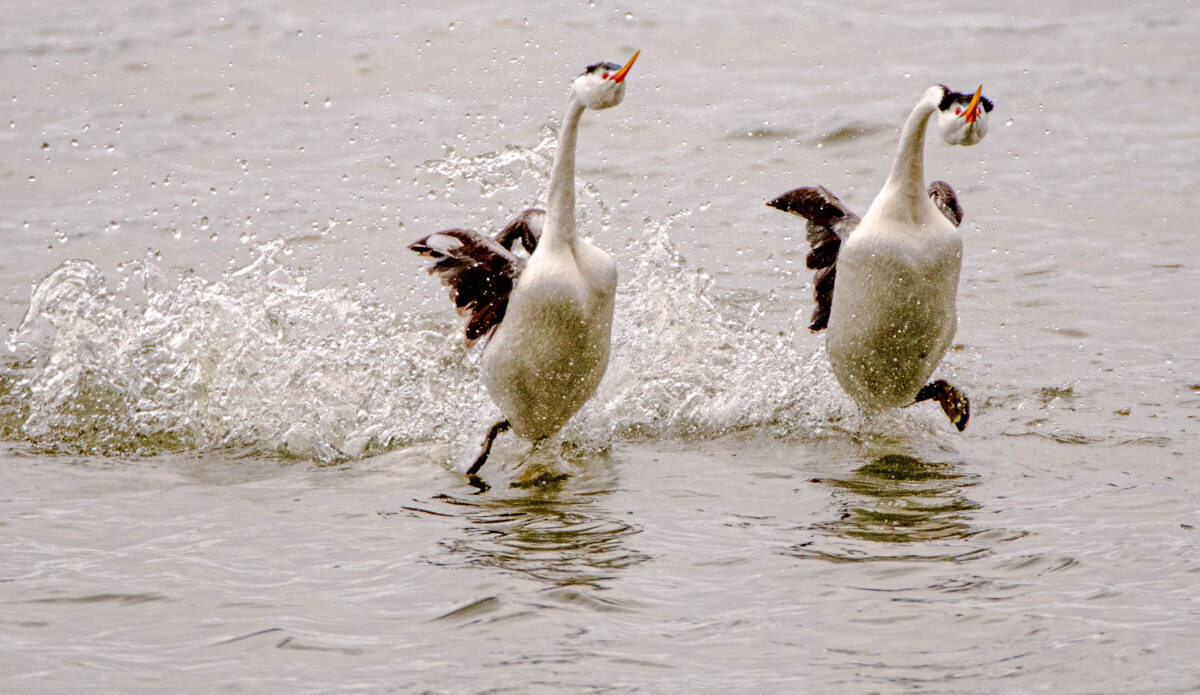
    Welcome to the Grebes housing estate, people – a dilapidated, bin-themed fairground near where I live in Yorkshire, sure to inspire that Monday morning feeling any time of the week. Helplessness, existential dread and lingering despair are never in short supply here. And grebe is a state of mind.

    I found myself traipsing morbidly through Grebes estate one morning not all that long ago, en route to the office. The previous day, I’d knowingly avoided all the things I knew I ought to do. And today I’d resolved to get them done: finding and mingling with changemakers I long to serve, as I built my coaching business.

    But, like the billion dog eggs bejewelling the Grebes estate road, so many unknowns lay in my path. What problem am I solving? For who? How do I help? Where are they?

    And if there’s one thing the mind doesn’t need on a stroll through the Grebes estate, it’s uncertainty. I tried my best to walk purposefully, but that familiar treadmill of doubt span and creaked in my mind, slowing me down. 

    What began as slight hesitancy soon revolved into full-blown, existential panic. I’d resolved to take action, I just didn’t know what or how. So why bother even trying?

    Then, right on cue, came feeling bad for feeling bad 

    I cowork in a converted flax mill near the Grebes estate, where poor young nippers were literally mangled to death crawling beneath heavy machinery, so that toffs might have more comfortable socks. 

    Comforting thought, I thought. Now we’ve lost perspective too, and replaced it with post-industrial class guilt.

    If you’ve ever built a business from scratch or launched any ambitious project, these feelings might sound familiar. It’s not unusual to feel beaten before you begin, and kicked when you’re down, over and over and over again. 

    That’s what you get for chasing your dreams, when grit isn’t your forte

    I used to cope by diverting my attention to well-defined, achievable tasks, like bleeding a radiator or buying some screws. Until brute force or resignation eventually showed up, forcing me to confront the unavoidable, those tricky tasks, with frustration and disappointment.

    These days the stakes are higher for me. While it’s OK to feel what my clients feel, it’s deeply inauthentic to not practice what I preach as a coach – meeting challenges like these with a more helpful attitude.

    So this article is my reflection upon new ways of coping and getting motivated. Of how a black day turned grey, then off-white, and eventually yellow. Yellow being good, because it’s kind of warm and sun-coloured like golden sunlight (another colour alien to the Grebes estate).

    Maybe they’ll work for you too?

    First, de-tangle and de-escalate

    When I worked with naughty boys and girls at an inner city school (ineptly I might add), we were taught to de-escalate if a scrap looked imminent. That means bringing heightened emotions down to a manageable level, so our brains act a little less reptilian.

    One way to de-escalate alone is by journaling (or morning pages). It doesn’t resolve unknowns, it just downloads them, so they’re out of your head. Doodling or wittering works well too. 

    Journaling helps identify what’s really going on and what’s really on your mind. It breaks lumpy thoughts into individual nuggets, giving them coherence. With the brain less dark and muddled, threads of ideas and options emerge, like pulling earphones from a cat tod. 

    On that fateful morning, journaling revealed five or six different themes in my coaching, possible lines of enquiry for the whole ‘who and how do I help’ problem. Too early to answer, but they were jammed in there all the same, throttling valuable CPU time.

    Journaling bought relief and space. It was kind of exciting too, to know creativity was in there somewhere. Playfulness was emerging; laughing at the ridiculousness of sipping an oat milk latte inside a former temple to the crushing forces of ruthless capitalism.

    How might you step back from the brink, and maybe even enjoy a laugh with yourself?

    Second, join something bigger 

    Coincidentally, I’d applied to join a group called coaches helping coaches a few days earlier. So, after braving the toxic cross-fire that is Facebook, I discovered my membership was approved. 

    Isn’t it funny how doom halves when you hear others feel equally doomed? Perhaps this works best when we aren’t looking for answers, like how-to explainers. Although we might think we want to be told the right way to do something, what we really need is understanding and connection from others. 

    I tried that and felt a little better still, as well as empathy and compassion. 

    Although still unresolved, my concluding remark here is that this business development stuff is tricky as fuck. Yet everyone goes through it, there’s no avoiding it or quick fix. 

    But could it be that the very thing you’re up against – effort and persistence as a barrier to entry, is what distinguishes you from those who give up?

    Third, tune in

    With my mood lifted, I had a good hard stare at the canal through a mill window. A grey wagtail balleted purposeful on the frozen water, flashing its yellow underbelly while scrabbling at fags and empty cans of Galahad lager.

    Nature is so restorative, isn’t it?

    Feeling more objective, I wondered what all this resistance might be telling me. Strong feelings are often signals. Perhaps I was doing too much saying – wanting to rush straight to market with a fully formed idea of the whats, who, hows and whys of business. 

    So what would listening involve? Asking? Talking? Would that be a more appropriate, agreeable way to connect with people? What would that look like?

    After realising I’d just coached myself with some magnificent questions, I resolved that getting into conversation with people as an exercise in market research (“hello what’s your world like? Would you like some help with that?”) is a splendid way to shape a business.

    What would it take to lift your mood?

    In my experience coaching, when people have calm and perspective, their questions answer themselves. When I felt less defeated and morose after this remedial action, creativity came back online and suggested five specific things I could do to find my kind of people to coach. 

    That would never have happened, had I let the Grebes estate mentality shape my day.

    What’s especially notable is that the three things I put at the heart of coaching others – playfulness, compassion and curiosity, are the very same three things that lifted me out of this particular rut. Who’d have thought?

    Maybe there aren’t any boundaries between career, business and life? Perhaps it’s all one big adventure? Perhaps there are clues to what lifts your mood, in what you already give others?

    Bum days are inevitable

    When you’re in a bleak mood, how might a little less urgency and a little more ‘working up the levels’ towards a more useful state of mind, like I did, help you?

    Attitude is the perennial blocker of many, if not all, routes to where you dream of being, and back on the Grebes estate mine was all kinds of wrong. If that dreadful feeling of doubt and inaction is all-too-familiar and all-too-tiresome, then maybe it’s time we worked on new ways of showing up in the world? 

    Ever had a sluggish start to the day. What happened? How did you recover?

    Photo by sunrisesoup

  • On the impishly elusive state of focus

    Each morning, a former monk pours mellow reassurance directly into my ears via the HeadSpace app, reminding me that the hypothetical future wanderings drifting in and out of my mind, are actually quite inevitable.

    And don’t I know it…

    Your own private peep show

    All it takes is one word or evocative idea and my imagination’s in orbit. 

    Someone chit-chats about the weather; yet in my head I’m wondering what geo-engineered rain feels like. Or while buried in a good book, I’ll be orating a one-sided defence of post-capitalism.

    Whichever distraction prompts it, my awareness rockets skyward only to plummet earthbound, crashing, disorientated, several junctures ahead of where I left off. 

    It’s a bit like living in your own private episode of Peep Show. And it doesn’t half get in the way of being fully present and focused when I’m on-the-go. 

    For others, it’s not quite so simple 

    Luckily (or not) I’m a remorseless taskmaster so shit gets done – I’m just ‘not all there’ while I make it happen. 

    But I’ve coached other folk who don’t even know where to begin because of their greasy focus. And then there are other poor souls who’ve made an art of defer and delay, succumbing to playful distractions, overanalysis or crippling perfectionism.

    Whatever the reason and response – what’s so tortuous is that at a profoundly deep level, every one of us knows what really needs to be done. What matters most. 

    Yet somehow, all too often, it rarely gets done the way we hope it will.

    Quick, buy a book!

    However elusive focus feels, if you’re trying to navigate a meaningful existence through the noisy shitshow that is modern life, chances are you’re in for some frustration and resistance. 

    Cal Newport squeezed a palatable tome out of this de facto state of affairs, in one of those snazzy-covered, one-big-idea books that really only merit a chapter or two: Deep Work. 

    In it, Cal argues that deeply focused, applied concentration…

    “…is becoming increasingly rare and at the exact same time it is becoming increasingly valuable in our economy. … the few who cultivate this skill, and then make it the core of their working life, will thrive.”

    You’ve probably read or heard of Deep Work already – worldly soul on a journey of constant improvement that you are. So let’s not cover old ground. 

    Instead, think how what Cal said makes you feel…

    Like you need to fix this? ASAP? Because something’s wrong, there’s something you’re missing out on, or you’re not everything you know you could be. 

    That’s a tricky place to learn and build from though, isn’t it? Perhaps awkward and uncomfortable.

    It does, however, shift a lot of £12 books off the shelves.

    What meddles with focus could be a way forward

    Which brings me neatly onto one possible source of brooding malcontent with focus, or our lack of it. 

    When a coaching client rocks up in knots, one way to create a bit of breathing space is to put a fresh spin on things as they are.

    So, what if this royal pain in the arse focus thing is actually just an escape route in disguise? 

    Seriously.

    When I’m daydreaming-up dendritic dialogues of situations yet-to-be, instead of being enraptured by the task at hand (like I ought to), maybe my rocket-fueled imagination is just under-engaged. 

    At the risk of sounding ethereal and wanky – I’ve not honoured a talent.

    Perhaps if I took it for walkies in the park, let it have a shit if it’s a good boy (by journaling, for example), it might curl up by the fire later when I need to be wholly present and focused on whatever I’m supposed to be doing.

    So under-focus isn’t a hindrance. It could be a signal. An itch that needs scratching.

    • What if indecision and overanalysis is really just a vivid mind in search of a fresh project to commit to? What do the subject matters you ponder over tell you about what makes you tick?
    • What if your happy-go-lucky, effulgent way of engaging with the world – flitting playfully from one sensation to the next, is just a hunger for responsibility or resolution? Do the activities you lose time in tell you something about yourself?
    • What if all these things are just double-edged swords? They’re what draw people to you; part of your character that make you a joy to be around, yet a nightmare left alone.
    • What would working with (rather than against) under-focus look like? If it wasn’t a problem, how would that change things? 
    • Could you nurture distraction, procrastination, introspection like a useful urge that deserves context and direction? And how can you get clear on that?

    James Clear, another peddler of one-big-idea books (though admittedly a very good one), argues that focus frustrations often mask lack of clarity about what we really want. If we’re clear on that – what we want to be, do and have, focus tends to follow.

    In my experience coaching, getting clear means saying no to more stuff. Some put their needs first instead of others a little more often. Others build more variety and routine into their week so they satiate that incongruent human desire for structure and freedom.

    What we stand for presents options too 

    If you believe personal responsibility is a solid principle, how in practice might you raise your hand and say “know what, I’m going to give myself permission to indulge daydreaming/ procrastination/ avoidance/ introspection on Friday afternoons.” 

    Because responsibility isn’t the same thing as blame. You didn’t choose your mind, or those moreish thoughts and feelings that waft like farts through your cheesebox. 

    But you can choose to own what you’ve got to work with, and hack it, gently.

    Likewise, for cooperation, collaboration and community values. If you stand by them, how can you reach out to others when focus wanes? Know any other devout perfectionists or procrastinators? How are they getting on? Who’s taking the lead?

    By way of example on both of these, I take the lead from a lifelong master of relaxation: my darling spouse. With or without me, she’ll have her feet up, guilt-free, whenever the feeling takes her. So, after some resistance I tried her way. I owned my tendency to never sit still (when that’s appropriate), but come 6pm it isn’t so I down-tools, and resist tinkering with my latest DIY distraction.

    In my experience as a coach, inspiration and ways forward often lurk right beneath our noses. They only become apparent when we look beyond the struggle, and take on the role of curious and playful beginner – not weak, but daring, however uncomfortable we feel about the experiments that follow.

    Beware toxic entrepreneurialism

    Time for a pop at the rat-race, so here’s some vitriol…

    There’s a subtext to this whole focus thing. It’s that all-encompassing productivity is a gold standard. And that growth and progress should be linear and relentless. Five minutes suffering the sermons of entrepreneur influencers on YouTube confirms this.

    Sorry, but human progress isn’t like that (for most of us). 

    It’s blindly lurching forwards through puddles of our vomit, followed by a kick in the teeth then a nice sit-down. Then the sun comes out again and we’re off, ad infinitum.

    To put this in a more coach-like way, the mind and body seem to operate seasonally, with day-to-day emotional weather to contend with too. 

    It’d be trite to suggest focus is all about balance – you’re a smart reader, you already know that. My point is that there’s something about planning your route forward with seasons and weather in mind. 

    If the plan is to go pelvis-deep on Monday/Tuesday with wellbeing Wednesday for treats, then suddenly Tuesday arrives full of piss and wind; can you flex? Would you dare bring relaxation forwards when you need it most, shuffling other commitments with intention, and not give yourself too much of a hard time for taking such sensible, honest action? 

    Likewise, if all is well on Friday; can you roll with it and work into Saturday while the world rues its hangover? There’s something sweetly rebellious about stealing a march on the rat-race when it dares not intrude…

    All this demands responsibility, clarity and honesty with yourself – all themes that run deeper than what at first glance appears to be a localised bug in your focus software. 

    Focus defies brute force

    If trusty Buddhists like Andi Puddicombe of HeadSpace are to be believed, focus is less about being perpetually ‘on it’ – driven and productive. It’s more about “remaining undistracted”, apparently. 

    Nor can we fix or find focus. We can only cultivate conditions it prefers. It seems (from my own experiments) that focus may be one of those impishly desirable states, like happiness. We’re all chasing it, when pursuit is the very thing most likely to scare it off.

    It may well be that focus, like happiness, is a default state. Calm is already there within us, we just need to cut the shit piled on top of it, to make it more accessible. 

    Now there’s a twist.

    What if focus is neither good nor bad: it just is

    Despite my best efforts, I can’t court ‘becoming more present’ into my life by being (even more) disciplined. I’m already sorted for drive and self-organisation. And I’m quite fond of having an overactive imagination too (sometimes).

    Reading more books and how-to explainers won’t help much either (sorry Cal/James). That’s why I resisted the temptation to burp up yet another article littered with life-hacks on silencing your phone, pomodoro technique or working to binaural beats. 

    These things might help, but substantive change only ever really comes about through identity shift – our relationship with who we authentically are (warts and all)

    For me, that’s calling truce with my mind’s tendency to wander off into well-trodden hinterlands as I get on with things. It’s neither good, nor bad. 

    It just is. 

    I can only meet it as I do most professional challenges; curious, calm, compassionate, comic, contrarian, C-fixated coach I am.

    With that glimmer of calm acceptance quelling any tension, I can toy with step two: alternative identities. And discovering which aspects of character are worth fortifying, any gaps, and how to go about that, before embarking on wild experiments, as a playful beginner.

    To this end, I’ve got some upcoming befriending training that purports to embrace whatever (or rather whoever) is playing up inside our private box of frogs, when focus escapes us. As I understand it, a splash of compassion helps; checking-in with your interruptions. 

    I’ll report back on what I learn; perhaps that’ll shed more light on this whole focus thing.

    What next for you? 

    As we’ve seen, waning focus could be a signal rather than a hindrance. So, what might it be telling you about who you are and what you really want? How might you meet it in a different way?

  • How can we be effective changemakers?

    It’s good to step outside your usual circles. It’s how we broaden our minds – that was the thinking behind why I joined a webinar hosted by The Resurgence Centre and Eco Resolution last week. It was pitched as a collection of short talks from front-line, grassroots activists about what it means to be a leader and changemaker.

    While change-making leadership feels familiar, activism is new ground for me (unless you count flirting with XR Leeds and toddling along miner’s protests in the 90s). So I ventured there might be a spark of energy, wisdom and insight I could capture from the speakers, one I might relate back to the people I coach.

    A who’s who of changemakers

    The online guests were an eclectic mix of four lively speakers, each tackling fundamental problems facing humanity, like climate change, social injustice and the effects of rampant inequality. 

    They were:

    Consider this my report back on what their front-line experiences of leadership and organising change might teach us, about our own day-to-day change-making in our careers and businesses.

    Lyla June

    Lyla opened by honouring her ancestors in her native tongue – a new one for me. This certainly doesn’t happen enough on our family Zoom quizzes, and I must admit to irreverently chuckling at the idea before reminding myself to be more respectful. I did however resolve to begin every future quiz by telling everyone to “calm down Barry” in a Scouse accent reflecting my Liverpudlian roots, then burning a shellsuit in homage.

    Flippancy aside, Lyla had much wisdom to share.

    Neither her protest against the Dakota access oil pipeline, or running for political office, ended in conventional ‘success’. The pipeline seems to be going ahead, and standing up to the bullying petrochem lobby ended predictably. But Lyla remained optimistic, thanks to the way she reframed what ‘victory’ means. 

    Victory is rarely how we imagine it

    She argued that blazing a trail constitutes change, and doing something that’s never been done before is still a victory. Even if you don’t achieve what you thought you would. And she’s right. Braving fear, thoughts of inadequacy, and lack of knowledge is a very human triumph. 

    Lyla also argued that being a changemaker means asking ‘why not’ even if the world’s not ready. It’s about honouring your imagination as sacred, she said. Trusting in it, even if you can’t see where it’s leading you. 

    Manage any of that and you’ll see victories that most can only dream of.

    Salvador Gómez-Colón

    This guy was slick. I mean really slick – polished and wildly charismatic in his delivery, especially for someone so young. All tooth and thrust, as they say. He was simultaneously intimidating and inspiring for someone like me to watch; my middle-age virility evaporating steadily in the radiated heat of his youth.

    For all his charm, there was a strong current of humility and wisdom in Salvador’s words; openly alluding to the fact that he’s still at school, so why should anyone listen… 

    Well, I couldn’t help myself, and nor could leaders at the World Economic Forum, it seems, when he spoke alongside Greta Thunberg. Here’s what I gleaned.

    Salvador opened by defining leadership as how you treat responsibility. If you’re responsible for something, someone or other people, or you take it, then you inherit certain (sacred?) duties as a leader. 

    Leadership is egoless, not authority

    And leadership actually has very little to do with authority though, he argued. I find this a lot with those I coach. When we look at how they show-up in life, it turns out almost all of us are in positions of influence. And as Salvador says – that comes with responsibilities, like standing up when something’s wrong. Likewise, leaders by definition shouldn’t conform, especially to today’s global injustices and inequalities.

    I was elated to hear purpose come up (it’s a bit of a theme in my coaching practice). We heard how an ethos, a mission, and cherished values are what give you self-assurance in times of uncertainty (like talking to crowds of strangers with killer conviction). And those values, coupled with stories, (another soft spot for this coach) are what convince others to join you.

    Yet a leading changemaker should be egoless, argued Salvador. They empower others and run on empathy. As opposed to a traditional iron fist or inflexible power-agenda. 

    All that can be pretty tiring though, and result in burnout – something I hear often in coaching. Salvador’s remedy was to focus on the task at hand rather than the threat. And remember to recharge and rest – it’s your duty to others and your cause, not just our fallible human bodies.

    KMT Freedom Teacher

    Midway through the webinar, group appreciation and gratitude acknowledging was bountiful. I’m all for the sentiment behind this phenomenon, as long as things don’t turn into a bizarre empathy workshop. I’ve also got a blindspot for positive psychology, as a floundering pessimist.

    So KMT, AKA Ian, was a welcome punctuation to the evening’s tone.  

    I knew we were in for a treat when KMT opened, frankly, by admitting he was in a bit of a state knowing what to talk about. Hardly surprising given all he gets up to: community permaculture projects and raising social cohesion with hip-hop as his vehicle.

    Laughing, he then admitted Salvador was a tough act to follow – ‘pitching for president’. KMT’s humour, admission of vulnerability, and total lack of pretence was an instant tick in the world-class leadership box for me. 

    If authenticity is being utterly yourself, whatever the situation – then this was it

    KMT likened leadership to the activity of a bee – an apt analogy for his community permaculture project. He said that much of the work of leaders is (and should be?) invisible. And you only know the extent of their impact when they’re gone. That’s when things fail.

    The juiciest insight I took from KMT was how to tackle setbacks. 

    He argued that the way to meet adversity is with consistency. I took that to mean living in line with what you value. If you believe in humility and honesty, be receptive to feedback. If you believe in self-sacrifice, welcome the rough times and learn.

    This was something of a theme in the rest of his talk, as he delved into attitudes to mistakes and failure. Now he had my attention, as a lifelong perfectionist. KMT argued that mistakes aren’t just OK, they’re important, and we should emulate nature in our leadership style. 

    I wasn’t quite clear on what KMT meant by that, but I intend to quiz him on it. I suppose he meant embracing change, and adapting to what evolution teaches us about failure (as well as success. 

    Noga Levy-Rapoport

    When Noga took the stage I found myself thrust two decades into the past, reflecting on my own convictions, and robustly constructed reality of absolutes. Her introduction was a no-holds barred attack on the toxicity of late-stage capitalism and its dysfunctional power structures. It was an unashamed sermon, and visceral critique rooted firmly on the frontline of protest and idealism. 

    And rightly so – there was much truth in what she said. 

    What I lacked in the certainty of youth was abundant self-awareness, whereas Noga made a point of acknowledging inherent naivety. She argued that youthful optimism and unbounded imagination are actually superpowers when it comes to systemic change. 

    I can’t argue with that. We need less jaded, white-male cynicism at the helm, and fresher, ambitious, diverse perspectives. Perhaps a balance of skyscraping hope, energy and ambition, blended with the realism and pragmatism of our elders?

    (Re)educating changemakers

    Noga went on to criticise how we teach people to become changemakers (or rather, don’t). Our state education system (here in the UK), is woefully inadequate at schooling young people in local action and grassroots leadership. Having lived through and worked in it myself, I can point to many structural flaws in education, but Noga is right – this is a principal one. 

    To be a changemaker one needs to believe that taking action is worth it, and will effect lasting, meaningful change. The earlier, the better. 

    Otherwise, we end up in situations I often untangle with changemakers – coaching through excess fear and “stuckness,” like you’re not sure which way to turn because of overanalysis, low confidence and competing priorities. 

    It’s almost as if helplessness is conditioned into us early, then confirmed in later life.

    Changing our relationship with the future

    While I joke about my kind of changemakers saving the world, one poignantly haunting observation from Lyla was that we’re not individually responsible alone for solving systemic existential problems we face, like climate change. 

    When you look at things like that, it’s a step towards finding space. Room for manoeuvre. Space to reflect, think and ease the individual pressure. Perhaps even for joy and focus to fill the void? 

    I’d add you can apply that sort of thinking to any problem. You can choose what to take responsibility for, you can ‘want’ to do something at whatever scale you see fit. That goes some way to easing the burden of making progress as a leader and changemaker.

    Changemakers have a tendency to focus on the future, is another closing nugget (I forget who from), yet often at the expense of the present. Enjoying those little steps that chip away at a bigger problem can, and should, be more rewarding than ultimately solving the problem. Are most of these problems we’re talking about actually ‘solvable’ anyway?  

    To challenge oneself to do the impossible is the most human thing to do

    To challenge oneself to do the impossible is the most youthful thing to do, said Salvador. I’d extrapolate that it’s probably the most human thing to do, regardless of how old you are. As is acknowledging what one does know and doesn’t (says Noga) – that’s the start of solving any problem, great or small. 

    It’s also a bedrock of change-making leadership.

    It took me a while to make peace with this realisation, yet there’s no rule saying you should know everything and be completely correct and successful on every first attempt. Yet you’d be surprised to learn how often that gets in the way of people I coach. Many other talented people may never even start in the first place, because of this fear of failure, imperfection – what is essentially our basic humanity.

    That’s enough insight for now

    I’ll be sowing these seeds of wisdom in my coaching practice, but what will you do with it?

    How can you and I bring more vulnerability and humility in the face of such serious, existential problems, like the speakers above have – despite what they’re up against? What about your humour, charisma or other personable traits that draw people to us?

    We need more of that, if we’re to come out the other side of this with our humanity intact.

  • Make Wednesday great again

    Perhaps in lieu of the toxic fug that haunted our childhoods on the Mersey estuary, the local authorities saw fit to grant us youngsters a few hours’ R&R every Wednesday morning. 

    This was back in the 1990s. 

    And when I say ‘respite’, what I actually mean is a filthy game of rugby in biting cold winds, during Mr Buckton’s double P.E at the comprehensive school I attended. But at least it was outdoors, it was exercise – communal, and theoretically in the spirit of enrichment (albeit only for sadists).

    In the shadow of Widnes’ thousand chimneys, belching ominously transparent gases more or less directly into our lungs, Wednesday mornings were a mental pause for teacher and pupil alike, punctuating the tribulations and tedium of another week at the National Curriculum’s coalface.

    Wellbeing Wednesday (working title)

    By sixth form, wellbeing Wednesday was even higher on the agenda, meaning study leave or recreation. For some, it meant catching-up with yourself after a busy Monday/Tuesday. For driving lessons, or to socialise. For others, it meant inhaling lighter fluid behind the 5th Widnes Scout hut, giggling incessantly at crude knob graffiti.

    Beyond the stench of Merseyside, at university, wellbeing Wednesday seemed like a permanent, eminently sensible hook to hang your week upon. Why wouldn’t you want a spacious, midweek afternoon to decompress, rest, tie-up loose ends, switch-off or nourish the mind with knowledge?

    Yet for some reason, once I got a job – once I was a grown-up, it all ended. No more Wednesday breakouts.

    Being a grow-up is shit

    These days, with adult commitments, dwindling energy and increasing demands placed upon it – that midweek circuit breaker (to coin a phrase) is practically a necessity. Not just for crucial errands, but our actual bodily health, the welfare of our families, communities and culture at work.

    Hard evidence suggests poor mental health costs UK employers up to £45 million a year, and we’re already losing on average about 20 days every year, per person, because of stress, burnout and workplace-related depression and anxiety. And research from 2012 revealed half of working Americans said they were always rushed, and 70 percent felt they never had enough time.

    So there’s a compelling case for ring-fencing space for active wellbeing, or encouraging folk to at least unwind, right smack-bang in the middle of the week when life often gets a bit too serious and stressful. Just unplugging digitally for a while, or putting things on pause to check-in with ourselves and our circles might be a start.

    Or look at it this way. Maybe Wednesday is time to be learners again. Open-minded, reckless, irresponsible and curious. For just a few hours, we get a little space to play with – a gap between being a serious grown-up, most of the time.

    Downtime doesn’t have to be productive (that’s sort of the point)

    Putting wellbeing pride-of-place, midweek, like a stake through the heart of 9-5 presenteeism culture (which is often more onerous when working remotely, I’m told) would be quite a symbolic commitment, wouldn’t it?

    What if, by mutual agreement, we all came to an understanding – that every Wednesday AM or PM, we allowed ourselves a bit of a breather, to enrich ourselves – however we see fit? 

    Sure, some might indulge, but I’ve a feeling many of us would (eventually) pick up an old hobby, launch a side-hustle, or look into that training we’ve been toying with. Kind of like many of us (lucky ones) have already been doing during lockdown with our sourdoughs, fitness and crafts.

    This would be paid, of course

    Because happier, healthier people are more productive people. It’s proven – no matter how counter-intuitive it might feel to slacken the leash by reducing people’s working hours. I’ve seen this happen over and over again, back when I wrote case studies on novel working practices at some of the world’s leading progressive organisations. 

    Dare I say it, but could we have in our midst, a ready-made, tentative stepping stone to the self-evidently sensible four-day week too? There’s often no demonstrable gain in human output, yet significantly, none is lost – indicating something deeply dysfunctional is afoot in the way we run (ran?) our working lives.

    What would change look like?

    For some reason, once we turn 18, space for growth and freeing-up our minds ceases to be a priority. It’s as if we collectively decide it’s time to get on with the important job of being perpetually busy, stressed, and emotionally and physically unwell grown-ups. Because that’s real-life and that’s just the way things are.

    To which I respond is it? Who said so?

    So what would change look like for you? What would you do with a formal, midweek circuit-breaker? I’ve known coaching clients to exercise, dig, lose their phone, walk, talk, try something new, or simply stare into space for an hour or two.

    Perhaps we might scale up wellbeing Wednesday for all – a tried-and-tested idea, one that’s a straight-forward up-sell to the cynics, and one within easy reach.

    Just an idea. And it’s not all that crazy, apparently. What do you think?

  • A powerful antidote to fear you’ve known your whole life

    An old man surveys a familiar world beyond his study window. His hair is grey, skin craggy and stature wizened. Yet it’s still the unmistakably kind face of Michael Palin:

    “There’s a lot of little boy in the whole enterprise. In all the travels,” he reflects in the BBC’s recent Palin travel retrospective. “Whenever I’ve lost the little boy, the sense of wonder,” he continues, a touch of sadness crowding his voice, rough and gravelled at the edges, “I’ve lost something significant.”

    Despite decades of seemingly effortless globetrotting with an ever-present twinkle in his eye, it turns out Michael Palin still harboured the same self-doubt, uncertainty and anxieties we all do when faced with risk, change and uncertainty. “Of course you had doubts, you had worries,” he admits in the documentary, yet somehow he prevailed and thrived.

    It’d be churlish to say privilege and position alone helped Palin surmount his fears. There’s clearly something deeper at play here. 

    Perhaps it’s that sense of wonder he alludes to. Let’s find out.

    When fear shows up

    Of course, fear needn’t mean traversing the planet in 80 days, or embarking on a pole-to-pole voyage, wooing peoples of all nations with your wit, charm and common touch. 

    Fear manifests in all sorts of everyday ways too. 

    It could be unwitting procrastination over progress in your business. It could be frustrating, relentless indecision about that career move. Maybe you’re avoiding committing to different ways of working? Or avoiding taking on new risks in these uncertain times.

    However fear gets in the way, I’ve seen it prevent changemakers from giving the world what it so desperately needs (as well as you need personally). Fear forsakes uncertainty in favour of predictability or mediocrity. It cheats us out of grand plans. It squanders your valuable time and talent.

    And when that happens, you start to feel bad for feeling bad. You enter the fear loop.

    Yet wonder; that childlike curiosity as Michael Palin suggests, could be the cure.

    How’s your relationship with fear?

    Everything changed for me when I heard fear and curiosity glued together. It came as a revelation via Finding Mastery – a full-on, high-five, Americana podcast, guaranteed to make any understated Brit belch up a spot of mouth-sick.

    Yet one episode in particular unlocked a door for me, and continues to help me open doors for the people I coach:

    “The ones that are changing an industry or the human potential landscape, they understand how to work with it… Fear is a signal and if we use that signal in anything in life, it’s our due north.”

    Let me introduce Tony Blauer, a beefy, iron-balled, close combat specialist. Not a typical source of wisdom for the kind of emotionally intelligent discourse I offer my clients. 

    So I’ll keep it snappy.

    Say what you like about Tony – a practically-minded alpha-male from a world of professional violence. But this man knows fear. He understands what makes it tick. 

    Fear as a movie

    Tony likens fear to a movie. Whenever we’re triggered by the seemingly uncontrollable, some looming deadline, a situation, a person – our mind presses play. Next, we unwittingly watch a readymade mental movie, mindlessly munching our popcorn and losing ourselves in the plot.

    Suppose you’re burning out from championing your cause. Sense says take a break. The movie plot says that’s selfish. It makes you feel guilty for making space. 

    Maybe you’ve got a big idea to protect nature and it’s commitment time. Involuntarily, the mind presses play, and your internal silver screen tricks you into thinking it’s already flop, so you may as well give up now.

    The thing is, it’s just a movie

    A made-up story, based tenuously on real-life. 

    It’s your imagination exploring worst-case scenarios in a way that’s probably quite helpful, if a threat is real, immediate and existential. But in this context – your life, career and business, our simplistic fantasies are often somewhat disproportionate and misplaced. A life’s journey is more complicated and unpredictable than that – it’s rarely wholly a failure or success.

    So here’s a first step that might help you.

    If you’re wrestling with fear and anxiety, notice when the mind presses play like this. Recognise what’s going on beneath the surface. Enjoying the movie? What’s the script like? Is the hero a victim? Is the ending really a foregone conclusion? Are there copious special effects that make it seem real?

    By trying this you’ll become more self-aware than most people out there.

    But what then?

    Enter: curiosity

    ‘So curiosity is like your keyway in. And so as soon as [you’re] feeling a flood of neurochemicals or physiology… you’re saying, “Hey, stay curious. Now what is this like?” And that curiosity is almost like the antidote.’

    Micheal Gervais (quoted) hosts the very same podcast mentioned above. He’s also a coach. And he consistently says that one way to live with (because it never goes away) uncertainty and change, is to explore or to lean into it. With wide, wild eyes, healthy intrigue and endless questions.

    Suppose you’re afraid of throwing everything behind some big idea that’ll change your fortunes. You know it’s right, but somehow you daren’t dedicate the time and energy it deserves. You perpetually skirt around the edges, make excuses, or let other people’s priorities trump your own. 

    Rather than simply watch that disaster movie play over and over again, you instead wonder why it is that I’m so afraid of this? What’s possible here? What’s the real challenge?

    Introspection isn’t quite the word

    A lot of my coaching clients are thinkers (as well as do-ers) – they spend enough time wondering and questioning themselves. So it’s not about ruminating your inner world.

    Think of this more like agnostic or impartial curiosity. You aren’t judging what or why you’re scared, nervous or afraid, you just notice fear for what it is – a signal to act upon. 

    So where does your compass point?

    It could be that the thing you’re most afraid of is success, rather than failure. It could be that deep down you don’t really care enough about that thing you ought to do, after all. So you let go of it. Or conversely, maybe it’s definitely the right thing because it won’t leave you alone.

    Think of it like a learning experience. What can you learn that will displace fear?

    Another way to handle this is to get out of your head. 

    Ideas will always be ideas until you vocalise (and thus scrutinise) them, then turn them into action, a decision, or simply let them go. 

    One way to do that is to get a coach, talk to a friend, or try an exercise like free writing or doodling to unravel that toxic internal monologue.

    Get some headspace

    One reason why mindfulness has enjoyed such worldwide success is that it teaches people to greet uncomfortable thoughts and feelings with gentle inquisitiveness. When a feeling arises, like fear or anxiety, you note it, then turn your focus back to whatever it is you’re doing at that moment.

    In its guided meditations, the internationally renowned HeadSpace app even suggests that healthy curiosity, mixed with humour, is the best way to embrace the unknown. 

    When that fearful movie begins to play, and your mind conjures up everything bad that could go wrong – whether that’s letting clients down, angering the boss, or losing your livelihood, you simply smile, and ponder wryly what rating the film would get on imdb.

    How can you be bold and brave in the face of fear?

    Speaking from experience, the surest way to amplify any uncertainty, hesitance and discomfort (about whatever predicament you find yourself in), is to deliberately ignore, avoid, repress or resist it. 

    I hear this a lot from people I coach in various forms: “be alright” “let’s see what happens,” “one day,” and the timeless “that’s just the way it is”.

    This is a bit like telling the mind to not think about that purple mongoose you’re now thinking of. It’s equivalent to pretending there isn’t really a problem that needs addressing, or making out you have no choice. 

    But there’s always another way… 

    Another technique that works well for me and my coaching clients is to ask yourself – am I taking this (or myself) too seriously again?

    Whenever I feel down or uptight, or otherwise not making the progress I want, chances are it’s because I’ve become a character, rather than an audience member, in the ongoing saga that is the movie of my life. When really, I should have pointed and laughed at the silly poster advertising it.

    Sound familiar?

    Lead with curiosity

    Good leadership is about making space for other people to act naturally, encouraging them to trust themselves, and helping them plot their own way forward. 

    So, what if you lead yourself? 

    By that I mean create space to sit with your discomfort and those awkward feelings, instead of rebelling. 

    Wouldn’t that be a curious experiment? 

    Because that’s all curiosity really is – experimentation, observation and reflection on what’s going on. Otherwise known as learning.

    When I became a coach I unwittingly became a leader, of sorts. And my fears lay in not knowing the right way forward for my clients, or how to handle deep conversations without intention, where outcomes present themselves. 

    Yet as soon as I went into uncertain coaching calls with curiosity for my clients, and started being bold and brave like I encouraged them to be, my impact got a lot deeper – not just for them, but for me too. I make space and, soon enough, their answers (not mine) begin to fill it.

    If you deal with other people in your life, business or career – to what situations can you invite curiosity? If you played leader for a while, what might that teach you about yourself and your relationship with fear?

    Be a kid again

    The best thing about curiosity is it’s innate. You’ve had it your entire life. Maybe you’re just out of practice?

    You only need to watch any young child at play to realise how perfectly natural, playful and effortless curiosity is. Without a life of upsets, setbacks and put-downs (the kind we’re not schooled to be resilient against), curiosity dominates fear.

    In adulthood, some of us are lucky enough to hold onto our childlike curiosity – like Michael Palin did in travel, writing and comedy. Many of us grow-up too soon, and in the process forget that it’s inquisitiveness that leads to discovery, creativity, adventure, and ultimately fulfillment in life.

    So next time that disaster movie is on repeat, what would it take to greet the screening with curiosity? 

    Consider the flip-side: can you recall a time where you approached a new situation with wonder, or simple open-mindedness? How did that turn out? Was it as bad as you imagined it would be? Probably not.

    Maybe it’s time to rekindle curiosity when you next feel scared, nervous or unsure of yourself? Remember – no effort or resistance required, just wonder why again, and prepare to laugh.