Blog

  • What improv taught me about being a cynical alien snuffle hog

    What improv taught me about being a cynical alien snuffle hog

    A train squeals into dimly lit Derby station. Two baby-faced students drift into its congested vestibule. Crouched in a corner on my rucksack, I listen as they bemoan presentations they’re obliged to deliver tomorrow. 

    One must memorise and practice so he doesn’t let his tutor down. The other wants it done quickly, meaning less time for worrying. Neither wants to endure anyone else’s presentation.

    I’d been expecting this. 

    When modern life welcomed me back into its familiar, restrained embrace. Pleasantries over, it hands you a list of shoulds and musts, demands a plan, then leaves you alone to screw over the hows and whys.

    Crouched in that carriage vestibule, bearing witness to workaday woes, felt very at odds with the adventure I’ve just been on. I’ve just returned from a four day improv retreat into my imagination, emotions, and those of my fellow improv-ers.

    Improv, in case you’re as new to it as I am, is unscripted, improvised performance. You just make it up as you go along – singing and acting your way through ideas as they emerge. You play with scenes, characters, objects, games and narratives. 

    And hosting this particular retreat were the effervescent Maydays, who make comedy improv an artform, emphasising play, fun and laughter.

    In a moment of mad intuitive decision-making, I joined their retreat to broker personal peace with spontaneity and uncertainty. To let go of over-planning, preparedness, control, and that fear of being unready and making mistakes. 

    All big obstacles for folk like me.

    So I expected the big challenge to be coping with novel, uncertain situations. I thought I’d struggle to take myself less seriously, and immerse myself in play.

    That was my first inconsequential mistake

    Like humanity since forever, I navigated novelty quite well, I think – imagination took care of that. And there’s relish in playing daft and making a tit out of oneself. Loved it.

    No, the real blocker was those ever pesky unhelpful beliefs, and negative internal chatter. 

    I’m talking about the kind we accumulate memorising obligatory presentations no one really enjoys giving or hearing. By pretending to be grown-ups in everyday life. By exposing ourselves to scrutiny. By avoiding failure and mistakes. By making unrealistic expectations of ourselves and others. 

    Then moaning about it all on late-night train journeys through Derby. 

    Beliefs are like chain-link fences surrounding our ego. They keep things safe and knowable. And mine strained under the weight of my own bullshit in our very first improv exercise.

    It was a circle game where fellow improv-ers played out imaginary scenes. Newcomers could freeze the action, tag in/out, then shift the scene somewhere else with new characters and action. You might remember this from drama lessons at school.

    Stood at the edge of that circle on day one, I recall watching with simultaneous delight and disgust the ease with which these strangers threw themselves into it. Part of me wanted to jump in and play, unafraid and keen to make playmates. The other shook his head, tutting at ideas he deemed reductive, childish, or shallow; scared and awkward. 

    It was like being a grown-up standing at the entrance of a park, holding a child back because the swings look dangerous, or other kids aren’t good enough; or a thousand other flawed arguments against just, well, seeing what happens.

    I am one of four mystic oracles

    I vomited this at Ed, one of the Maydays. I likened it to hearing all those disapproving, judgemental, ridiculing voices at once. Bullies from childhood, parents, siblings, classmates – telling you to hold back, stay in line, to avoid risks. 

    Ed reassured me this was all perfectly normal apparently, when new to improv. He revealed his after kindly dropping me into a group game, live on-stage, at the first evening show of the retreat.

    Here I was one of four mystic oracles who responded with wisdom, one word at a time, when posed questions by the audience. 

    Absurdly, for someone who loves showing off, the heat of public scrutiny felt acute, as I strode onto stage with my fellow oracles. That inner child at the park gates was grinning, playful and enraptured. Yet holding its hand firmly was that cemented adult – unwilling to sway in gay, reverential abandon like my fellow oracles.

    Slowly, I began to wave my arms and surrender to the game, daring to lift my eyes beyond the floor, toying with questions from the audience and offering daft responses. 

    It felt excruciating at first, then gleefully inevitable. 

    I was having inconsequential fun. And it felt freeing.

    Over the course of the retreat, I was thrown into hours of pair and group work like this. We were given scenes, props, characters, relationships and emotions to play with. 

    My inner child gradually led the adult. I remembered how to play.

    Yet still, the judgement – “what are these dickheads doing?” it asked, “that’s so dishonest to pretend,” “how is THAT funny?”. 

    In a clinic with Katy, of the Maydays, I listened as she deftly shared techniques to resolve others’ improv problems I could literally only imagine, beginner as I am. At session close, I thought fuck it, she seems nice, I’ll open up about my struggle with judgement and cynicism. 

    Her advice was reassuring and sincere. In fact it probably applies to any situation we feel anxious or cynical about. 

    She said it’s about ‘over-agreeing’

    In improv, we are told “yes, and…” is the motto: meet every idea with openness and enthusiasm, always wonder how you can make it even better, more fun and playful for everyone. 

    So to combat my demons, her suggestion was to greet someone’s ‘annoying’ hyperactive monster with the reaction “oh god I’m this monster’s superfan, can I get your autograph?!” 

    This made sense. 

    It made even more sense outside of improv

    I don’t know about you but I’m uncomfortable not knowing, being on my own, and having to make fast friendships. Well, as a newcomer to a retreat like this, I had no choice but to agree my way through. 

    To over-agree.

    In crowds like this, my inner stroppy teenager (yes, another character) wants to cross its arms, snort and judge people from the sidelines. “Look at how quickly they make friends, it’s so disingenuous, why are they so over-the-top with each other?” 

    That part wanted me to believe everyone else was the problem, when really – I was the odd one out here. I came to the realisation that outsiderness was my own construct. It was a subliminal choice. 

    So began my journey with over-agreeing. By observing the warmth and innocence amongst fellow improv-ers. I tried to meet it with curiosity and my own (for now, understated) version of agreement.

    I decided to be an improv-er

    It all came together one evening in a conversation with fellow improv-er, Gareth. I asked him what it was that made a community like this. He was well-refreshed at the time, yet strung together the most useful and eloquent summation of improv-types (at least at that retreat). 

    He said what united people like this (us?) was a love of attention, yet not too much, a love of games and world-building escapism. Many had experience of bullying, feeling left out, or other cruel hands life can deal you. 

    He said it attracted gamers, coders, dancers, and people with self-confessed ‘boring’ jobs. I’d noticed that too – how many people improv-ed to escape the everyday workaday, looking for a safe place to play, free from judgement and obligation, perhaps. 

    But the kindest observation was that at heart improv is optimistic and hospitable. People who love improv love making friends and playing. 

    What a place to be a vulnerable newcomer!

    Could it be that I’d not only found a way of life I’m drawn to, but a tribe too? One to grow amongst.

    I’ve always, somewhat arrogantly, regarded myself as a bit alternative in terms like these; a bit nerdy and escapist, a sometime victim of convention. Certainly not ‘mainstream’. 

    Yet here I was bringing all my accumulated mainstream baggage and judgemental persecution with me into the retreat, killing my own buzz. 

    And in doing that I was practically defining the role of conformist!

    So here was the real obstacle to improv. 

    Not technique – that could be learned. 

    Play? Well, I suspect that’s innate. I melted into scenes like the best of them. 

    Mistakes? Too late, the game has already moved on.

    No, it was self-editing and self-consciousness. 

    Ego. 

    Which led to yet another lightbulb moment

    I later attended a session on supporting other humans in improv. It wasn’t my first choice – I just picked from whatever workshops were left. 

    Heck, this improv. Let’s go…

    During that session we explored our improv preferences. Some liked objects, others liked slow and calm. Mine was surrealism. Cue a library scene in which fellow improv-er Wanda created conditions where I inadvertently kink-shamed a snail via bad translation. 

    Only later did the lesson become clear, when she pointed out what worked. She’d created the scene for me, out of kindness. 

    That was Wanda’s gift. 

    More walls came tumbling down

    Play is generosity. Play is altruism. Saying yes, and over-agreeing. It’s all just making hospitable games where we can all have a nice time together.

    At some point, probably in growing-up and taking responsibility for everything, I forgot that that was so important. 

    Yet lurking beneath all the trappings of adulthood – there it still was. The need for kindness and the ability to be kind in play. 

    And without realising it, I’d been doing it for others myself on this retreat, every time I threw them a line, or let imagination lead us both.

    Reciprocal kindness at play was how my judgement quietened

    Suffice to say it precipitated my natural transition into alien snuffle hog on heat, singing “I’m dead inside” with a choir, and smearing blancmanage on a trio of lusty uncles.

    One particularly fond memory of the retreat is yelling “shit and pointless! Shit and pointless!” with fellow spoof-businesspeople, after we’d each delivered boardroom presentations we’d never seen before. My alter ego? Nigel Chiswick, sycophant, golf prat and shallow materialist.

    In short, things got better when I embraced discomfort – contradicting and surprising myself.

    The cynicism and judgement didn’t stop, I just paid it less mind. I made other people my focus, did right by them and me – genuinely wanting what felt best for us in the moment. 

    Perversely, a workshop of ‘starting with yourself’ helped with that. 

    To improv well, apparently one can look inside for inspiration; at what empathy is telling you, or what feels intuitively interesting. That’s as opposed to trying to be funny, clever or original. 

    It’s nice when you get a laugh, but it’s even nicer when others come along with you. 

    Another lesson.

    I got way more than I bargained for on this improv retreat

    I discovered, or rediscovered, that like most challenges, we already have much of what we need inside us. That often in life, the thing you think will be the thing, isn’t the thing. The thing is something quite different, or could never have predicted. You can hear more about that on my audio blog podcast.

    And I’ve also found a new hobby that isn’t one

    Improv is a way of life, or at least one that (im)perfectly fits where I’m going. Ironically it couldn’t be any more like the way I already (hope) I coach – with curiosity, playfulness and compassion. In fact, what rescued me several times on this retreat was ‘what would a decent coach do?’. 

    Now I’m thinking up new ways to bring the improv ethos into coaching sessions with clients. And how I might draw on those wrestles with self-censorship into my coaching practice.

    And like every decent coach, I’m asking new questions. 

    Like how can I live a life more improv? Where can I practice with (and be kind to) others? What vibes do I give off, in play, in work? And how can I over-agree more?

    An unexpected passenger

    As our train rattled northwards out of Derby station, I felt a foreboding sense of resignation. 

    Reality had pierced my improv bubble. 

    I’d expected this – being back amongst people who, like me, bought the bullshit. People prone to preparing, stressing and struggling.

    Then an unexpected passenger hopped on at Sheffield. 

    She swanned into our crowded vestibule, joking about the Covid-19 super-spreader event it clearly was. 

    Suddenly, another passenger piped up: “Just so everyone knows: I’ve got a delta variant”. 

    And before my ego could intervene, I was in on the vibe: “Ace! Can I have one please? I’m collecting it.” 

    Surreal. Inappropriate. But I suspect that’s how I like my improv. 

    Unfiltered. 

    And this retreat gave me permission to begin exploring that. Judging by the sheer diversity of people in attendance, it seems that playful resourcefulness in the face of what’s unknowable, the kind I was initially looking for, is innate. 

    It’s already there within us. 

    And the situations to be more improv are all around us; in our jobs, homes and late-night trains from Derby.

    Just gotta push through those filters, play like mistakes don’t matter, and help other people along in the game.

    Do you (over-)agree?
  • Liberation from the need for meaning with Laurence Shorter

    Liberation from the need for meaning with Laurence Shorter

    Maybe it was the dystopian solitude of lockdown, but last spring spawned my wild poking of new and old friends alike – roping them into random conversations about the future. 

    Was it madness? Loneliness? A cynical attempt at network-building? Probably some of all those things. Plus our old friends ego, death and the futility of existence: obvs. 

    But what really sat behind all this was two questions: How do you see the world? Are you human too?

    Weird, I know. But it turns out I’m deeply curious about uncertainty and the different ways we relate (or don’t) to people and planet.

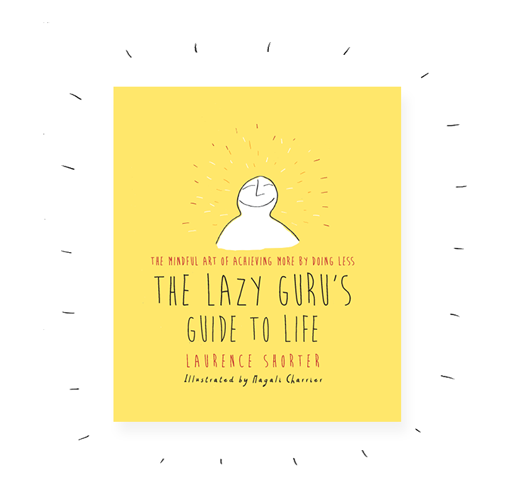
    The result was The pessimist’s guide to a hopeful future podcast (now steadily seeping into your socialz). Here I interview people I admire doing purposeful things. Like Mark Ormond, Tamma Carel (PIEMA, MSc, BSc) and now Laurence Shorter – the lazy guru, in the latest episode.

    ‘I, for whatever accident of fate, have developed a very high tolerance of ambiguity. And I’m able to tightrope walk a little bit more than most people, I’m able to improvise. And so when I’m in a room with a group of people… something opens up.’

    While indulging my haphazard interrogation, Laurence (a seeker, speaker and coach) shows himself to be masterfully sage and light-hearted. He’s a thoughtful torch to those questions that still shadow my odd, solitary little brain. 

    Maybe you ponder them too… Would you like to be a fellow traveller? 

    If so, give my latest episode a listen now.

    ‘What I love is the imagination… I want to have more fun… I’ve left truth behind me as a thing to talk about, and I’m just living it. I think that that’s a great way to sum this up. I’d just like to be it and not have to talk about it.

    ‘I would love to be much more liberated from the need for meaning. I’d like to be free. That’s my goal.’

  • Monday vomit

    Monday vomit

    It feels almost too cliche to write about, but Mondays for me bring baggage. Emotional weather. At least habitually. 

    It begins Sunday evening

    A sense of foreboding. An atmospheric changeover. Like duty descending as an ethereal burden. A sandstorm of uncertainty gathers on the horizon, closing in, leaving the next morning in its wake. 

    There’s possibility in there, of course – space and opportunity. But for folk like me (who like a bit of structure and apparent ‘how’ in their lives) – the scope of the week ahead can sometimes get the better of us. 

    Monday can be a vulnerable time

    Yet rather than tackle problems alone, these days I’m trying something new. 

    I dredge for curiosity and connection in those murky feelings – how do others relate to their week ahead? What are they going through? 

    More often than not, I find it’s the lonely bit of Mondays, the stoney-faced struggle, the seriousness, that gets in the way. 

    Sounds like an excuse for an experiment

    Three weeks ago, I launched the Monday vomit event: a space to process the dread, hope, fear or excitement of your week ahead. To meet others. Feel the feels. Regain perspective. And focus on what really matters.

    It’s kind of like a pep-talk, leaning heavily on group coaching. And it follows a proven therapeutic model for exploding those Monday morning narratives and underlying motivations. 

    All in a quick 30 minute session

    The metaphor I’m toying with is like puking up whatever is on your mind, then picking out the chunky bits. But that’s where the imagery ends, because the final bit is about accountability – working out what’s valuable to us in the coming week ahead (do people bottle puke?)

    So far, we’ve had people bring dilemmas, stories, mistakes, overwhelm, victories, tears, laughter and everything in-between. Anything goes really. 

    If you’re an enterprising individual at a point of change, an entrepreneur or employee, a leader, or just fancy a bit of space in your working week – this might be for you.

    Just bring an enquiring mind and willingness to share and try something different.

    Here’s your invitation

    Next week (19th July) the Monday vomit event goes public (so far it’s been an inner circle thing…). It’ll be a regular event, every Monday morning.

    If you want to try one, just sign-up on Eventbrite. It seems to work best as a tiny, intimate event so grab one of four places before it fills up.

    Join us for connection, honesty and levity. Gloom might be the (my?) pretext, yet I’m surprised by how many people vomit sparkles in the sessions too.

    Subversion will be my compass, through the emotional weather that sometimes clouds the start of our week – what’s yours?

  • What subversive madness must live through you?

    What subversive madness must live through you?

    There’s a door, in a room, above a garage, in Merseyside. And if you scrape off a layer of paint or four, you’ll be looking at a gaggle of mutilated faces; noseless and shrunken.

    And these faces would grin back at you, all eyes and mouth; ghoulish and gormless. A disembodied throng of serious fools, time-travellers, sentinels at a former gateway to lunacy.

    You’re looking at the back of my teenage bedroom door

    Back in the 90s I enjoyed working myself into hysteric fervour, by snipping away at the Viking office supplies catalogue. I’d cut out the faces of pictured models – officious-looking businesspeople, then fold them so their eyes kissed their mouths, leaving little in between. 

    In fruitier moods I’d perhaps lower a hairline, so the face resembled a smirking rugby ball. Or glue someone else’s (usually bigger) eyes in, upside down. Then I’d cry laughing at this hideous transformation of banal to ridiculous.

    It beats torturing animals, I suppose.

    Yet there was one face in particular that always captured my imagination… 

    Let’s call him Viking guy

    The Viking guy

    He was a late-60-something caucasian chap, with frosty white hair, besuited, confident, and sporting a smile somewhere between affable and smug. 

    This kindly man reeked of boardrooms and golf courses – the definitive pre-retirement exec. He was (possibly) the embodiment of business: smart, trustworthy, sensible and serious. The kind of guy who’d do you a fabulous deal on printer ink, and throw in a gentle pat on the head for your anxious, overachieving son.

    He lives on, inside me. Inside all of us?

    I expect this poor gent is long dead. I wonder now what he’d make of my secret anti-shrine to everything he stood for (or seemed to). 

    Likewise, with my lifelong subversion of serious, corporate professionalism. Something so at odds with the noble truth of his adorable little scrunched-up face. And his command of a mutant army of gurning telesales operatives. Their upside-down eyes-bulging, attentive and pitiful.

    This is NOT Viking guy

    Escapism

    My squashed faces were, of course, an inconsequential detour from the seriousness of childhood: school, exams and expectations. 

    I grew up pretty quick – handed house keys in junior school, child-minding my siblings, cooking meals from scratch for a family of five. Someone had to be the grown-up until the grown-ups came home, from their long, stressful day at work. I suppose part of me still waits.

    But that’s the origin of my serious and subversive, silly side. 

    I won’t denigrate either – they both have their place. Mr serious gets things done, and under control. Yet it can dominate. Often at the expense of the playful, funny, absurd side – with its ‘pointless’ outcomes.

    Maybe this sounds familiar? 

    When problems get tricky and existential (like when I found myself drifting in a former career) the serious side can often step in. It creates perfect infinite loops of introspection. And pressurises you to find definite solutions to perennial problems, like meaning and purpose. Be perfect. Do it right. Try harder etc. etc.

    But what happens to your ‘other’ sides when your serious side dominates? Where does your equivalent of the scissor brandishing lunatic, gunning for the Viking guy, go? 

    Perhaps more tellingly, where else in life do they inevitably pop up, no matter how hard your serious side tries to repress them?

    For me it’s always something absurd

    A turn of phrase, snapshot or abstract idea that catches my imagination. Like a seagull with no wings saying “bro I’m outta here”. I giggle to myself, reliving it over and over. And revel in not being able to figure out why it’s so funny. I embrace uncertainty instead of managing it, like my inner Viking guy.

    My playful side instead wants to subvert the seriousness, meet it with irreverence and laughter. It seeks truth through humour. Like a safety valve. Or a different window onto a familiar vista.

    A working theory: everything’s in there, coexisting 

    Angels and demons, inner critics and cheerleaders – you already have options. Perhaps some are muted or lost for words. Yet they’re intrinsically part of your amalgamated identity, out of reach or elusive, but in there all the same. 

    And they will, perhaps persistently, manifest throughout your life as simultaneous traps and escape routes. 

    Like mine did, when squashed faces became a full-on community project. This was in my 30s, when I left the barren grey plains of the corporate wilderness. Or my animal wisdom memes, art that emerged from a dark patch in my mid-30s. 

    In pondering this dilemma of how aspects of character coexist, and how to channel them meaningfully, I came across Dr. James Hollis, a Jungian psychoanalyst speaking on the Power of Ten podcast:

    ‘The people that we admire most in history… in many cases, their lives were very conflictual, full of suffering, often without recognition in their lifetime. And yet we admire them because they embodied something that was meant to be embodied in this world. It wasn’t about their egos. It wasn’t about their fiscal plan. It was about being in service to something that mattered within them. And that’s what vocation really is. And when you do that something supports you.’

    As a visionary clearly in the same category as Van Gogh or Mother Theresa, I’m drawn to Jim’s compelling premise. He speculates that meaning in life (i.e. what to throw ‘yourselves’ into) is something channeled through you. It’s a crusade that you’re in service to. Something inescapable and pervasive. It emerges, through ongoing, daily battles and little victories. 

    Maybe you don’t quite choose it, more it chooses you?

    That’s your thing and who you (already) really are

    Here’s Jimbo again:

    “What wants to enter the world through me? We’re always in service to something. You better figure out what it is, because if you’re in service to the primal complexes, which is to say the clusters of history that a fate presented us, it’s always going to be in some way, someone else’s life, someone else’s agenda. It’s going to be regressive in character. You’re in service to what wants to enter the world through me.”

    Perhaps far too often, we throw ourselves behind what we’re told to get behind, or fall into it accidentally. We do what we ought to and should do in life. Not what we really want to or care deeply about. 

    And when we’re distracted or unaware, maybe there’s a risk we miss what’s right under our noses (or on the back of our bedroom doors), and has been all along.

    Meanwhile, that existential struggle we know all too well. That cause we might rally behind (like my seriousness and lust for subversion with absurdity) and discover ourselves through, goes amiss.

    What won’t go away? What lives through you?

    In case you’re doubting the relevance of your lived experience, your particular lifelong crusade, or who you are: here’s a thought. Sometimes there’s a misconception that to champion a cause – some problem or injustice, one has to have all the answers, and be the expert on solving it. 

    I fell for this slight of hand, in our age of technocratic officiousness. 

    However, just living your crusade, knowing the ups and downs intimately, first-hand, is perhaps really what qualifies you to speak up about it and explore its domain. 

    Maybe I’m only justifying my own indulgent madness here (*reaches for scissors*). But there’s something inescapable about this personal quest for subversion, truth, and exploration of our shadow side. 

    What wants to live through you? And who are we to resist?

    So, I put it to you: what themes seem inescapable in your life? What wants to live through you? And how will you speak up about it? 

    Because maybe there are others out there, just like you, ready and willing to join you on the adventure. 

    And who knows where it will end? Perhaps in some eerie mausoleum to squashed faces, on the rear of a repainted bedroom door in Merseyside.

  • You grow. I grow. We grow.

    Curious? Here’s what’s on offer:

    • More time for leaders and leadership
    • Greater innovation, creativity and resilience in your organisation
    • More empowered and engaged staff
    • Higher productivity, job and customer satisfaction
    • Better performance, people, knowledge and culture

    Made possible through 18 hours’ worth of 1-to-1 coaching sessions for your staff, with me (a trained coach). This is space for people to unlock themselves, obstacles, big plans and ways forward.

    The nearest thing to a catch

    Right now I’m upgrading my skills to practise in organisations (ILM5). And while I’m already a capable coach, the organisational context is the important bit… 

    You see, my usual clients are private individuals, not staff. So I’m looking for a willing, like-minded organisation, that’s curious about developing their staff, and unlocking their potential through coaching.

    Between us we’d figure out a mutually beneficial arrangement.

    You grow. I grow. We grow. That kind of thing.

    Think clinical trial rather than experiment

    I’m supervised throughout, and trained of course. Plus your organisation stands to gain all the benefits above.

    This might be of particular interest if you’re the kind of organisation who puts (or aspires to) social and environmental outcomes, and ethics at the heart of what you do.

    Because acting responsibly is my thing too.

    How to apply

    If you’re curious, it all begins with a conversation about where you’re at now, and how we make this mutually beneficial and impactful for everyone involved.

    Pick a slot for our conversation here

    Source: Coaching for performance by Sir John Whitmore (the godfather of modern organisational coaching). Plus my delighted clients.

  • Another podcast by a white, middle-aged, Western man but…

    Right on trend, this white, middle-aged, Western man has launched a podcast. Yet in a refreshing departure from convention I’m not here to tell you how to live your life. 

    Or get rich quick.

    Or solve some problem. 

    Or vomit unsolicited explanations and strategies. Like so many other blokey ‘experts’ indulging their egos in laryngeal masturbation. There’s far too much of that tiresome bilge slopping about the floor of your favourite podcast app.

    Nah. This new podcast goes deeper than that.

    Welcome to The pessimist’s guide to a hopeful future

    A podcast that’s a rallying point for folk like you (not just white middle age Westerners). Curious about your relationship to the world around you, uncertainty and the future – the universe beyond our myopic, occasionally warped worldviews. 

    For 30-40 minutes per episode, you’ll enter a warm, colourful padded cell. One frequented by interesting, like-minded leaders and changemakers. People doing exciting purposeful stuff for people and the planet. 

    Yet they’re still only human (just like you and me). And I think they’ll intrigue you. 

    Perhaps one of them unlocks a gate to your mind-forged prison? Or grants pardon from a self-inflicted sentence. Or slips you a spoon to excavate that long-sought escape tunnel.

    On this podcast we’ll hear their wisdom and personal philosophies. Perhaps how they lead, learn, crash and burn will tell us something about the human condition?

    It’s kind of like rehab too: think reintegration

    Whether that’s back into society (however broken it seems) after our collective 18-month, pandemic-induced, global sabbatical. Or finding your place amidst the messy, moreish chaos that is modern life.

    This show is for anyone feeling stuck or lost, ready to open a closed mind, or on the outside looking in. Maybe you too stare in equal fascination and despair at the ongoing botched experiment that is humanity? Craving deeper connection with some… thing, one, or where.

    That ubiquitous ‘vulnerability’ thing 

    This podcast takes a wanky, overused aspirational concept in self-improvement circles. Turning it into a living experiment for anyone who dares listen and expand the discussion it provokes.

    Listen carefully and you’ll hear your host shedding the pretence of ‘having everything under control’. Jettisoning his Mr serious business-professional persona. In favour of letting something emerge of its own accord. Eurrgh.

    Every episode hums with electric tension. Between presence and preparation, play and seriousness, perfection and imperfection. As I (mis)read the room with clumsy questions and hilarious consequences.

    But I wonder, what’s your equivalent? How might you bring your ignorance, flaws and superpowers when we shift this conversation beyond the recordings?

    You’ll also bear witness to, and join, a living experiment in improv

    I’ll be honest. I’m not 100% clear what this thing is or where it’s going. That’s a premise deeply uncomfortable to many like us. 

    But that’s what makes it fun, perhaps?

    Face-to-face with guests, we’ll riff and be spontaneous in ways that are tricky alone. There’s scope to push into new (uncomfortable even) spaces and see how we react. You’ll hear us flexing playfulness, curiosity, and compassion – themes that intrigue our tribe. They permeate my coaching practice too. And perhaps help us make peace with uncertainty.

    So if you’re up for an edgy experiment in different ways of showing up. Join us.

    Just another podcast, after all?

    Maybe. But one unashamedly trying not to take itself too seriously, and occasionally falling short of that. Albeit in an illuminating, hopefully reflective and funny way.

    And it’s open and free to all sentient beings, not just white middle-class, pseudo-intellectuals with existential angst, like me.

    Here’s who you can look forward to hearing from, as we ask the following lovely humans to justify their existence:

    • Mark Ormond, exploring nuance and permission to be human.
    • Tamma Carrel, on outlook and putting yourself out there.
    • Laurence Shorter, on life as a work-in-progress and learning about yourself.
    • Mike Chitty, throwing light on certainty and not knowing.
    • Sarah Lister, on growth and adventure.
    • Anna Fielding, on self-awareness and taking yourself seriously

    Search for it in Spotify, Apple or Google podcasts, or your favourite podcast app. You can also visit The pessimist’s guide to a hopeful future.

    In a hurry? Listen to episode 1 now